
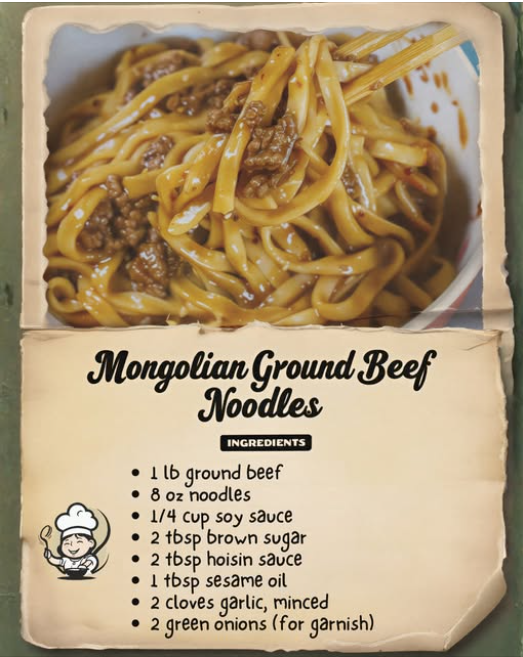
Step 1: The Starch Hydration (Noodle Prep)
Cook noodles according to package directions. The “Al Dente” Regulation: You must stop the cooking process while the starch remains slightly firm. This ensures the noodles don’t undergo Structural Failure when tossed in the high-heat skillet later.
Step 2: The Lipid Extraction (Browning)
Brown the beef in a skillet. The “Maillard” Rule: Do not crowd the pan. High heat is required to evaporate surface moisture instantly, allowing the temperature to exceed 300°F (150°C), where the savory brown crust forms.
Step 3: The Aromatic Volatilization
Add minced garlic for 30 seconds. The “Thermal Sensitivity” Rule: Minced garlic has a high surface-area-to-volume ratio, making it prone to pyrolysis (burning). 30 seconds is the ideal window to release Allicin without introducing bitterness.
Step 4: The Glaze Synthesis
Stir in soy sauce, brown sugar, hoisin, and sesame oil. The “Reduction” Science: As the sugar dissolves and the liquids heat, the sauce enters a Syrupy Phase.
The heat causes the sugars to bond with the beef proteins, creating a unified coating.
Step 5: The Mechanical Coating (The Toss)
Toss noodles into the sauce. The “Viscosity” Secret: The residual starch on the surface of the noodles acts as a Natural Emulsifier, helping the oil-heavy sauce and the water-based soy sauce stay combined in a glossy finish.
Step 6: The Final Garnish
Top with green onions and sesame seeds. The “Texture and pH” Balance: Green onions provide raw enzymes and a mild acidity that cuts through the heavy richness of the beef fat and hoisin.
Serving and Storage: Protecting the Umami
Serving: Serve immediately while the noodles are at Peak Elasticity. The gloss of the sauce is most reflective when the lipids are in a liquid state (above 120°F).
Storage: Store in an airtight container for up to 3 days. The “Starch Retrogradation” Factor: The noodles will absorb more sauce as they sit. When reheating, add 1 tablespoon of water to re-hydrate the starches and restore the Laminar Flow of the glaze.
Tips: Pro-Level “Quick Dinner” Nuances
- The “Wok Hei” Mimic: If using a standard skillet, let the beef sit undisturbed for 2 minutes at the start to develop a “crust” that mimics the charred flavor of a high-heat commercial wok.
- Hoisin Balance: Hoisin is very dense. If the sauce feels too thick, add 2 tablespoons of Pasta Water to loosen the emulsion without losing flavor.
- Garlic Precision: Use a microplane or garlic press. The finer the garlic, the more Cellular Rupture occurs, leading to a more intense aromatic profile in the limited 30-second window.
Holiday Variations: Seasonal Infusions
| Variation | The Adjustment | The Vibe |
|---|---|---|
| Ginger Snap Noodles | Add 1 tbsp of freshly grated ginger with the garlic. | Zesty, warming, and anti-inflammatory. |
| Szechuan Heat | Add 1 tbsp of chili garlic sauce or red pepper flakes. | Energetic, spicy, and bold. |
| The “Veggie Flash” | Add 2 cups of shredded coleslaw mix (cabbage/carrots) with the beef. | Crunchy, voluminous, and balanced. |
Tips: Preventing the “Greasy” Bottom
A “Greasy” result occurs when the beef fat separates from the sauce. To prevent this, ensure your Brown Sugar is fully dissolved before adding the noodles. The dissolved sugar helps hold the fat in suspension. If you notice pooling oil, a small splash of Rice Vinegar can help emulsify the mixture through acidity.
Conclusion: A Christmas Day Efficiency Victory
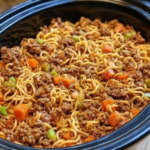
This 15-Minute Beef Noodle dish is a masterpiece of Time-Motion Cooking. By leveraging the speed of ground protein and the instant viscosity of sugar-based glazes, you create a “Better Than Takeout” experience in the time it takes to boil water. On this Christmas Day 2025, as the sweet and savory steam fills your kitchen, you are serving a masterclass in culinary speed. Enjoy the flash!
Frequently Asked Questions
- Can I use spaghetti?
- Yes! Spaghetti is a perfectly viable Starch Scaffold for this sauce. Just ensure it is cooked to Al Dente so it can withstand the final high-heat toss without becoming mushy.
- Why is my sauce too salty?
- This is usually due to Sodium Concentration from the soy sauce. To regulate this, use “Low-Sodium” soy sauce or add an extra tablespoon of brown sugar to provide a Flavor Counterweight.
- Can I use ground turkey?
- Yes, but you will lose Lipid Depth. If using turkey, add an extra tablespoon of vegetable oil to the skillet to ensure the garlic and sugar have enough fat to emulsify properly.
Would you like me to suggest a “Quick Smashed Cucumber Salad” to serve as a side, or perhaps show you how to turn this into “Beef Fried Rice”?
Related posts:
 Wok-Inspired Weeknight: Mastering the Beef and Pepper Rice Bowl
 The Garlic Lovers’ Wok: Master the Art of Savory Chicken Lo Mein
 The Ultimate Italian Drunken Noodles: A Hearty & Flavorful One-Pan Meal
 Engineering the Perfect Beef and Broccoli Stir-Fry
 Egg Roll Stir Fry – All the Flavor, None of the Wrapping!
 Grandma’s Ground Beef Chow Mein Casserole: The Science of Retro Comfort
