
The Art of the Pastry Dough
Introduction: The Science of Fat and Flour
At its core, pastry is a mechanical dance between **gluten and fat**. Whether you are making a three-ingredient “Rough Puff” or a “Grated Butter Pie Crust,” the goal is to keep the butter from fully incorporating into the flour. When the dough hits the hot oven, the water in the butter evaporates, creating steam. This steam pushes the layers of flour apart, creating the “flakiness” we crave.
The two recipes provided represent the two main branches of pastry: **Laminated Dough** (where fat is folded in layers) and **Shortcrust** (where fat is cut into the flour). Understanding the physics of temperature is the difference between a crisp, shattering crust and a tough, greasy one.
The universal law of pastry: Everything Must Be Cold. From your hands to the bowl to the water, heat is the enemy of the flake.
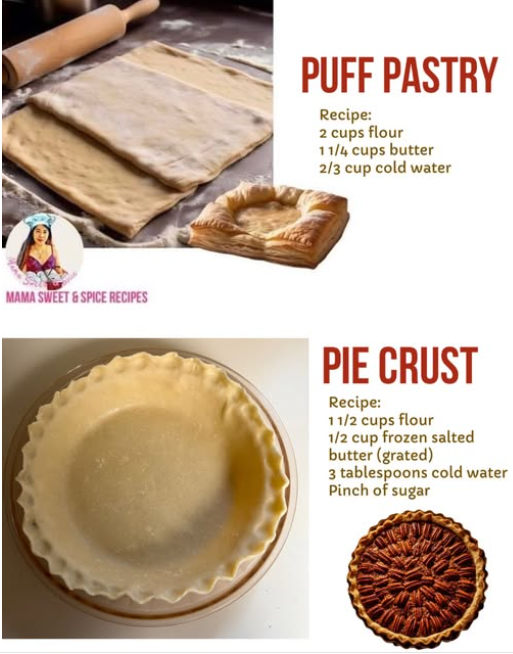
I. The 3-Ingredient “Rough Puff”
This is a simplified version of traditional pâte feuilletée. Instead of wrapping a single block of butter in dough, we use “rough” chunks of butter to achieve a similar layered effect in a fraction of the time.
Ingredients
- 2 Cups All-Purpose Flour: Provides the protein structure.
- 1 & 1/4 Cup Salted Butter: High-quality, high-fat butter (like European style) yields the best results.
- 2/3 Cup Ice Cold Water: Crucial for binding without melting the fat.
The Technical Method
Rotate the dough 90 degrees and repeat the process twice more. Each fold creates hundreds of microscopic layers of butter and flour.
II. The “Grated Butter” Pie Crust
This version is designed for fruit pies, quiches, and tarts. By grating frozen butter, you ensure that the fat is evenly distributed but remains in discrete “pellets” that create a tender, sandy texture.
Ingredients
- 1 1/2 Cups All-Purpose Flour.
- 1/2 Cup Salted Butter (Frozen).
- 3 Tablespoons Ice Water.
- Pinch of Sugar: Optional, but aids in caramelization (browning).
