
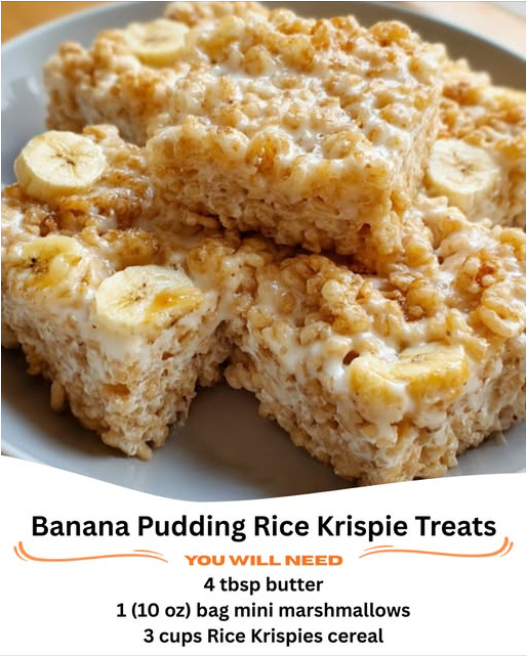
Banana Pudding Rice Krispie Treats: The Architecture of Multi-Layered Textures
Introduction: Engineering the Perfect “Ooze-to-Crunch” Ratio
In the culinary arts, creating a “hybrid” dessert requires more than just mixing flavors; it requires managing Phase Transitions. On this Wednesday, December 24, 2025—Christmas Eve—these treats provide a nostalgic, high-energy snack that bridges the gap between a snack bar and a custard. The cereal base provides the Structural Tension, while the pudding top provides the Viscous Luxury.
This guide will explore the Colloidal Chemistry of Marshmallows, the Starch Retrogradation of instant pudding, and the Enzymatic Browning of bananas. We will delve into why 4 tablespoons of butter is the critical volume for creating a waterproof barrier for the rice.
Ingredients: The Molecular Components
- 4 tbsp Butter: Butter acts as the Liquid Lipid Barrier. By coating the rice cereal in fat before the marshmallows are added, you prevent the sugar in the marshmallows from making the cereal “soggy-hard.”
- 10 oz Mini Marshmallows: Marshmallows are essentially Stabilized Air. They contain gelatin, which provides the “chew,” and sugar, which provides the “stick.” Heating them collapses the foam into a workable adhesive.
- 3 Cups Rice Krispies: These are High-Surface-Area Starches. Their porous nature allows them to absorb the marshmallow “glue,” creating a rigid, lightweight matrix.
- Instant Banana Pudding: This relies on Modified Cornstarch. Unlike traditional pudding that requires heat to thicken, instant pudding thickens through cold-milk hydration, which is vital because it won’t melt the marshmallow base.
- Whipped Cream & Bananas: These provide the Aerated Fat and Fibrous Sugars that round out the mouthfeel of the dessert.
