
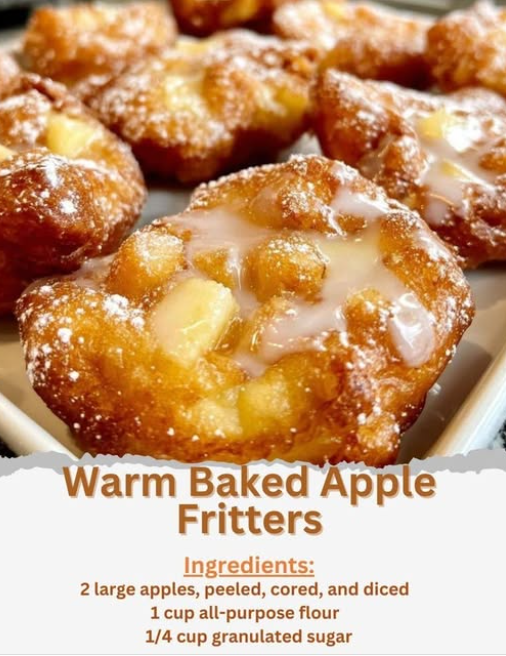
Baked Apple Fritters: A Masterclass in Steam and Chemical Leavening
Introduction: The Physics of “Bake vs. Fry”
In traditional fritter preparation, deep-frying creates a rapid Thermal Shock that sets the exterior instantly. In this baked version, we rely on Convective Heat. The technical challenge is achieving a light texture without the oil bath. This is solved through a High-Moisture Batter that utilizes Steam Expansion and the CO2 production from baking powder to create vertical lift and a porous crumb.
Ingredients: The Molecular Building Blocks
- 2 Large Apples (Diced): The Hygroscopic Inclusions. As apples cook, their pectin breaks down, releasing moisture into the surrounding batter.
- 1 Cup All-Purpose Flour: The Structural Scaffold. Provides the gluten network necessary to trap leavening gases.
- 1 tsp Baking Powder: The Chemical Leavener. Upon hydration and heating, it undergoes a chemical reaction to release carbon dioxide.
- 1 Large Egg & 1/2 Cup Milk: The Liquid Phase & Emulsifiers. Eggs provide protein for structure and lecithin for emulsifying the melted butter into the milk.
- 1/2 tsp Cinnamon: The Aromatic Phenol. Cinnamon contains cinnamaldehyde, which provides the characteristic “warmth” that complements the malic acid in the apples.
Instructions: Engineering the Fritter
Step 1: Dry-Phase Homogenization
Whisk flour, sugar, leaveners, and spices. The “Distribution” Rule: Ensuring the baking powder is perfectly distributed is critical; otherwise, you will have uneven Structural Voids in the final fritter.
Step 2: Emulsifying the Wet Ingredients
Whisk milk, egg, vanilla, and melted butter. The “Thermal Tempering” Secret: Ensure the milk is not ice-cold when adding melted butter, or the butter will undergo Lipid Solidification (clumping), ruining the smooth emulsion.
Step 3: Creating the Batter Matrix
Combine wet and dry ingredients. The “Low-Shear” Rule: Stir until just combined. Over-mixing activates too much Gluten, changing the texture from a tender fritter to a tough, bready muffin.
Step 4: Thermal Processing (Baking)
Bake at 375°F (190°C) for 15-20 minutes. The “Maillard” Effect: The sugar and flour on the surface react to the dry heat, turning golden brown while the internal temperature causes the apple cells to rupture, softening the fruit.
