
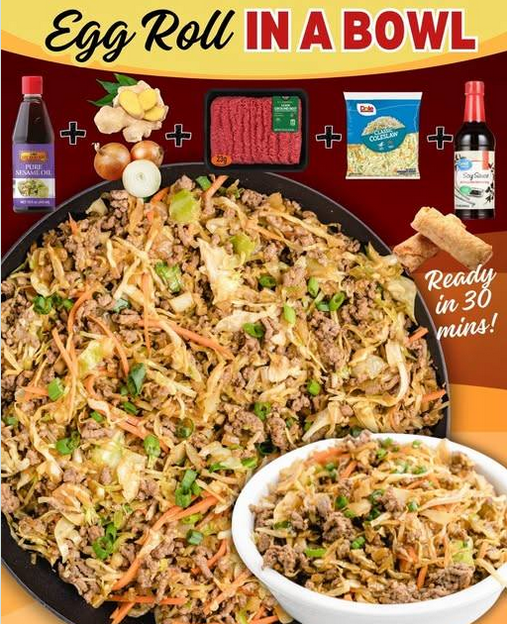
Egg Roll in a Bowl: A Study in Maillard Reactions and Cellulose Softening
Introduction: Deconstructing the Roulade
The technical objective of this dish is to replicate the Organoleptic Profile of a fried egg roll without the deep-fried pastry shell. This is achieved through Flash-Sautéing, a method that uses high heat to rapidly cook vegetables while maintaining a “crisp-tender” Mechanical Texture. The primary flavor engine is the combination of toasted sesame oil and soy sauce, which creates a complex Ionic and Lipid Balance.
Ingredients: The Molecular Building Blocks
The Protein Aggregate
- 1½ lb Ground Beef: The Primary Protein Matrix. As it browns, it undergoes the Maillard Reaction, creating hundreds of new flavor compounds.
The Aromatic Catalysts
- 1 Onion & 1 tbsp Garlic: These contain Organosulfur Compounds that mellow and sweeten upon heating, providing a savory foundation.
- 2 tbsp Sesame Oil: The Volatile Lipid. Unlike vegetable oil, toasted sesame oil is used for its intense aromatic profile (primarily pyrazines).
- 1½ tsp Ground Ginger: Provides Gingerol, which adds a pungent, thermal heat that complements the red pepper flakes.
The Structural Cellulose
-
- 16 oz Coleslaw Mix (Cabbage): The Main Structural Component. Cabbage is rich in Cellulose and Hemicellulose. The goal is to apply enough heat to soften these cell walls without causing Turgor Loss (which would result in a soggy dish).
[Image of plant cell wall structure showing cellulose microfibrils]
