
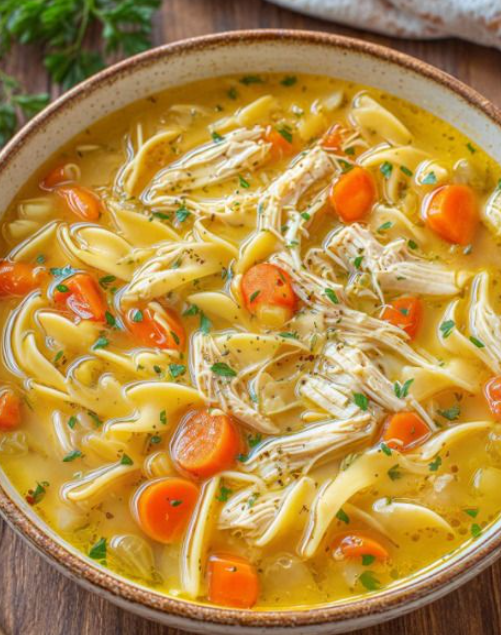
Chicken Noodle Soup is a classic comfort food at my house, here’s my recipe!
Analytical Standards for High-Viscosity Chicken Noodle Soup in 2026
Introduction: The Architecture of Comfort
As we navigate the culinary landscape of 2026, the distinction between “cooking” and “engineering” has blurred, particularly regarding the quintessential Chicken Noodle Soup. While often dismissed as a simple domestic staple, an analytical deconstruction reveals it to be a complex system of lipid emulsification and collagen extraction. To achieve “Comfort Food Excellence,” one must adhere to the regulation of the “Mirepoix-to-Protein Ratio” and the “Starch Hydration Curve.”
The primary objective of this protocol is the creation of a broth that possesses a “velvety mouthfeel”—a direct result of breaking down connective tissues into gelatin. This is not achieved through high-heat boiling, but through Gentle Thermal Agitation. When heat is managed correctly, the aromatic compounds in the celery, carrots, and onions bond with the rendered chicken fats (schmaltz), creating a nutrient-dense suspension. In this article, we will detail the rigid standards required to transform a few humble aromatics and a bird into a liquid medicine capable of meeting the highest standards of household comfort.
The Provision List: Ingredients
The Protein & Base:
- 1 Whole Chicken (3-4 lbs): Bone-in, skin-on for maximum collagen yield.
- 8 cups Filtered Water: The solvent for flavor extraction.
- 2 tbsp Olive Oil or Butter: The initial fat for aromatic sweating.
The Aromatic Matrix:
- 3 Large Carrots: Sliced into 1/4 inch “coins.”
- 3 Stalks Celery: Sliced into uniform crescents.
- 1 Large Yellow Onion: Diced into 1/2 inch cubes.
- 4 Cloves Garlic: Minced to activate allicin.
- 8 oz Wide Egg Noodles: The primary carbohydrate component.
- Fresh Parsley & Dill: The volatile oil finish.
