
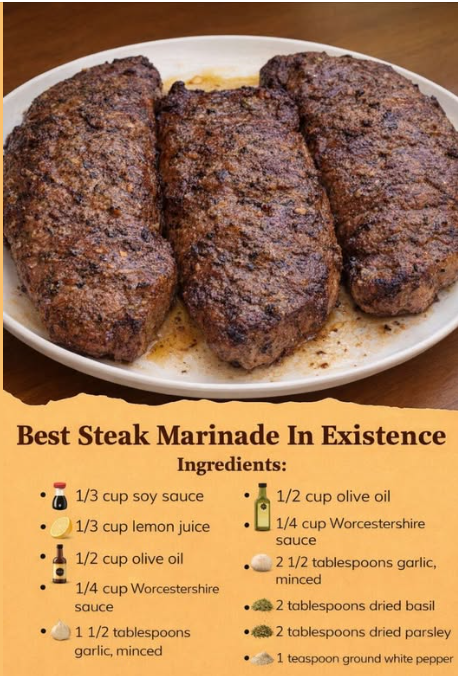
“This isn’t just a recipe; it is a chemical blueprint for the most flavorful, tender steak you have ever prepared.”
1. The Philosophy of the Marinade
As we enter 2026, the science of home grilling has moved beyond “guessing.” We now understand that a marinade has three primary jobs: Flavor Infusion, Enzymatic Tenderization, and Caramelization Enhancement. This specific recipe works because it balances the four pillars of taste: Salt (Soy), Acid (Lemon), Fat (Olive Oil), and Sweet (Brown Sugar).
Unlike salt-only dry brines, a liquid marinade like this creates a “flavor shell” on the exterior of the meat. While the flavor only penetrates a few millimeters deep, the tenderizing agents (acids and enzymes) work on the connective tissues, making even cheaper cuts like flank or hanger steak taste like prime filet.
2. Detailed Ingredient Analysis
The Flavor Blueprint
- ½ cup Soy Sauce: The primary source of liquid salt and glutamate ($C_5H_8NO_4Na$), providing the savory “Umami” base.
- ¼ cup Olive Oil: Acts as a carrier for fat-soluble flavor compounds and prevents the steak from sticking to the grill.
- ¼ cup Worcestershire Sauce: Adds depth with fermented tamarind, anchovies, and vinegar.
- 2 tbsp Lemon Juice: The catalyst. The citric acid denatures tough proteins.
- 2 tbsp Brown Sugar: Essential for the Maillard reaction (the crust).
- 3 cloves Garlic: Releases sulfur compounds that bond with the meat’s amino acids.
