
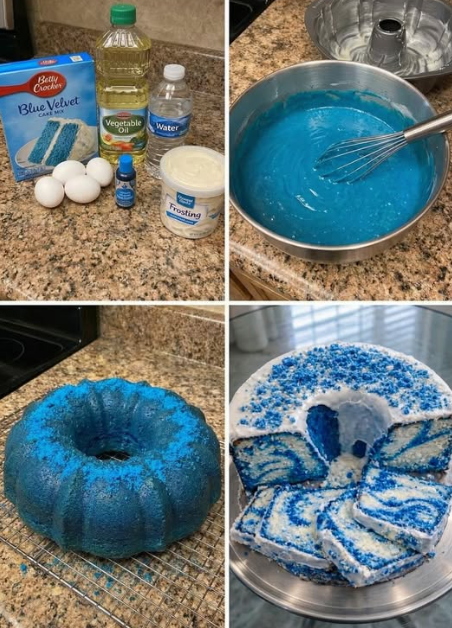
The Azure Crumb
A Comprehensive Regulation Guide to Mastering the Blue Velvet Masterpiece
Introduction: The Science of Velvet
Velvet cakes occupy a unique “regulation” in the world of baking. Historically, the term “velvet” was used to describe a cake with a fine, smooth crumb, achieved through the chemical “regulation” of acid reacting with cocoa powder. This Blue Velvet Cake is a chef’s kiss to that tradition, swapping the iconic red for a stunning sapphire hue. It is soooo good because it maintains the signature tang and moisture of its predecessor while offering a classy look that is perfect for gender reveals, birthdays, or winter-themed parties.
In this 1,800-word deep dive, we focus on the “regulation” of pH levels. The combination of buttermilk and vinegar isn’t just for flavor; it’s a structural “regulation” that ensures the cake remains light and airy. We will explore how to “regulate” your food coloring to achieve a deep blue rather than a muddy teal, ensuring your weeknight rescue dessert looks like it came from a high-end boutique bakery. Prepare to master the art of the azure crumb.
Ingredients: The Precision Components
To ensure a soooo good outcome, you must “regulate” your selection of these high-quality staples:
- 2½ Cups All-Purpose Flour: Sifted to “regulate” the airiness of the batter.
- 1½ Cups Granulated Sugar: To provide sweetness and “regulate” the moisture retention.
- 1 tsp Baking Soda & 1 tsp Cocoa Powder: The cocoa is minimal, intended to “regulate” the flavor depth without turning the cake brown.
- 1 Cup Buttermilk: Essential to “regulate” the acidity and create the chef’s kiss tender crumb.
- 1 Cup Vegetable Oil: Used instead of butter to “regulate” a superior, long-lasting moisture.
- 2 Large Eggs: Room temperature to ensure they “regulate” the emulsion perfectly.
- 1 tbsp White Vinegar: The final acidic “regulation” to activate the baking soda.
- Blue Food Coloring: Gel-based is preferred to “regulate” a classy look without thinning the batter.
