
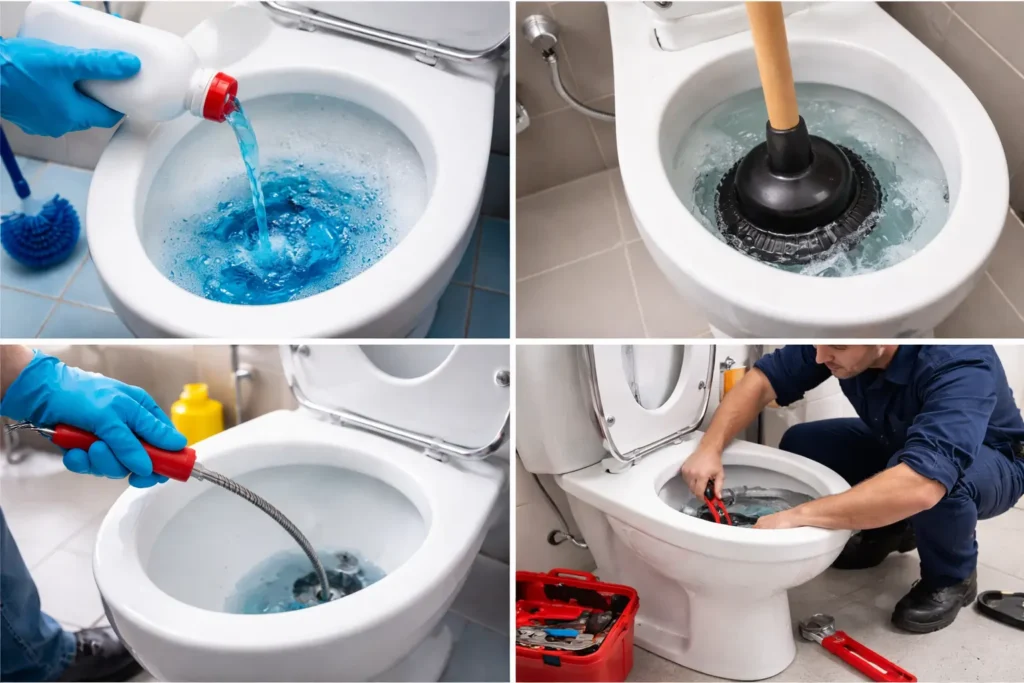
Have you ever considered what lurks behind your seemingly clean toilet? While the ceramic may shine, the plumbing system can harbor a hidden world of bacteria and buildup that could lead to serious clogs. With over 15,000 toilet repairs under his belt, master plumber Stefan Hofer reveals the shocking truths about what accumulates in your pipes and how a revolutionary cleaning powder can tackle issues that traditional methods fail to address.
The Silent Accumulation in Your Pipes
Stefan Hofer, a master plumber from Essen, has spent 28 years fixing clogged toilets in homes, hotels, and offices. He explains that when people call him in a panic, claiming their toilets have suddenly clogged, it’s rarely the case. “Toilets don’t just clog overnight,” he says. “The problem builds up over months and years, deep within the pipes where it’s invisible and odorless—until it’s too late.”
Every time you flush, water flows through your pipes, but what most people don’t realize is that an ultra-thin layer of residue remains on the interior walls. This includes grease, limescale, soap residues, and organic deposits from toilet paper. Individually, these substances are barely noticeable, but over time, they form a stubborn coating that Hofer refers to as “biofilm.”
Understanding Biofilm: The Hidden Culprit
Hofer likens your pipes to arteries, with the biofilm acting like cholesterol that accumulates layer by layer, slowly narrowing the diameter of the pipes. “At some point, the pipe becomes so constricted that nothing can pass through,” he warns.
This biofilm is not just dirt; it’s a living ecosystem of bacteria, fungi, and microorganisms. In fact, a typical toilet drain can contain more bacteria per square centimeter than a public toilet seat. When you clean your toilet with common products, you’re only addressing the visible ceramic surface. The pipes behind remain untouched, allowing the biofilm to thrive.
The Stages of Clog Formation
Hofer outlines the stages of clog formation:
Phase 1: Invisible Accumulation (Months 1-12)
The biofilm begins to settle on the pipe walls, imperceptibly reducing the diameter from 100 mm to 90 mm, then to 80 mm.
