- The Pre-Game (Temping the Meat): Remove the prime rib from the fridge at least 1 hour before cooking. This is the most critical “regulation”—cold meat will not cook evenly.
- The High-Heat Blast: Preheat your oven to 450°F (230°C). Rub the herb butter all over the roast. Place in the oven for 15 minutes. This “shatters” the exterior fat into a savory, dark crust.
- The Low and Slow: Without opening the door, drop the temperature to 325°F (160°C). Continue roasting until the internal temperature reaches 120°F (for rare) or 130°F (for medium-rare).
- The Potato Transformation: While the beef roasts, toss the diced potatoes with 3 tbsp olive oil, salt, pepper, and garlic powder. Place them on a separate tray. When the beef has about 30 minutes left, slide the potatoes into the oven.
- The Vital Rest: Remove the beef from the oven. Let it rest for at least 20–30 minutes tented with foil. This allows the juices to pull back into the center of the meat.
- The Green Bean Snap: While the meat rests, turn the oven back up to 425°F to finish crisping the potatoes. Meanwhile, blanch or sauté the green beans with a splash of oil and a squeeze of lemon for 5–7 minutes until tender-crisp.
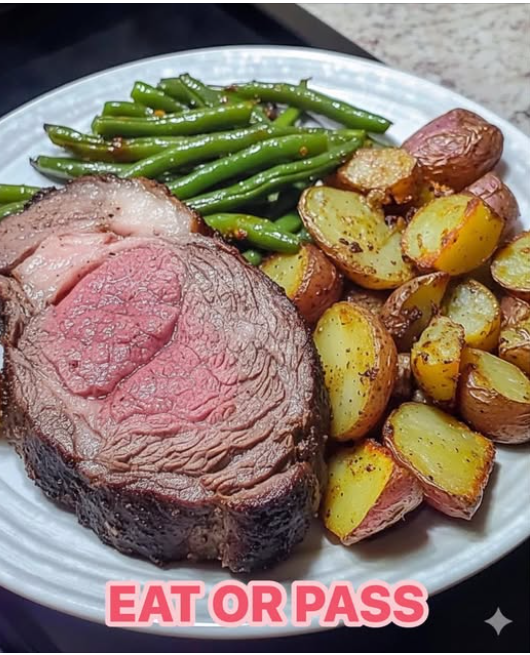
- Assembly: Slice the beef against the grain, pile on the crispy potatoes, and add the vibrant green beans.
Presentation: Serving and Storage
Serving: Serve the prime rib with its natural “Au Jus” (the drippings from the pan). A small dollop of horseradish cream provides a sharp, cold contrast to the hot, rich beef.
Storage: Prime rib is best fresh, but leftovers make world-class sandwiches. Store in an airtight container for up to 3 days.
Reheating: To avoid turning your medium-rare beef into a “well-done” tragedy, reheat the slices gently in a pan with a splash of beef broth over low heat, or in a 250°F oven until just warmed through.
Chef’s Tips: Mastering the Roast
- Invest in a Probe: Don’t guess. Use a digital meat thermometer. 135°F is the “sweet spot” for most guests.
- The “Shatter” Potato: For extra-crispy potatoes, par-boil them in salted water for 5 minutes before roasting. Rough up the edges in the pot to create more surface area for the oil to crisp.
- Bone-In vs. Boneless: Bone-in roasts act as an insulator, leading to a more tender result, though boneless is much easier to slice.
The Flavor Pivot: Variations
- The Peppercorn Crust: Press 2 tbsp of crushed black peppercorns into the butter rub for a “Steak au Poivre” aesthetic.
- Balsamic Beans: Drizzle a balsamic glaze over the green beans and top with slivered almonds for a nutty, acidic finish.
- Duck Fat Potatoes: Replace the olive oil on the potatoes with duck fat for a legendary, “shatter-crisp” luxury.
Strategic Success: The “Au Jus” Regulation
Don’t throw away those pan drippings! They are the concentrated soul of the meal:
- De-glazing: Once the meat is out, place the roasting pan on the stove over medium heat. Pour in 1/2 cup of red wine or beef broth.
- Scrape the Fond: Use a wooden spoon to scrape up the brown bits (the “fond”) from the bottom of the pan.
- Strain: Run the liquid through a fine-mesh sieve for a silky, professional-grade sauce.
Conclusion: An Honest, Vibrant Masterpiece
A Prime Rib Dinner with roasted potatoes and green beans is the ultimate expression of culinary respect. It respects the quality of the ingredients, the science of temperature, and the value of a shared table. By following these regulations—the long rest, the high-heat sear, and the lemon-brightened greens—you’ve created a meal that is vibrant, grounding, and undeniably premium. Tonight, you aren’t just eating; you are experiencing the very best of home cooking. Enjoy every savory, herb-crusted bite!
Frequently Asked Questions
- How much meat should I buy per person?
- A good rule of thumb is 1 lb per person if the bone is in, or 1/2 to 3/4 lb if it is boneless.
- Can I cook the potatoes in the same pan as the meat?
- You can, but they will “confit” in the beef fat rather than roasting. For a “shatter-crisp” texture, a separate tray is much better as it allows the air to circulate.
- Why did my roast come out tough?
- This usually happens for two reasons: skipping the room-temperature rest before cooking, or slicing the meat too early without letting it rest after the oven.
**Would you like me to suggest a “Creamy Horseradish Sauce” recipe to complete your prime rib experience?**