ADVERTISEMENT
To create the authentic flavor profile of the Savoie region, every ingredient plays a key structural or aromatic role.
I. The Core Components (Alpine Tradition):
- 2 pounds (approx. 6-8 medium) Waxy Potatoes: Choose waxy potatoes like Yukon Gold for the best texture. They hold their shape during boiling and baking, preventing the casserole from turning mushy.
- 1 whole Reblochon Cheese (approx. 16 oz/450g): The star of the dish, providing creaminess and flavor. This AOC cheese is crucial for its washed rind, which adds an earthy, slightly pungent aroma that intensifies during baking.
- 6 oz Lardons: French-style bacon (cured pork belly) or pancetta adds a smoky, salty touch.
- 2 medium Onions: Sautéed onions add depth, sweetness, and the essential aromatic base to the dish.
II. The Liquid & Aromatic Enhancers:
- **1/2 cup Dry White Wine:** A splash of dry white wine (Savoie wine like Apremont is traditional, otherwise use Pinot Grigio or Sauvignon Blanc) enhances the flavors and adds a mild acidity that cuts through the richness.
- **2-4 tablespoons Crème Fraîche or Heavy Cream:** While not always required, a tablespoon or two of cream adds a layer of velvety smoothness to the base and prevents the potatoes from drying out before the cheese melts.
- 1 clove Garlic: Used to season the baking dish and add a subtle background aromatic flavor.
- Salt, Pepper, and a pinch of Nutmeg: Seasonings to elevate the taste profile. Nutmeg is a classic seasoning for French cream and potato dishes.
- **1 tablespoon Butter:** Used to grease the baking dish and sometimes to finish the onions.
Optional Ingredient Substitutions:
- For a vegetarian version, omit the lardons or substitute with mushrooms (cremini or shiitake).
- Replace Reblochon cheese with a mix of Gruyère and Brie for a similar melting texture, though the flavor will be less pungent and more nutty.
Instructions: Pre-cooking, Sautéing, and Layering
The traditional method involves pre-cooking the potatoes in their skins and preparing the aromatic base separately before combining them.
Phase 1: Potato and Aromatic Preparation
- Cook the Potatoes: Wash the **potatoes** thoroughly but leave the skin on. Place them in a large pot of cold, salted water. Bring to a boil and cook until they are about 75% done—**al dente** (approximately 15–20 minutes, depending on size). They should be easily pierced but still firm. Drain immediately, cool, peel, and slice into $1/4$-inch thick rounds.
- Sauté the Aromatics: In a large skillet, cook the **lardons** until crisp. Remove the lardons with a slotted spoon and set aside, reserving 1-2 tablespoons of the rendered fat in the skillet. Add the sliced **onions** to the reserved fat and cook over medium-low heat until soft and translucent (about 8–10 minutes).
- Deglaze and Season: Add the **white wine** to the onions and scrape up any browned bits on the bottom of the pan. Let the wine reduce for 2 minutes. Stir the cooked lardons back into the onion mixture. Season lightly with **salt, pepper, and nutmeg**.
Phase 2: Assembly and The Critical Cheese Placement
- Prep the Baking Dish: Preheat the oven to **$400^\circ\text{F}$ ($200^\circ\text{C}$)**. Rub the interior of a 9-inch casserole or baking dish with the cut side of a **garlic clove**, then grease the dish lightly with butter.
- Mix the Base: In a large bowl, gently mix the sliced **potatoes** with the **lardon/onion/wine mixture** and the **crème fraîche** (if using). Taste and adjust the salt and pepper.
- First Layer: Spread half of the potato mixture evenly into the prepared baking dish.
- **Prepare the Reblochon:** Slice the **Reblochon cheese** horizontally (through its equator), creating two flat circular halves. *Do not remove the rind.*
- **The Critical Cheese Layer:** Place one half of the Reblochon, **rind-side up**, over the first layer of potatoes.
- **Final Layer and Top Cheese:** Add the remaining potato mixture over the cheese. Place the second half of the Reblochon, **rind-side up**, directly on top of the final potato layer.
Phase 3: Baking and Serving
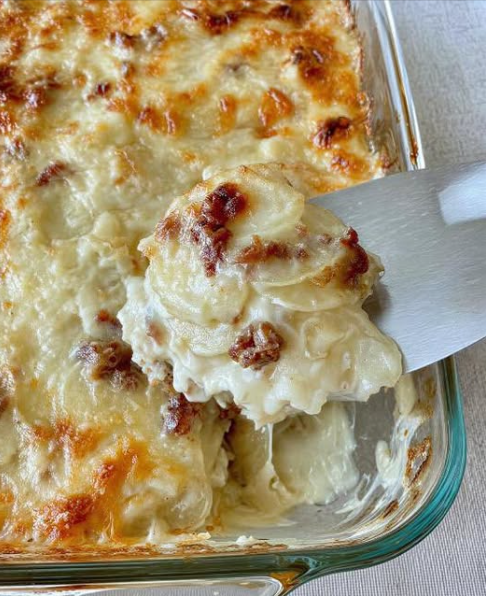
- Bake: Bake for **20–25 minutes**, or until the potatoes are tender, the cheese is completely melted and bubbling, and the top rind is golden-brown and slightly crusty.
- Rest and Serve: Remove the tartiflette from the oven and let it **rest for 5–10 minutes** before serving. This allows the molten cheese to slightly set and the layers to integrate. Serve hot with a green salad and cornichons (small French pickles).
Tips: Achieving Creaminess Without the Soup
Structural and Flavor Tips:
- **Waxy Potatoes are Essential:** Using starchy potatoes (like Russets) will lead to a mushy texture. Waxy potatoes are lower in starch and maintain their shape, which is crucial for the casserole’s structure.
- **The Al Dente Rule:** Do not overcook the potatoes when boiling them (Step 1). They must be slightly firm, as they will finish cooking and soften beautifully in the oven. Overcooked potatoes equal a soupy tartiflette.
- **Rind-Side Up:** Placing the Reblochon rind-side up ensures that as the cheese melts, the fat and flavor drip down and coat all the potatoes beneath it, creating the rich, creamy texture the dish is known for.
- **The Wine’s Role:** Do not skip the dry white wine. Its acidity is essential for cutting through the extreme richness of the Reblochon and lardons, balancing the flavor profile.
Variations: Customizing the Alpine Flavor
Alternative Meat and Seasoning:
- **Vegetarian Version:** Sauté 1 cup of sliced crimini mushrooms with the onions. Add 1/2 teaspoon of smoked paprika for a smoky undertone to replace the lardons.
- **Smoked Ham:** Substitute the lardons with **diced smoked ham** for a slightly milder, saltier meat component.
- **Goat Cheese Accent:** Sprinkle a handful of crumbled goat cheese between the layers for an additional tangy dimension before baking.
Conclusion: A Taste of Savoie
Tartiflette is the perfect winter dish—a celebration of simple, high-quality ingredients transformed by baking. By mastering the delicate balance of al dente potatoes, deeply caramelized aromatics, and the strategic placement of the pungent Reblochon rind, you create a casserole that is fundamentally rich, deeply comforting, and authentic to its Alpine roots.
Serve it hot, straight from the oven, and enjoy the perfect fusion of potato, pork, and molten cheese.
Frequently Asked Questions:
Q: Can I use pre-sliced Reblochon?
A: While convenient, pre-sliced Reblochon often means the cheese is cut into wedges or small pieces. This makes it difficult to achieve the desired effect where the **rind melts down evenly** over the entire surface. If using sliced, arrange the pieces to cover the surface as fully as possible.
Q: Why did my tartiflette turn out watery?
A: Wateriness can be caused by two things: **1. Overcooking the potatoes** (releasing too much starch and moisture). **2. Using too much white wine or cream.** Ensure the wine is reduced fully (Step 3) and use the minimum amount of cream needed for smoothness (2 tablespoons).
Q: Do I really need to leave the rind on the Reblochon?
A: **Yes.** The rind of the Reblochon is a key source of the dish’s flavor and aroma. The rind’s texture and composition help the cheese melt properly, creating a beautiful, slightly golden crust. Removing it is highly discouraged as it sacrifices authenticity and flavor.
Q: Can I prepare the potato and onion mixture ahead of time?
A: You can prepare the pre-cooked, sliced potatoes and the lardon/onion mixture up to one day in advance and refrigerate them. Assemble the casserole (including the cheese) right before baking.
ADVERTISEMENT