Phase 1: The Maillard Sauté (The Soffritto)
Heat a generous amount of olive oil. Add the onion, carrot, and celery. The “Sweating” Science: Cook them over medium heat until translucent. You are drawing out the moisture to allow the flavors to concentrate. Add the garlic only in the last minute to prevent the bitterness of burnt sulfur compounds.
Phase 2: Frying the Paste
Add the tomato paste to the center of the pan. Cook it for 2–3 minutes until it turns from bright red to a deep rust color. This process, called “Pinnying,” removes the raw metallic taste of the tomato and creates a complex, savory base.
Phase 3: The Bean Slurry (The Thickener)
Add your drained beans, but first, take one cup of the beans and mash them with a fork or blender. The “Pectin” Secret: By breaking the skin of the beans, you release the internal starches and pectins. When this mash hits the broth, it acts as a natural emulsifier, turning the water into a thick, creamy stew.
Phase 4: The Hydration Period (The Simmer)
Add your vegetable broth and the Parmesan rind. Bring to a simmer. The “Casein” Extraction: As the rind heats up, it slowly dissolves, releasing savory glutamates. This is where the dish gains the “weight” that people usually associate with meat.
Phase 5: The Pasta Infusion
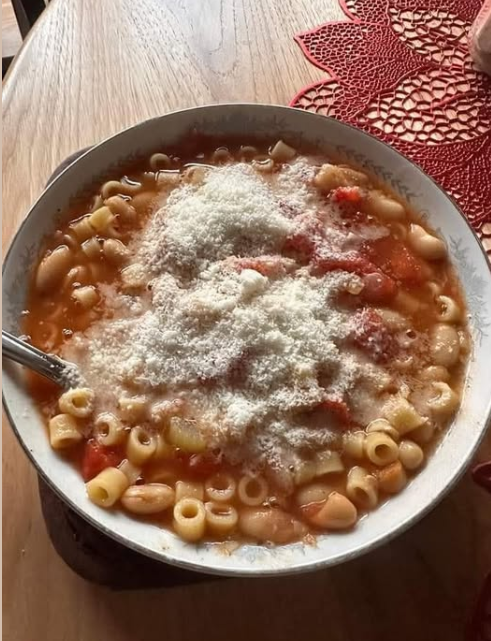
Add the dry pasta directly into the pot. The “One-Pot” Advantage: Do not boil the pasta separately. By cooking the pasta in the bean liquid, the pasta absorbs the flavored broth into its core. Simultaneously, the starch shed by the pasta stays in the pot, resulting in a “Breakfast of Champions” thickness that can practically hold a spoon upright.
The Science: Why “Meatless” Works Better
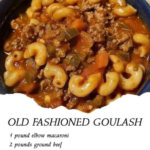
When you add meat (like in an American Goulash), the palate is dominated by animal fats and iron. In a meatless Pasta e Fagioli, the Bioavailability of Legume Nutrients is the star. The combination of beans and pasta creates a “Complete Protein” (containing all nine essential amino acids). Furthermore, the absence of heavy grease allows the volatile oils from the rosemary and sage to be more perceptible to the olfactory sensors, creating a “cleaner” savory experience.
Chef’s Tips for a “Championship” Result
-
The “Resting” Rule: This dish is exponentially better if it sits for 15 minutes after cooking. This allows the pasta to finish its Retrogradation, where the starches realign and thicken the sauce further.
-
The Finishing Oil: Since there is no meat fat, the quality of your finishing olive oil is paramount. Drizzle a high-quality “Extra Virgin” oil over the bowl just before serving. The “peppery” finish of the oil mimics the heat of black pepper and sausage.
-
The Rind Removal: Don’t forget to fish out the Parmesan rind before serving, though in some Italian households, finding the soft, chewy rind in your bowl is considered a sign of good luck!
Pasta e Fagioli vs. American Goulash
| Feature | Pasta e Fagioli (Traditional) | American Goulash |
| Protein Source | Cannellini/Borlotti Beans | Ground Beef |
| Thickening Agent | Mashed Beans & Pasta Starch | Tomato Sauce & Meat Fat |
| Flavor Profile | Earthy, Herby, Creamy | Sweet, Acidic, Savory |
| Consistency | Stew-like / “Pasta in Sauce” | Soupy Macaroni & Meat |
Conclusion: A Christmas Eve Morning Tradition
Meatless Pasta e Fagioli is a testament to the power of plant-based chemistry. By utilizing the starch of the bean and the umami of the Parmesan rind, you create a dish that is as hearty and satisfying as any meat-heavy meal. On this Christmas Eve 2025, as you stir this thick, aromatic pot, you’re serving a masterclass in Italian “Cucina Povera”—the art of making a feast out of the simple and the humble.
Frequently Asked Questions
Can I make this vegan?
Yes! Simply omit the Parmesan rind and add a tablespoon of nutritional yeast or a splash of soy sauce. The soy sauce provides the “fermented” umami hit that the cheese rind usually contributes.
What if the pasta absorbs all the liquid?
This is common! Simply add a splash of hot water or broth to “loosen” it back up. The dish should be thick, but still “movable.”
Can I use dry beans instead of canned?
Absolutely. You will need to soak them overnight and simmer them for 60–90 minutes before adding the pasta. The flavor will be even deeper, as the “bean liquor” (the cooking water) is the ultimate flavoring agent.