Step 1: Sugar Dissolution and Thermal Set
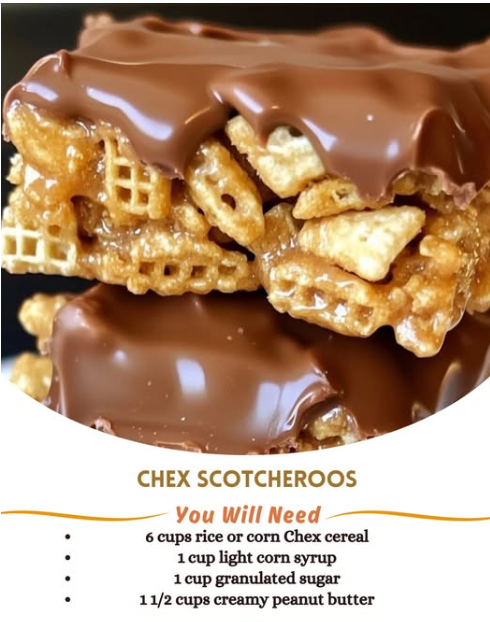
In a large saucepan, combine corn syrup and sugar. Heat over medium until it reaches a Simmer. The “Sucrose Inversion” Rule: Do not let the mixture reach a hard boil. If the temperature exceeds 112°C (234°F), the sugar will enter the Thread Stage, making your Scotcheroos too hard to bite.
Step 2: Lipid Integration (The Emulsion)
Remove from heat and stir in the 1.5 cups of peanut butter. The “Viscosity Modification” Science: The residual heat from the syrup lowers the peanut butter’s viscosity, allowing it to blend into a Smooth Colloidal Suspension.
Step 3: Mechanical Coating
Pour the mixture over the Chex cereal and fold gently. The “Surface Tension” Factor: Use a large spatula to ensure every “grid” of the Chex is coated. This creates a Surface-to-Surface Bond that prevents the bars from crumbling.
Step 4: Layering the Lipid Seal
Melt the chocolate chips and spread over the pressed cereal. The “Latent Heat” Secret: If you spread the chocolate while the base is still warm, the two layers will Inter-diffuse slightly, preventing the chocolate from “peeling off” once set.
Step 5: Crystallization (The Chill)
Allow the bars to set at room temperature or in the fridge. The “Lipid Solidification” Physics: As the temperature drops, the saturated fats in the chocolate and peanut butter realign into a solid lattice, locking the structure in place.
[Image showing the process of fat crystallization and solidification]
Service and Storage Tips
Service: Slice into squares once the chocolate is no longer “tacky.” The “Fracture Point” Rule: For the cleanest edges, use a warm knife to cut through the chocolate layer without cracking it.
Storage: Store in an airtight container for up to 5 days. The “Hygroscopic” Warning: Cereal treats will absorb moisture from the air. If left uncovered, the Chex will lose its Structural Crispness and become soggy via Atmospheric Hydration.
Variants: Flavor Iterations
| Variation | The Adjustment | The Result |
|---|---|---|
| Butterscotch Classic | Use 1 cup chocolate chips and 1 cup butterscotch chips. | Nostalgic, buttery, and higher-aromatic profile. |
| Dark Sea Salt | Use dark chocolate chips and top with flaky sea salt. | Sophisticated, bitter-sweet, and high-contrast. |
| Crunchy Texture | Use “Extra Crunchy” peanut butter in the base. | High textural contrast and mechanical fracture force. |
Tips: Pro-Level “Scotcheroo” Nuances
- The “Gentle Press” Rule: When putting the cereal in the pan, do not pack it down too tightly. Structural Voids are necessary for a light, chewy mouthfeel; packing it too hard creates a “dense brick.”
- Microwave Chocolate: Melt chocolate in 30-second intervals. The “Burning” Point: Chocolate can easily scorch (seize) if it exceeds 50°C (122°F), turning the smooth lipids into a gritty, dry mass.
- Corn Syrup Alternative: You can use honey or brown rice syrup, but be aware that they have different Fructose-to-Glucose Ratios, which may result in a softer or stickier set.
Conclusion: A Triumph of Texture
Chex Scotcheroos are a masterpiece of Mechanical Layering. By balancing the rigid, grid-like cereal with a soft, lipid-rich binder and a crisp chocolate seal, you create a treat that engages multiple sensory receptors simultaneously. On this December 26, 2025, enjoy the perfectly executed results of sugar-lipid engineering. Happy snacking!
Frequently Asked Questions
- Why are my Scotcheroos rock hard?
- This is a Thermal Overrun. The sugar and corn syrup were boiled for too long, causing the mixture to enter a higher “hard-crack” sugar stage.
- Can I use a different cereal?
- Yes, but Surface Area matters. Puffed rice has less “grip” than the grid-like structure of Chex, so your binder-to-cereal ratio may need adjusting.
- Why is my chocolate turning white (blooming)?
- This is Lipid Migration. If the chocolate is cooled too quickly or stored in a humid environment, the cocoa butter crystals separate and move to the surface. It is still safe to eat!
Would you like me to suggest a “Peanut Butter Drizzle” recipe to top these off, or perhaps show you how to turn these into “Scotcheroo Truffles”?