ADVERTISEMENT
I. The Core Savory Base:
- **Sausages:** (Spicy Italian, mild chicken, or vegetarian sausage)
- **Broth:** Good quality chicken or vegetable broth
- **Fat:** Olive oil or reserved sausage fat (Assumed)
II. The Hearty Components:
- **Pasta:** Short pasta shape (penne, rotini, cavatappi)
- **Vegetables:** Onions, carrots, and celery (Mirepoix blend)
III. The Cream and Seasoning:
- **Cream:** Heavy cream or dairy-free alternative (coconut cream, oat cream)
- **Herbs and Seasonings:** Thyme and oregano (Assumed quantity, e.g., 1 tsp each), salt and pepper
Instructions: Sear, Simmer, and Stabilize
Phase 1: Searing and Deglazing (Flavor Extraction)
- **Sear Sausage (FOND CREATION):** In a large pot or Dutch oven, cook the **sausages** over medium-high heat until deeply browned. Break up the sausage as it cooks. Remove the sausage with a slotted spoon and set aside. **Leave 1–2 tablespoons of rendered fat** in the pot for the next step, draining the rest.
- **Sauté and Deglaze:** Reduce heat to medium. Add the **onions, carrots, and celery** to the pot. Sauté for 5–7 minutes until softened, **scraping the brown fond** (caramelized bits) from the bottom of the pot with a wooden spoon as the vegetables cook. This process is called deglazing. Add the **herbs (thyme, oregano)** and seasonings.
Phase 2: Cooking the Pasta (Timing Trap)
- **Simmer Broth:** Pour in the **broth** (chicken or vegetable) and bring the mixture to a strong simmer. Reduce the heat slightly to maintain a gentle simmer.
- **Add Pasta (TIMING ALERT):** Add the **pasta** (penne or rotini). Stir well to prevent sticking. Continue to simmer, stirring occasionally, until the pasta is **al dente** (check package directions, usually 8–10 minutes).
- **Monitor Texture:** If the pasta is cooked and the soup is ready to be served immediately, proceed to the next step. If you anticipate leftovers, cook the pasta for **1–2 minutes less** than al dente to allow for carry-over cooking and future reheating.
Phase 3: The Cream Finish (Stabilization Protocol)
- **Add Sausage and Heat Through:** Return the **cooked sausages** to the pot. Allow the soup to return to a gentle simmer for 2 minutes to heat the sausage.
- **Add Cream (CRITICAL STEP):** Turn the heat **OFF** or reduce it to the **absolute lowest setting**. Stir in the **heavy cream or dairy-free alternative**.
- **Avoid Boiling:** Stir the soup for 1–2 minutes, allowing the cream to warm through. **DO NOT** let the soup return to a hard boil once the cream is added, as this risks curdling.
- **Season and Serve:** Adjust the seasoning (salt and pepper) as needed. Serve the soup hot, garnished with fresh herbs (e.g., fresh parsley or chives).
Expert Tips for Success: Perfecting the Soup
Use Lukewarm Cream: Before adding the cream (Step 7), let it sit on the counter for 10 minutes or gently warm it. Adding cold cream to a hot soup increases the risk of curdling due to temperature shock. Ensure the soup is off the direct heat.
The Starch Factor: The starch released by the pasta during cooking naturally helps to thicken the soup (Step 4). If the soup becomes too thick for your liking, simply stir in an extra splash of **broth or water** at the end.
The Best Sausage: Use a high-quality sausage for maximum flavor. **Spicy Italian sausage** provides the best depth and seasoning, often eliminating the need for extra red pepper flakes.
Storage Strategy: If you know you will have leftovers, store the cooked pasta **separately** (Step 5). Reheat the broth and add freshly cooked pasta or the stored pasta just before serving to maintain the perfect texture and consistency.
The Vegetable Cut: Dice the onions, carrots, and celery (mirepoix) into **uniform, small pieces** (less than $\frac{1}{2}$-inch) so they soften at the same rate and fit neatly onto a spoon.
Variations: Customizing Texture and Flavor
This soup base is highly adaptable to various flavor profiles:
- **Smoky Heat:** Add **$\frac{1}{2}$ teaspoon of smoked paprika** and a pinch of red pepper flakes with the other herbs in Step 2.
- **Added Greens:** Stir in 2 cups of **fresh, chopped spinach or kale** during the last 5 minutes of simmering (Step 4) for added nutrition.
- **Tomato Richness:** Add **$\frac{1}{4}$ cup of tomato paste** (sautéed for 1 minute before adding the broth) for a richer, more complex color and flavor base.
- **Cheesy Finish:** Stir in $\frac{1}{2}$ cup of freshly grated **Parmesan cheese** with the cream (Step 7). Be sure the heat is completely off, as Parmesan is prone to clumping or separating.
- **Potato Thickener:** Add 1 cup of **diced Yukon gold potatoes** with the broth (Step 3). As they cook, their starch will thicken the soup naturally, offering a heartier texture.
Conclusion: Depth in Every Bowl
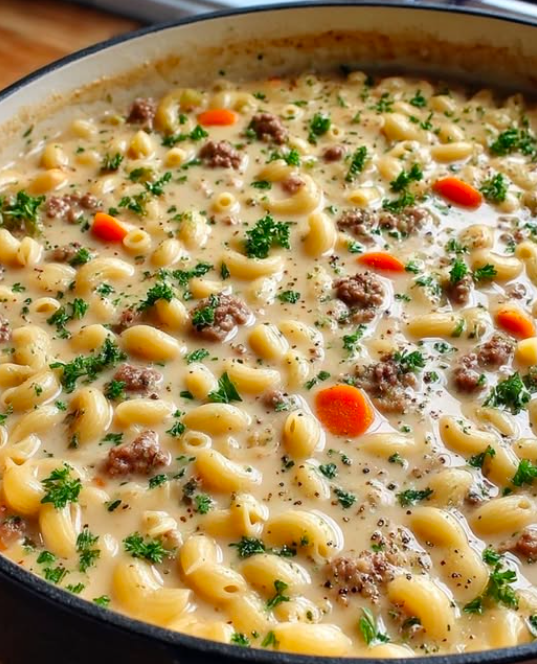
The **Winter Comfort Creamy Sausage Pasta Soup** is a triumph of careful technique, rewarding the cook with a deeply flavorful and luxuriously creamy dish. By maximizing flavor extraction through the sausage **sear and deglaze**, carefully managing the **pasta cooking time**, and strictly adhering to the **dairy stabilization protocol**, you ensure a soup that is perfectly seasoned, beautifully textured, and delivers on its promise of ultimate cold-weather comfort.
Frequently Asked Questions (FAQ)
Q: Why did my soup curdle or look grainy when I added the cream?
A: The heat was too high (Step 7). **Dairy proteins separate under high heat.** Ensure the heat is completely off or at the lowest setting, and the cream is close to room temperature when added.
Q: My soup is too thick after resting in the refrigerator. How do I fix it?
A: The pasta absorbed liquid (Step 5). When reheating, simply add **$\frac{1}{2}$ cup of extra broth or water** at a time until the desired consistency is achieved.
Q: Can I use vegetable broth instead of chicken broth?
A: Yes. However, **chicken broth** generally provides a richer, more traditional savory base. If using vegetable broth, consider adding a dash of soy sauce or mushroom powder for extra umami depth.
Q: Can I cook the pasta separately?
A: **Yes, highly recommended if making ahead.** Cook the pasta in separate water to al dente, drain, and stir into the soup right before serving (Step 4). This prevents the pasta from getting mushy or soaking up all the liquid.
ADVERTISEMENT