
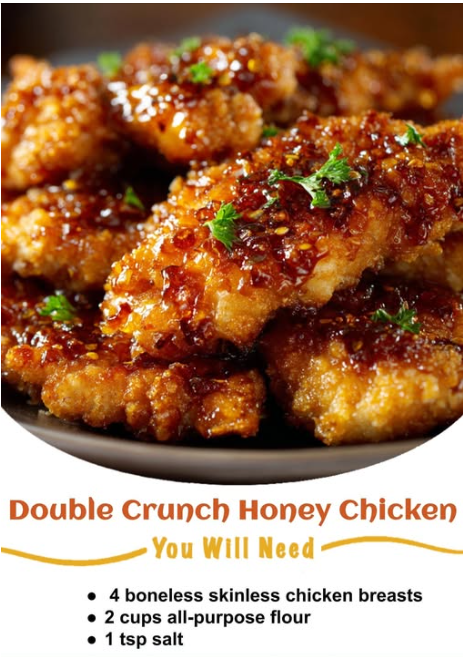
Step 1: The Flavor Priming (The Seasoning)
Dredge the chicken in the seasoned flour mix. The “Aromatic Distribution” Science: Ensure the ginger and nutmeg are perfectly sifted with the flour. These spices must be encapsulated in the starch so they don’t burn directly in the oil, which would result in a bitter “char” taste.
Step 2: The Double-Dredge Regulation
Dip the floured chicken into a liquid binder (usually egg or milk) and then back into the flour. The “Fractal Surface” Physics: This second coating creates a “jagged” texture. This increases the Surface-Area-to-Volume Ratio, providing more sites for the oil to induce the Maillard reaction.
Step 3: The Thermal Immersion (The Fry)
Fry in 350°F oil until golden. The “Dehydration” Rule: Frying is essentially a drying process. The high heat forces water out of the coating, replacing it with oil. When the water is gone, the starch becomes brittle—this is the “Crunch.”
Step 4: The Glaze Saturation
Simmer the honey and garlic until thick, then toss the chicken. The “Viscous Flow” Science: The glaze must be at the “Soft Ball” stage—thick enough to coat the spoon but fluid enough to seep into the nooks and crannies of the double-crunch coating without making it soggy.
Step 5: The “Set” Phase
Let the glazed chicken rest for 60 seconds. The “Adhesion” Secret: As the honey cools slightly, its Viscosity increases significantly, locking the garlic and spices onto the chicken’s surface like a delicious lacquer.
Serving and Storage: Managing the Crunch-Life
Serving: Garnish with sesame seeds or green onions to provide a Visual and Textural Contrast. Serve immediately. The “Internet-Breaking” quality of this dish relies on the Instant Sensory Impact of the hot, sticky, and loud-crunching layers.
Storage: This dish is the enemy of the microwave. If stored, the honey will draw moisture into the coating, causing it to go limp. To reheat, use an Air Fryer at 375°F for 3 minutes to “re-crystallize” the sugars and re-crisp the starch lattice.
Tips: Pro-Level “Double Crunch” Nuances
- The “Resting” Regulation: After the second dredge, let the chicken sit for 5 minutes before frying. This allows the flour to Hydrate and “bond” to the chicken, preventing the coating from falling off in the oil.
- Oil Temperature: Use a thermometer. If the oil is below 325°F, the chicken will absorb the fat and become “Grease-Logged.” If it’s above 375°F, the honey-based coating will burn before the chicken is safe to eat.
- Garlic Timing: Sauté the garlic in the glaze only until fragrant. Over-cooked garlic becomes acrid, which will ruin the delicate balance of the ginger and honey.
Holiday Variations: Seasonal Adaptations
| Variation | The Adjustment | The Vibe |
|---|---|---|
| Firecracker Christmas | Add 1 tbsp of Sriracha and a pinch of red pepper flakes to the glaze. | Spicy, bold, and warming. |
| Winter Orchard | Swap 1/4 cup of honey for apple cider reduction. | Tart, fruity, and festive. |
| The “Nutcracker” Crunch | Add finely crushed roasted peanuts to the final dredge. | Extra-crunchy, nutty, and savory. |
Tips: Preventing the “Soggy-After-Sauce” Fail
The biggest fail is chicken that goes soft 30 seconds after saucing. This is caused by Excess Sauce Hydration. To prevent this, ensure your glaze is highly concentrated (thick). A thin, watery sauce will penetrate the starch barrier immediately. A thick, syrupy glaze will sit on top of the crunch, maintaining the texture for the duration of the meal.
Conclusion: A Christmas Day Viral Sensation
The Double Crunch Honey Garlic Chicken is more than just a meal; it is a triumph of Textural Engineering. By balancing the science of starch dehydration with the chemistry of a high-sugar glaze, you create a dish that is as satisfying to hear as it is to taste. On this Christmas Day 2025, as you serve this burnished, sticky masterpiece, you are presenting a masterclass in modern indulgence. Enjoy the crunch!
Frequently Asked Questions
- Can I use chicken thighs?
- Yes, and they are arguably better! Thighs have a higher Intramuscular Fat content, which makes them more forgiving and “juicier” during the high-heat frying process.
- Why did my coating fall off?
- This is usually due to Surface Moisture. If the chicken was wet before the first dredge, a layer of steam forms between the meat and the flour, blowing the coating off. Always pat your chicken bone-dry before starting.
- Can I make this in an air fryer?
- Yes, but you must spray the chicken generously with oil. Without a Lipid Medium, the flour won’t undergo the necessary chemical changes to become “Crunchy”; it will stay “Dusty.”
Would you like me to suggest a “Creamy Coleslaw” recipe to balance the heat of the honey-garlic, or perhaps show you how to turn this into “Honey Garlic Chicken Sliders”?
Related posts:
 A Masterclass in Honey Butter Crispy Chicken
 Mastering Old-Fashioned Chicken Fried Steak
 Homemade KFC Chicken in the Oven: So Easy, So Tasty!
 Wok Excellence: Mastering the Sizzling Garlic Chicken Stir-Fry
 The Engineering of Slow-Cooked Chicken and Noodles
 Homestead Comfort: Mastering Chicken Tenders on Texas Toast
