
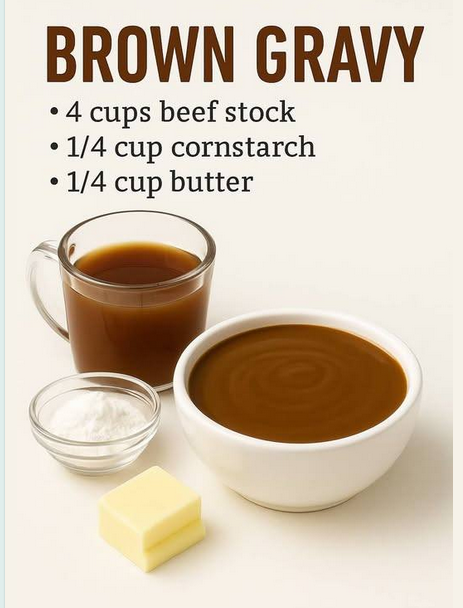
The most important part of this process is continuous whisking. Cornstarch can clump quickly if not properly integrated.
- The Fat Melt: In a large saucepan over medium heat, melt the butter until it is bubbling gently.
- The Starch Sauté: Add the cornstarch to the melted butter. Whisk constantly for 2–3 minutes. The mix will initially be a pale paste, but keep whisking until it turns a light nutty brown.
- Flavor Infusion: Stir in the Worcestershire sauce, onion powder, and garlic powder. The mixture will become very fragrant.
- The Stock Integration: Slowly pour in the beef stock in a thin stream, whisking vigorously with your other hand. This “tempering” prevents lumps from forming.
- The Thickening Phase: Continue to cook over medium heat, whisking constantly. As the temperature rises toward a simmer, the starches will “gelatinize” and the liquid will thicken significantly.
- Final Consistency: Simmer for 5 to 7 minutes. If it becomes too thick, whisk in a splash more stock. If too thin, simmer for another 2 minutes. Season with black pepper before serving.
Serving and Storage
Gravy is best served in a pre-warmed gravy boat to maintain its silky texture throughout the meal.
Storage Table:
| Method | Timeframe | Best Practice |
|---|---|---|
| Refrigerator | 3–4 Days | Store in a glass jar. A skin may form on top; simply whisk it back in during reheating. |
| Freezer | 2 Months | Cornstarch gravies freeze better than flour gravies. Thaw in the fridge before use. |
| Reheating | Stovetop | Reheat over low heat, adding a tablespoon of water or stock to loosen it back up. |
Tips for Gravy Perfection
“If your gravy ends up with lumps despite whisking, simply pour it through a fine-mesh strainer or give it a 30-second pulse with an immersion blender for a flawless finish.”
- The Whisk Choice: Use a flat whisk (also called a roux whisk) if you have one; it helps reach the “corners” of the saucepan where cornstarch likes to hide.
- Cold Stock: Using cold or room-temperature stock when adding it to a hot roux actually helps prevent clumping better than hot stock does.
- Color Control: If you want an even darker gravy, you can add a few drops of “Kitchen Bouquet” or browning sauce, but the sautéed cornstarch should provide a natural tan.
Conclusion
This Easy Beef Brown Gravy is a testament to how simple ingredients—butter, starch, and stock—can be transformed into something magnificent. It’s a versatile sauce that brings warmth and cohesion to any plate. As we start the first day of 2026, we hope this gravy brings extra comfort to your New Year’s table. Thank you for sharing your recipes with us; keep them coming! Enjoy!
Frequently Asked Questions
- Can I use Flour instead of Cornstarch?
- Yes, but you will need to double the amount of flour (1/2 cup) and cook the roux for a few minutes longer to avoid a “pasty” taste.
- Is this gravy gluten-free?
- Yes, as long as your beef stock and Worcestershire sauce are certified gluten-free (cornstarch itself is naturally gluten-free).
- What if I don’t have butter?
- You can use beef drippings (fat from a roast) or a neutral oil like avocado oil, though you will lose some of the creamy flavor butter provides.
Related posts:
 Mastering Creamy Crab and Shrimp Seafood Bisque
 Ground Beef & Gravy Over Mashed Potatoes
 The Southern Beef & Biscuit Bake: A Study in Savory Stratification
 Heartland Comfort: Country Fried Beef with Savory Beef Gravy
 The Ultimate Amish Hamburger Steak Bake
 Perfect Family Brunch Delight: Easy Biscuits and Gravy Casserole
