Step 1: Preparing the Peppers and Jar
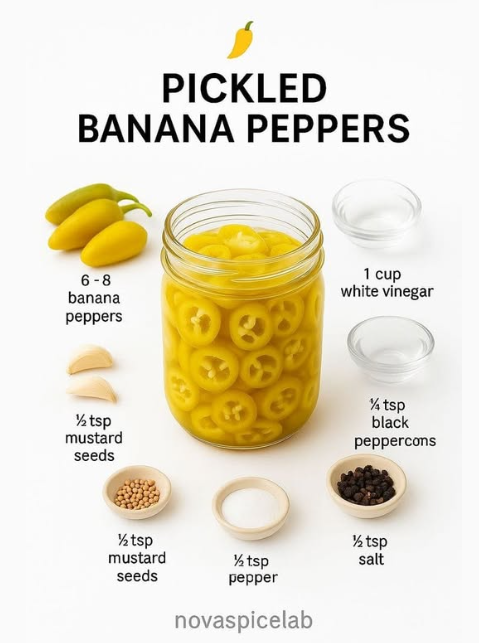
- **Prep Peppers:** Wash the banana peppers thoroughly. Remove the stems and slice the peppers into 1/4-inch rings. You can leave the seeds in for a bit more texture, or shake the rings in a colander to remove excess seeds.
- **Sterilize Jar:** Ensure your pint-sized mason jar is impeccably clean. While not strictly necessary for refrigerator pickles, a quick rinse in boiling water helps ensure no bacteria spoil your batch.
- **Pack:** Place the **smashed garlic, mustard seeds, and black peppercorns** at the bottom of the jar. Pack the **banana pepper rings** tightly on top, leaving about 1/2 inch of “headspace” at the top of the jar.
Step 2: Boiling the Brine
- **Combine:** In a small non-reactive saucepan (stainless steel or glass), combine the **white vinegar, water, sugar, and salt**.
- **Dissolve:** Bring the mixture to a rolling boil over medium-high heat, stirring occasionally to ensure the sugar and salt have completely dissolved.
Step 3: The Pour and Seal
- **Fill:** Carefully pour the hot brine over the peppers in the jar. Ensure the peppers are fully submerged. If they float, you can use a clean spoon to press them down.
- **De-bubble:** Run a thin plastic knife or chopstick along the inside edge of the jar to release any trapped air bubbles.
- **Seal:** Wipe the rim of the jar clean and screw on the lid until finger-tight.
Step 4: The Cooling Phase
- **Room Temp:** Let the jar sit on the counter until it reaches room temperature.
- **Cure:** Transfer the jar to the refrigerator. For the best results, wait at least 24–48 hours before eating. This allows the peppers to absorb the brine and the garlic flavor to mellow.
Serving and Storage: Keeping the Crunch
Serving Suggestions
Homemade pickled banana peppers are incredibly versatile. Try them on:
- **The “Ultimate” Sub:** Layer them on Italian deli meats with provolone.
- **Nachos and Tacos:** A milder alternative to jalapeños for those who want flavor without the burn.
- **Homemade Pizza:** Add them before baking for a smoky-sweet tang, or after baking for a cool crunch.
- **Greek Salads:** Pairs perfectly with feta cheese and kalamata olives.
Storage and Longevity
- **Refrigerator Life:** These peppers will stay crisp and delicious in the refrigerator for **3 to 4 months**.
- **Texture Over Time:** While they are safe to eat for months, they are at their peak texture within the first 4 weeks. Over time, the acid will gradually soften the cell walls of the peppers.
- **Safety Note:** This is a refrigerator recipe only. Do not store these in your pantry or at room temperature, as the brine has not been processed for long-term shelf storage.
Expert Tips: Troubleshooting and Clarity
Tip 1: The “Cloudy Brine” Mystery
If your brine looks cloudy after a few days, don’t panic. This is usually caused by using table salt with anti-caking agents or using hard water with high mineral content. As long as the peppers smell fresh and the jar was refrigerated, they are safe to eat. To prevent this, always use **distilled water** and **Kosher or Pickling salt**.
Tip 2: Keeping Peppers Submerged
Vegetables that float above the brine are more likely to soften or develop off-flavors. If your peppers keep floating, you can use a small glass pickling weight or even a clean, folded piece of parchment paper tucked under the lid to keep the peppers pushed down into the liquid.
Tip 3: Non-Reactive Cookware
Always use a stainless steel, glass, or enamel-coated pot for boiling brine. Aluminum or copper pots can react with the high acidity of the vinegar, giving your peppers a metallic taste and potentially changing their color.
Variations: Customizing the Heat and Spice
| Variation | Modification | Flavor Result |
|---|---|---|
| **Spicy Banana Peppers** | Add 1/2 tsp red pepper flakes or a sliced Fresno chili. | Increases the heat from mild to medium-hot. |
| **Sweet Pickled Peppers** | Increase sugar to 1/2 cup. | A “Bread and Butter” style pepper, great for burgers. |
| **Dill Banana Peppers** | Add a sprig of fresh dill to the jar. | Mimics a traditional dill pickle profile; great for sandwiches. |
| **Turmeric Glow** | Add 1/4 tsp of ground turmeric to the brine. | Gives the peppers a bright, neon-yellow color like store-bought brands. |
Advanced Tips: Preparation and Efficiency
Tip 4: Slicing for Consistency
For the most professional look and even pickling, use a **mandoline slicer** set to 1/4 inch. This ensures every ring is identical, which means they will all reach the perfect “cure” at the exact same time.
Tip 5: Adjusting the Vinegar
While white vinegar is standard, you can swap half of it for **Apple Cider Vinegar**. This will give the peppers a fruitier, slightly more complex flavor and a darker amber color, which works particularly well for the “sweet” variation of this recipe.
Tip 6: Using the Leftover Brine
Don’t toss the brine once the peppers are gone! That liquid is “liquid gold.” Use it as a base for a vinaigrette, use it to marinate chicken, or splash it into a Bloody Mary for an extra layer of savory flavor.
Conclusion: A Pantry Essential in Minutes
Pickling your own banana peppers is a simple, rewarding task that pays dividends for months. By controlling the ingredients, you avoid the preservatives found in commercial jars and can adjust the sweetness and spice to your exact preference. Once you taste the crisp, clean tang of these homemade rings, you’ll never go back to the supermarket shelf.
Happy pickling!
Frequently Asked Questions
Q: Are banana peppers hot?
A: Generally, no. Most banana peppers are mild, ranging from **0 to 500 Scoville Heat Units**. They are much milder than a jalapeño. However, “Hot Banana Peppers” (Wax Peppers) do exist, so always check the label when buying seeds or produce!
Q: Can I use this recipe for other vegetables?
A: Absolutely. This brine works perfectly for sliced cucumbers, red onions, or even green beans. The 1:1 ratio is a universal “refrigerator pickle” standard.
Q: Do I have to peel the peppers?
A: No. Banana pepper skins are very thin and become tender during the pickling process, so peeling is unnecessary.
Q: My garlic turned blue! Is it safe?
A: Yes! This is a common reaction between the enzymes in the garlic and the acid in the vinegar (or minerals in the water). It is perfectly safe to eat and does not affect the flavor of the peppers.