Step 1: The “Hollow-Out” Maneuver
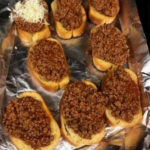
Slice the bread lengthwise and lightly compress or remove some of the soft interior. The “Volume Optimization” Science: Creating a “well” increases the Storage Capacity of the bread, ensuring the meat stays contained during the thermal set.
Step 2: Sauce Reduction (The Filling)
Brown the beef and vegetables, then simmer with sauces. The “Viscosity Management” Rule: You must simmer the sauce until it reaches a High-Viscosity state. If the sauce is too thin, you will suffer Interface Failure, where the liquid leaks through the bread crust.
Step 3: The Moisture Barrier (Pre-Toasting)
Lightly toast the bread under a broiler before adding meat. The “Hydrophobic Shield” Principle: Toasting creates a dehydrated, rigid surface on the bread’s interior, significantly slowing the rate of Liquid Diffusion from the sauce into the bread.
Step 4: Thermal Fusion (The Final Bake)
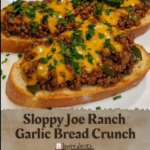
Fill the bread with the meat mixture, top with cheese, and bake at 375°F. The “Melting Point” Secret: The cheese must reach its Flow Point to encapsulate the meat, creating a protective protein-lipid cap that prevents the top of the meat from drying out.
Service and Storage Tips
Service: Slice into individual portions using a Serrated Blade. This prevents Mechanical Compression that would squeeze the filling out of the bread.
Storage: Best consumed immediately. The “Vapor Pressure” Warning: Storing leftovers results in Total Starch Hydration, turning the crisp crust soft. If reheating, use an air fryer to re-dehydrate the exterior.
Variants: Structural Iterations
| Variation | The Adjustment | The Result |
|---|---|---|
| Garlic Bread Base | Apply garlic butter to bread before pre-toasting. | Increased Lipid Barrier and aromatic intensity. |
| Spicy BBQ Joe | Swap tomato sauce for BBQ sauce and jalapeños. | Higher Sugar Caramelization and capsaicin heat. |
| Philly Style | Use Provolone cheese and sautéed mushrooms. | Increased Umami Concentration and smoother melt. |
Tips: Pro-Level “Sloppy” Nuances
- The “Cheese Barrier” Secret: For maximum crunch, place a thin layer of cheese on the bread *before* the meat. This creates an Impermeable Lipid Layer that completely blocks the sauce from touching the bread.
- Bread Density: Avoid very soft “supermarket” French bread. Seek out a loaf with a Rigid Exterior to ensure the sandwich doesn’t collapse under the weight of the filling.
- The “Lean” Ratio: Use 90/10 ground beef. Higher fat content will lead to Lipid Pooling at the bottom of the bread “well,” which can make the base greasy.
Conclusion: A Triumph of Crunchy Confinement
French Bread Sloppy Joes are a masterpiece of Mechanical Contrast. By confining a fluid, savory filling within a rigid starch vessel, you create a lunch experience that is technically superior to the traditional bun. On this December 27, 2025, enjoy the perfectly executed results of bread-based engineering. Happy eating!
Frequently Asked Questions
- Why did my bread get soggy so fast?
- This is a Moisture Gradient issue. You likely didn’t simmer the meat sauce long enough to reduce the free water, or you skipped the pre-toasting phase.
- Can I make these in advance?
- You can prepare the Meat Matrix in advance, but do not assemble the sandwiches until you are ready to bake. Assembly-to-consumption time should be minimized.
- How do I keep the filling from falling out?
- This is achieved through Cheese Stabilization. Use more cheese on top to act as a “lid,” and ensure the meat is finely crumbled rather than in large chunks.
Would you like me to suggest a “Creamy Coleslaw” to serve as a side, or perhaps show you how to turn this into “Sloppy Joe Bread Bowls”?