
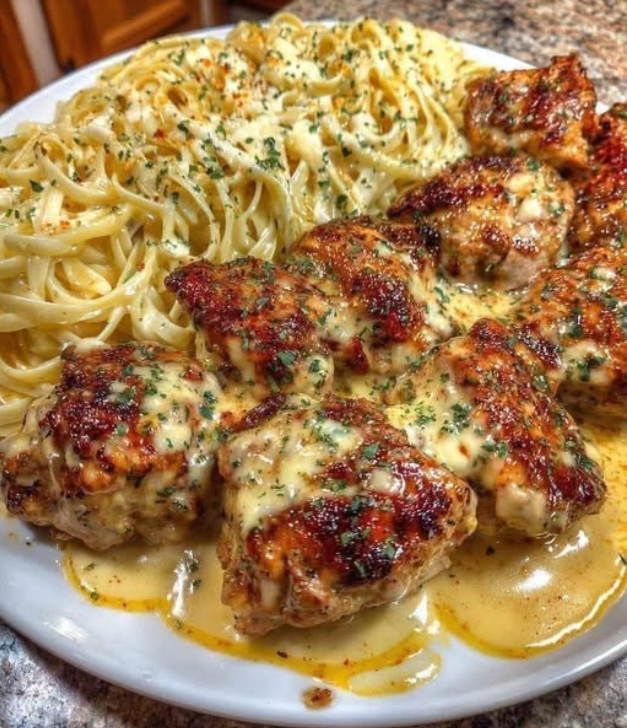
This dish relies on high-quality fat and dairy to create its signature richness and depth of flavour.
Garlic Butter Chicken (The Heart)
- **1 pound Boneless, Skinless Chicken Breasts:** Cut into uniform bite-sized pieces (about 1 inch) to ensure even cooking and faster searing.
- **2 tablespoons Olive Oil:** Used for the initial sear, adding a mild, fruity flavor to the base.
- **Salt and Black Pepper, to taste:** Generous seasoning is critical before cooking, as the sauce will absorb some of the flavor.
- **1 teaspoon Italian Seasoning:** A blend of dried herbs (oregano, basil, thyme, rosemary) that builds the aromatic foundation.
- **2 tablespoons Unsalted Butter:** Added later in the cooking process to create the luscious garlic butter sauce that coats the chicken.
- **4 cloves Garlic, Minced:** The key aromatic. Use fresh garlic for maximum flavor impact.
Alfredo Sauce & Linguine (The Vehicle)
- **1 pound Linguine Pasta:** The flat, ribbon shape of linguine is ideal for holding the thick, creamy sauce.
- **2 cups Heavy Cream (Whipping Cream):** The essential fat component of Alfredo. Full-fat cream is non-negotiable for a thick, stable emulsion.
- **1/2 cup Chicken Broth or Stock:** Used to balance the richness and provide a liquid medium for the garlic butter pan sauce.
- **1 cup Freshly Grated Parmigiano-Reggiano Cheese:** The second essential component. Use authentic, freshly grated cheese; pre-grated varieties contain anti-caking agents that can make the sauce grainy.
- **2 tablespoons Cream Cheese (optional but highly recommended):** Added for extra stability and thickness, lending a luxurious, velvety texture.
- **1/4 teaspoon Nutmeg (optional):** A classic Italian secret—a tiny pinch enhances the dairy flavor without tasting overtly spicy.
- **1/4 cup Fresh Parsley, Chopped:** Added at the end for color, freshness, and a gentle herbal finish.
🍫 Instructions: Searing, Sauce, and Synthesis
Timing and controlled heat are essential to prevent the cream from splitting and the chicken from drying out.
Stage 1: Sear the Chicken
- **Season:** Toss the bite-sized chicken pieces with salt, pepper, and Italian seasoning.
- **Sear:** Heat the olive oil in a large, deep skillet or Dutch oven over medium-high heat. Add the chicken in a single layer (work in batches if necessary to avoid crowding, which steams the chicken instead of searing). Cook for 3-4 minutes per side until deeply golden brown and cooked through. Remove the chicken and set aside, leaving the browned bits (fond) in the pan.
Stage 2: Build the Garlic Butter Base
- **Garlic Butter:** Reduce the heat to medium-low. Add the 2 tablespoons of unsalted butter to the same pan. Once melted, add the minced garlic and sauté for 1 minute until fragrant. **Do not burn the garlic**, as this will make the sauce bitter.
- **Deglaze:** Pour in the 1/2 cup of chicken broth. Scrape up the browned bits (fond) from the bottom of the pan with a wooden spoon—this is crucial for flavor depth.
Stage 3: Prepare the Sauce and Pasta
- **Cook Pasta:** While the sauce is beginning, cook the linguine in salted boiling water according to package directions until **al dente** (slightly undercooked). Reserve 1 cup of the starchy pasta water before draining.
- **Sauce Base:** Pour the heavy cream into the skillet and bring to a gentle simmer. Reduce heat to low. Add the 2 tablespoons of cream cheese (if using) and whisk until completely melted and smooth. Season with a small pinch of nutmeg, salt, and pepper.
- **Emulsify with Cheese:** Remove the skillet from the heat source. Gradually stir in the freshly grated Parmigiano-Reggiano cheese, a handful at a time, stirring until fully melted and incorporated. **Removing the pan from the heat is vital**; high heat causes the cheese proteins to seize and separate, leading to a grainy or oily sauce.
Stage 4: Finish and Serve
- **Combine:** Return the cooked chicken to the sauce. Add the drained, al dente linguine to the skillet. Toss continuously.
- **Adjust Consistency:** If the sauce is too thick, add reserved pasta water, 1 tablespoon at a time, until the sauce perfectly coats the pasta.
- **Finish:** Stir in the fresh chopped parsley. Serve immediately, topped with an extra dusting of Parmesan cheese.
🌌 Serving and Storage: Reheating and Texture Maintenance
Serving promptly ensures the creamiest texture, but this dish can be managed for storage with careful technique.
Optimal Serving
This dish is best served immediately after the pasta is tossed with the sauce. Because the sauce is a fragile emulsion of fat and cheese, it thickens rapidly as it cools. Serve in warm bowls to maximize the time the sauce stays fluid and creamy. Garnish with a fresh sprig of parsley and a light drizzle of high-quality olive oil if desired.
Storage Challenges and Solutions
**Storage:** Store leftovers in an airtight container in the refrigerator for up to 3 days. Be aware that the sauce will become very thick, almost solid, due to the high fat content and the starch from the pasta.
**Reheating:** Do not microwave; this will likely cause the sauce to separate (split) and become oily or grainy. Reheat leftovers gently in a saucepan over **low heat**, adding a splash (1-2 tablespoons) of **milk or cream** to help re-emulsify the sauce and restore its creamy texture. Stir constantly until heated through.
💥 Tips: Achieving the Velvetiest Alfredo Sauce
These tips focus on the chemistry behind the sauce to guarantee a flawless, stable emulsion.
The Golden Rule of Parmesan
Always use **freshly grated Parmigiano-Reggiano** and ensure it is added **off the heat**. Pre-grated cheese contains cellulose (anti-caking agent) that inhibits proper melting and creates a grainy texture. Additionally, adding cheese to a high-heat liquid causes the milk proteins to shrink and separate the fat, resulting in an oily, broken sauce. By removing the pan from the heat, you allow the cheese to melt slowly into the warm cream, creating a stable, silky emulsion.
The Magic of Starchy Pasta Water
The reserved pasta water is your best friend. As pasta cooks, it releases starch into the water, turning it cloudy. Adding a small amount of this water at the end acts as a natural emulsifier and binder. The starch molecules help the oil and water components of the sauce (butter/cream and broth) stay blended, contributing to a rich, glossy finish that perfectly coats the linguine.
The Importance of Fat Content
Do not attempt to use half-and-half, milk, or low-fat cream in this recipe. Authentic Alfredo sauce requires the high fat content of **heavy cream** to create a stable, decadent emulsion. Lower fat dairy will result in a much thinner sauce that is far more prone to breaking or separating.
🌿 Variations: Flavour and Protein Twists
The basic Alfredo base is highly adaptable to different proteins and flavour additions.
Shrimp Scampi Alfredo
Substitute the chicken with **1 pound of peeled and deveined shrimp**. Cook the shrimp in the garlic butter base for only 2-3 minutes per side until pink and curled, then remove before building the sauce. Add 1/2 teaspoon of **red pepper flakes** to the garlic butter for a touch of heat.
Mushroom and Spinach Alfredo (Vegetarian Option)
Omit the chicken. Sauté **1 pound of sliced cremini mushrooms** and 2 cups of fresh spinach in the pan until the liquid has evaporated and the mushrooms are browned. Proceed with the sauce base. The meaty texture of the mushrooms is an excellent substitute for the chicken.
Baked Alfredo Casserole
After completing the final step (combining chicken, pasta, and sauce), transfer the mixture to a baking dish. Top with a layer of **shredded mozzarella cheese** and bake at 375°F (190°C) for 15 minutes, or until the cheese is melted and bubbly. This provides a crisp, browned crust.
🔥 Tips: Searing and Seasoning Mastery
Final advice for elevating the overall flavor and ensuring the pasta is seasoned from the inside out.
The Chicken Sear (Developing Fond)
The **fond**—the browned bits left at the bottom of the pan after searing the chicken—is concentrated flavour. Do not wash or scrape it out. When you add the broth (Stage 2), make sure to scrape up these bits thoroughly; they dissolve into the liquid and become the deep, savory base that differentiates this homemade sauce from a bland alternative.
Seasoning in Layers
Do not rely solely on the salt and pepper in the chicken. **Season the cooking water** for the linguine (it should taste like the sea), **season the chicken generously** before cooking, and **season the sauce base** (with salt, pepper, and nutmeg) before adding the cheese. Seasoning at every stage ensures a complex, integrated flavor profile.
Using Other Pastas
While linguine is recommended, the thickness of this sauce works beautifully with other shaped pastas like **fettuccine, tagliatelle, or even penne**. The key is to choose a shape with a large surface area or ridges that can effectively carry the rich Alfredo coating.
🍳 Conclusion: Comfort, Perfectly Executed
The **Creamy Garlic Butter Chicken & Linguine in Alfredo Sauce** is a masterpiece of applied kitchen chemistry and controlled heat. By adhering to the critical steps—the high-heat sear for the chicken, the low-heat, off-the-stove incorporation of the cheese, and the final synthesis using starchy pasta water—you have successfully navigated the complexities of dairy emulsion and flavor layering.
The result is a dish that is deeply aromatic, thanks to the garlic butter base, and flawlessly textured, defined by the velvety, clinging Alfredo sauce. This preparation ensures maximum flavour absorption and avoids the grainy pitfalls of improperly made cream sauces. You have mastered a timeless comfort food, executed with restaurant-quality precision.
❓ Frequently Asked Questions
Q1: Why did my Alfredo sauce become grainy or oily?
A: The sauce broke. This happens when the **cheese is added over high heat**, causing the proteins to seize, or if **pre-grated cheese** was used (due to anti-caking agents). Always remove the pan from the heat when stirring in the Parmesan.
Q2: Can I use chicken thighs instead of breasts?
A: Yes, and many chefs prefer them. Thighs have more fat and stay juicier. Cut them into similar bite-sized pieces and increase the searing time by 1-2 minutes until they are cooked through (internal temperature of $165^\circ\text{F}$ or $74^\circ\text{C}$).
Q3: What if my sauce is too thin?
A: Return the skillet to low heat and let it simmer very gently for 2-3 minutes to encourage reduction. Alternatively, add a slurry of **1 teaspoon of cornstarch mixed with 1 tablespoon of cold water**; add to the simmering sauce and stir for 30 seconds until thickened.
Q4: Why do I need to reserve the pasta water?
A: The starchy water is crucial for two reasons: 1) It helps the heavy cream and cheese blend into a stable, glossy emulsion, and 2) It provides a small amount of liquid to adjust the sauce’s final thickness, ensuring it coats the pasta perfectly.
Related posts:
 The Definitive Guide to Garlic Parmesan Alfredo Pizza
 Slow Cooker Decadence: Mastering Creamy Chicken Alfredo Tortellini
 Million Dollar Indulgence: Chicken Alfredo Stuffed Shells
 Weeknight Comfort: The Ultimate Chicken Alfredo Tortellini Casserole
 Mastering Chicken Pot Pie–Style Creamy Pasta
 A Decadent Seafood Masterpiece
