Phase 1: The Creaming Matrix
Begin by beating the butter and cream cheese together until fully unified. Gradually add the sugar. This stage is not about mixing; it is about mechanical aeration. You are looking for a “pale and fluffy” texture, which indicates that millions of microscopic air pockets have been carved into the fat by the sugar crystals.
Phase 2: Emulsification of Proteins
Add the eggs one at a time. Each egg must be fully incorporated before the next is added. This prevents the emulsion from “breaking.” If the mixture looks curdled, your eggs were likely too cold. The eggs provide the water-in-fat emulsion that will eventually expand in the oven’s heat.
Phase 3: Fold and Bake
Gently fold in your sifted dry ingredients followed by finely diced peaches. Regulatory Warning: Do not over-mix after adding the flour. Over-mixing develops gluten, which will turn your pound cake into a bread-like texture. Bake at 165°C (325°F) for 75–90 minutes. The lower temperature is required for the heat to reach the dense center without burning the exterior.
Serving and Storage: Post-Production Management
Pound cake is a “maturing” dessert. The flavor profile actually improves 24 hours after baking as the moisture from the peaches redistributes through the crumb. Serve in thin slices at room temperature to allow the butter-based fats to melt slightly on the palate.
| Storage Method | Duration | Optimal Condition |
|---|---|---|
| Room Temp | 2–3 Days | Airtight container, cool dark place. |
| Refrigerated | 1 Week | Wrap tightly in plastic to prevent odor absorption. |
| Frozen | 3 Months | Slice before freezing for easy portioning. |
Tips: The Professional’s Secrets
- The Flour Toss: Toss your diced peaches in 1 tablespoon of flour before adding them to the batter. This “coats” the fruit and prevents them from sinking to the bottom of the pan during the long bake.
- The Pan Prep: Use a heavy-duty Bundt pan. Grease with shortening rather than butter; the solids in butter can cause the cake to stick to the intricate designs of the pan.
Variations: Adapting for the 2026 Table
The flexibility of the cream cheese base allows for several “flavor deviations”:
- The Spiced Peach: Add 1/2 tsp of ground cardamom and 1/4 tsp of ginger. Cardamom has a floral heat that perfectly complements the lactones in peaches.
- The Almond Infusion: Swap the vanilla for almond extract. The nutty profile mimics the pits of stone fruits, creating a deeper “orchard” flavor.
- The Peach Melba: Swirl a raspberry purée into the batter before baking for a vibrant visual and tart contrast.
Tips: Troubleshooting the Sink
If your cake develops a “wet line” near the bottom or sinks in the center, it is often due to excess moisture from the peaches. Ensure your peaches are ripe but firm. If using frozen peaches, thaw them completely and pat them dry with a paper towel before dicing.
Conclusion: The Soul of the Stone Fruit
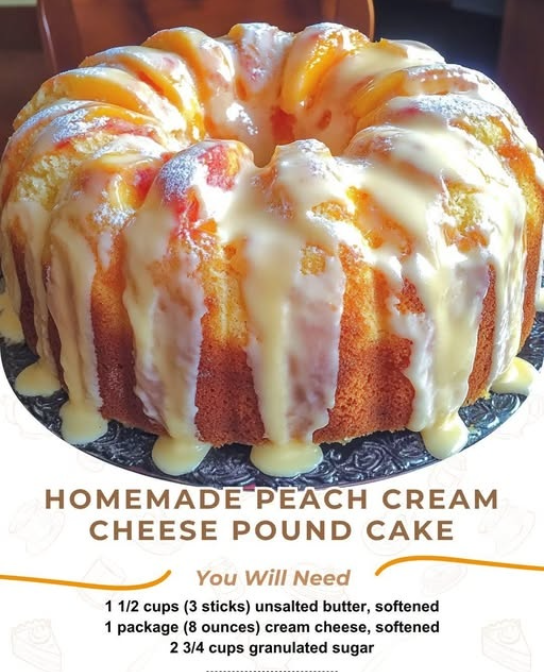
A Homemade Peach Cream Cheese Pound Cake is the ultimate celebration of summer’s bounty and the precision of baking science. By respecting the temperature of your lipids and the delicacy of your emulsification, you produce a cake that is both a visual masterpiece and a textural triumph. As the peaches caramelize against the rich, tangy cream cheese batter, you are left with a dessert that stands as a benchmark of Southern hospitality and modern culinary technique.
Frequently Asked Questions
A: Yes, but you must drain them thoroughly and rinse off the heavy syrup. Canned peaches are softer, so expect them to “bleed” more into the batter.
A: Over-baking is the usual culprit. Start checking the internal temperature at the 70-minute mark; it should reach approximately 98°C (208°F).
A: It is not recommended. The fat content in full-fat cream cheese is vital for the structural stability of the pound cake’s crumb.
Would you like me to create a “Glaze Guide” for the best peach-infused drizzles, or perhaps help you adjust the recipe for a high-altitude environment?