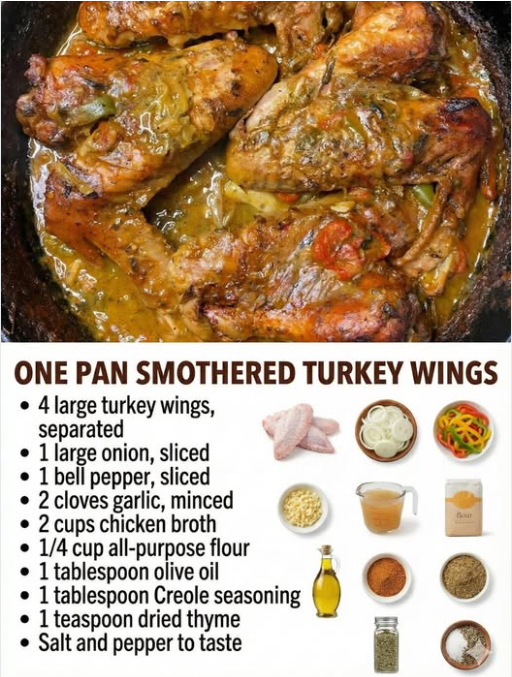
- Preparation: Pat the turkey wings completely dry with paper towels. Moisture is the enemy of a good sear. Season the wings generously with half of the Creole seasoning, salt, and pepper.
- The Dredge: Place the flour in a shallow dish. Lightly coat each wing in flour, shaking off any excess. This flour will eventually serve as the thickening agent for your gravy.
- The Sear: In a large heavy-bottomed skillet or Dutch oven, heat the olive oil over medium-high heat. Place the wings in the pan (do not overcrowd). Sear for 4–5 minutes per side until a deep golden-brown crust forms. Remove the wings and set aside.
- The Aromatics: In the same pan (keep those brown bits!), add the onion and bell pepper. Sauté for 5–6 minutes until softened. Add the garlic and dried thyme, cooking for only 60 seconds to avoid burning the garlic.
- The Liquid Build: Slowly pour in the chicken broth while using a wooden spoon to “deglaze” the pan—scraping up the flavorful brown bits (the fond) from the bottom.
- The Smother: Place the turkey wings back into the pan. The liquid should come about halfway up the sides of the wings.
- The Braise: Bring to a simmer, then reduce heat to low. Cover tightly. Cook for 1.5 to 2 hours. Check occasionally; if the liquid reduces too much, add a splash of water or more broth.
Serving and Storage
Serving: These wings are traditionally served over a bed of white rice, mashed potatoes, or buttery grits. The gravy is the star here—ensure every portion gets a generous ladle of the onion and pepper reduction. A side of collard greens or cornbread completes the Southern experience.
Storage: Smothered turkey wings are an elite leftovers candidate. Store in an airtight container for up to 4 days. As the dish sits, the spices in the Creole seasoning continue to infuse the meat. To reheat, simmer gently on the stove with a tablespoon of water to loosen the gravy; avoid the microwave to keep the meat from becoming rubbery.
Tips: Achieving the Perfect Gravy
The hallmark of a “smothered” dish is a gravy that is thick enough to coat a spoon but fluid enough to soak into rice. If your gravy is too thin after the wings are tender, remove the lid and simmer on medium heat for 10 minutes to reduce. If it’s too thick (the “paste” stage), whisk in a little warm broth until the desired consistency is reached. Remember: the flour used to dredge the wings is what does most of the heavy lifting here!
Variations: Making the Dish Your Own
- The Mushroom Forest: Add 8 oz of sliced cremini mushrooms during the aromatic sauté for a deeper, earthier umami profile.
- The Wine Braise: Replace 1/2 cup of the chicken broth with a dry white wine (like Sauvignon Blanc) to add a sophisticated acidity to the gravy.
- The Spicy Bayou: Double the Creole seasoning and add a diced jalapeño or a dash of cayenne pepper for a heat that lingers.
Tips: Why the Sear is Non-Negotiable
Beginners often want to skip the searing step and put everything in the pot at once. Do not do this. Searing the turkey wings creates the Maillard reaction, a chemical reaction between amino acids and reducing sugars that gives browned food its distinctive flavor. Without the sear, your turkey will taste “boiled” and your gravy will lack the characteristic deep brown color that makes the dish so appetizing.
Conclusion: A Beginner’s Masterpiece
Smothered Turkey Wings represent the best of one-pan cooking: efficiency, depth of flavor, and undeniable comfort. By following the browning and braising steps, you transform a relatively inexpensive cut of meat into a feast fit for a king. It is a dish that rewards patience and honors the tradition of slow, soulful cooking. Once you see the meat falling off the bone and taste that pepper-onion gravy, you’ll understand why this is a favorite for beginners and experts alike.
Would you like me to suggest a 10-minute side dish that pairs perfectly with these wings, or perhaps a guide on how to make your own Creole seasoning at home?
Frequently Asked Questions
- Can I use turkey drumsticks instead of wings?
- Yes! Drumsticks work beautifully with this method, though they may require an extra 20–30 minutes of braising time due to their density.
- Is the Creole seasoning too spicy for kids?
- Most commercial Creole seasonings are mild. If you’re worried about heat, use a “salt-free” version or simply substitute with a mix of paprika, garlic powder, and onion powder.
- How do I know the wings are done?
- When you lift a wing with a fork and the meat easily separates from the bone without resistance, they are perfect. Usually, the skin will start to pull back from the tips of the bones as well.