
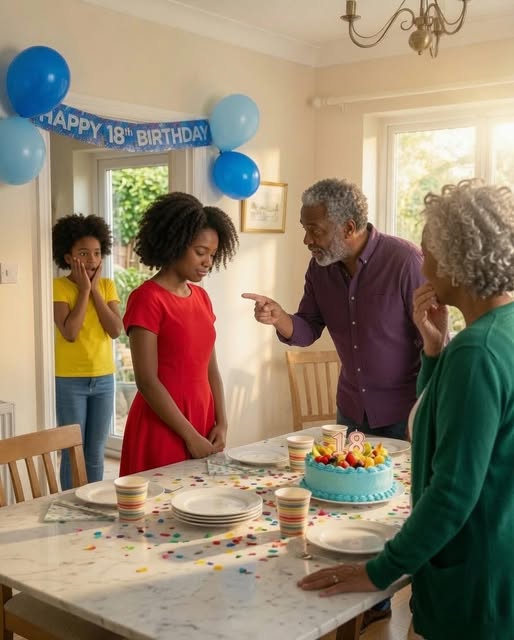
For months, she blamed me for everything. Then one winter evening, she called from my parents’ phone and cried so hard I could barely understand her. She said therapy had made her realize she had mistaken attention for love, and that she had hated me because I seemed strong enough to survive what she had been too afraid to face.
“I ruined your birthday,” she said.
“No,” I answered. “You threw a tantrum. They ruined my birthday when they chose it over me.”
She fell quiet, then whispered, “I’m sorry.”
I accepted the apology, but I did not hand her immediate closeness. I had learned that forgiveness was not the same thing as opening the door again.
On my nineteenth birthday, I invited my parents and Brielle to lunch at a small restaurant near campus. Not because everything had been repaired, but because I wanted to meet them as the person I had become without begging them to love me.
My mother brought no excuses. My father brought no speeches. Brielle brought a small wrapped box.
Inside was a silver keychain shaped like a house.
“I know it doesn’t fix anything,” she said. “But I thought… maybe home should mean where you feel safe.”
Related posts:
 Last night, I heard my husband giving my PIN to his mother while I was asleep: ‘Take it all out, there’s over a hundred and twenty thousand dollars on it.’ I just smiled and went back to sleep. Forty minutes later, his phone buzzed with a text from his mom: “Son, she knew everything. Something’s happening to me…” Then the phone suddenly went dead. – usnews
 My sister thought my Navy uniform would ruin her royal wedding. So she erased me from the guest list, smiled for the cameras, and pretended I did not exist
 Amazing effects of bananas
 JAMAICAN FLOWER JELLY WITH CINNAMON AND CLOVES
 The Wife Who Booked the Room. He Realized Too Late
 My parents canceled my 18th birthday because my sister threw another tantrum. So I packed my life in silence, walked away, and let their “perfect family” collapse without me…
