
I looked at her for a long time.
Then I said, “Take off the robe.”
She did not move.
I walked past them, opened the front door, and stepped onto the porch.
Across the street, Mrs. Romero was watering her roses. She looked up and waved. I waved back.
Then I called my attorney.
His name was Samuel Whitaker. He had handled Helen’s estate after she died. He was eighty-one, sharper than broken glass, and had known me long enough not to waste time with polite pretending.
“Walter,” he said when he answered. “It’s early.”
“I need to remove unauthorized occupants from my home. I also need to report attempted financial exploitation, identity theft, and forgery.”
There was a pause.
When he spoke again, his voice had changed.
“Are you safe?”
I looked back through the open door.
Brian stood in the kitchen, staring at me like a child caught stealing.
Melissa was already on her phone.
“For now,” I said.
“I’ll be there in thirty minutes. Call the police non-emergency line. Do not argue with them alone.”
“I have evidence.”
“I assumed you would.”
That almost made me smile.
After I hung up, I called the police.
Then my bank.
Then my niece Rachel.
Rachel was Helen’s brother’s daughter. She was forty-eight, a nurse, and one of the only people who still visited me without needing money, favors, or a place to stay. Brian hated her because she saw through him.
She answered on the second ring.
“Uncle Walter?”
“I need you.”
She heard something in my voice and asked no unnecessary questions.
“I’m on my way.”
Inside the house, shouting began.
Melissa was yelling at Brian.
“You said he never checked anything.”
“I didn’t think he would.”
“He was an accountant, you idiot.”
I stood on the porch and listened.
For the first time, their masks slipped when they thought I could not hear.
By ten o’clock, my home had more witnesses than my birthday dinner.
Two police officers stood in the foyer. Samuel sat at the dining room table with his leather briefcase open. Rachel stood beside me with one hand on my shoulder, furious in the controlled way only nurses and mothers can be furious.
Melissa had finally removed Helen’s robe after Rachel looked at her and said, “Take it off before I take it off for you.”
Brian paced beside the fireplace.
“This is insane,” he said. “He’s my father. This is a family matter.”
Samuel did not look up from his papers.
“Forgery is not a family matter.”
Melissa sat on the sofa, legs crossed, trying to look calm.
“You’re making assumptions from documents you don’t understand.”
Samuel glanced at her over his glasses.
“Ms. Parker, I have practiced elder law for fifty years. I understand them perfectly.”
One officer asked me to explain what had happened.
So I did.
Not emotionally.
Not dramatically.
Like a ledger.
I explained who lived in the house. Who paid for what. What happened at dinner. Which cards I canceled. What documents I found.
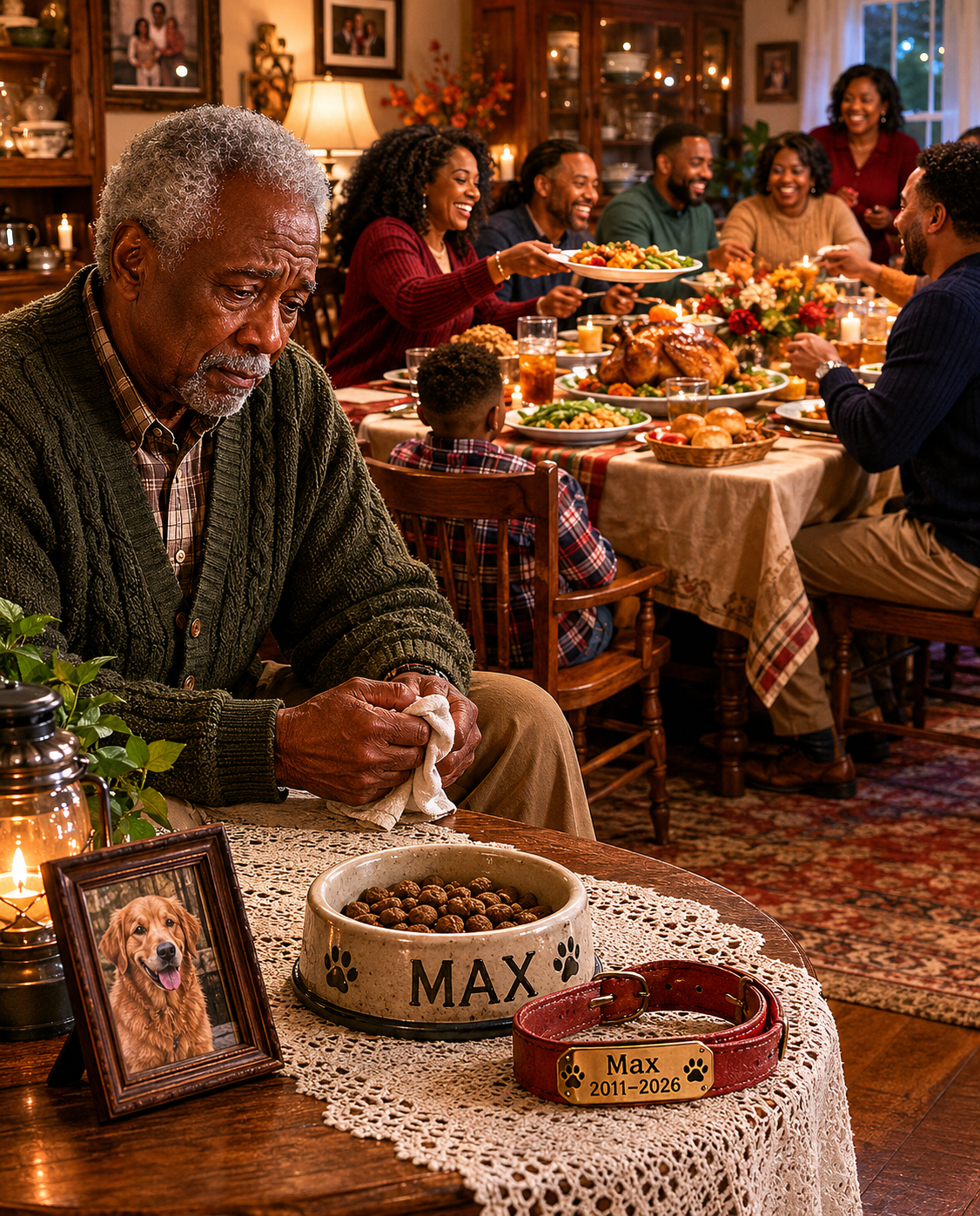
When I mentioned the dog food, one officer looked at Brian with open disgust before catching himself.
Brian saw it.
His face reddened.
“It was a joke,” he snapped.
Rachel turned on him.
“Would you have laughed if your mother were alive?”
That shut him up.
For one brief second, I saw the boy he used to be. The boy who cried when Max died. The boy Helen rocked through fevers. The boy who once made me a Father’s Day card in crooked letters that said, “Dad, you are my hero.”
Then he looked away, and the man he had become returned.
Melissa tried again.
“Mr. Bennett gets confused. Last month he accused me of stealing from his wallet.”
“Because you did,” I said.
She smiled sadly at the officers. “See?”
Samuel slid a printed bank statement across the table.
