
My voice stayed calm.
But Melissa looked away.
Not from guilt.
From defeat.
People like her hate when objects become sacred. Sacred things are harder to steal.
The officers took statements. Samuel filed emergency paperwork. Rachel packed Melissa’s things into trash bags because, as she said, “Suitcases are for guests, not parasites.”
Melissa screamed when she saw them.
Brian did not stop her.
By evening, they were gone.
Not permanently, legally. That took notices, filings, locks changed properly, accounts protected, and Samuel’s careful process.
But physically, they walked out.
Melissa left first, dragging two designer suitcases I had unknowingly paid for. She paused at the driveway and looked back.
“You’ll die alone in this museum,” she said.
“Maybe,” I answered. “But I’ll die in my own home.”
Brian stood near the porch steps with a duffel bag.
He looked smaller than he had that morning.
“Dad,” he said.
I waited.
“I’m sorry.”
I wanted those words to repair something.
They did not.
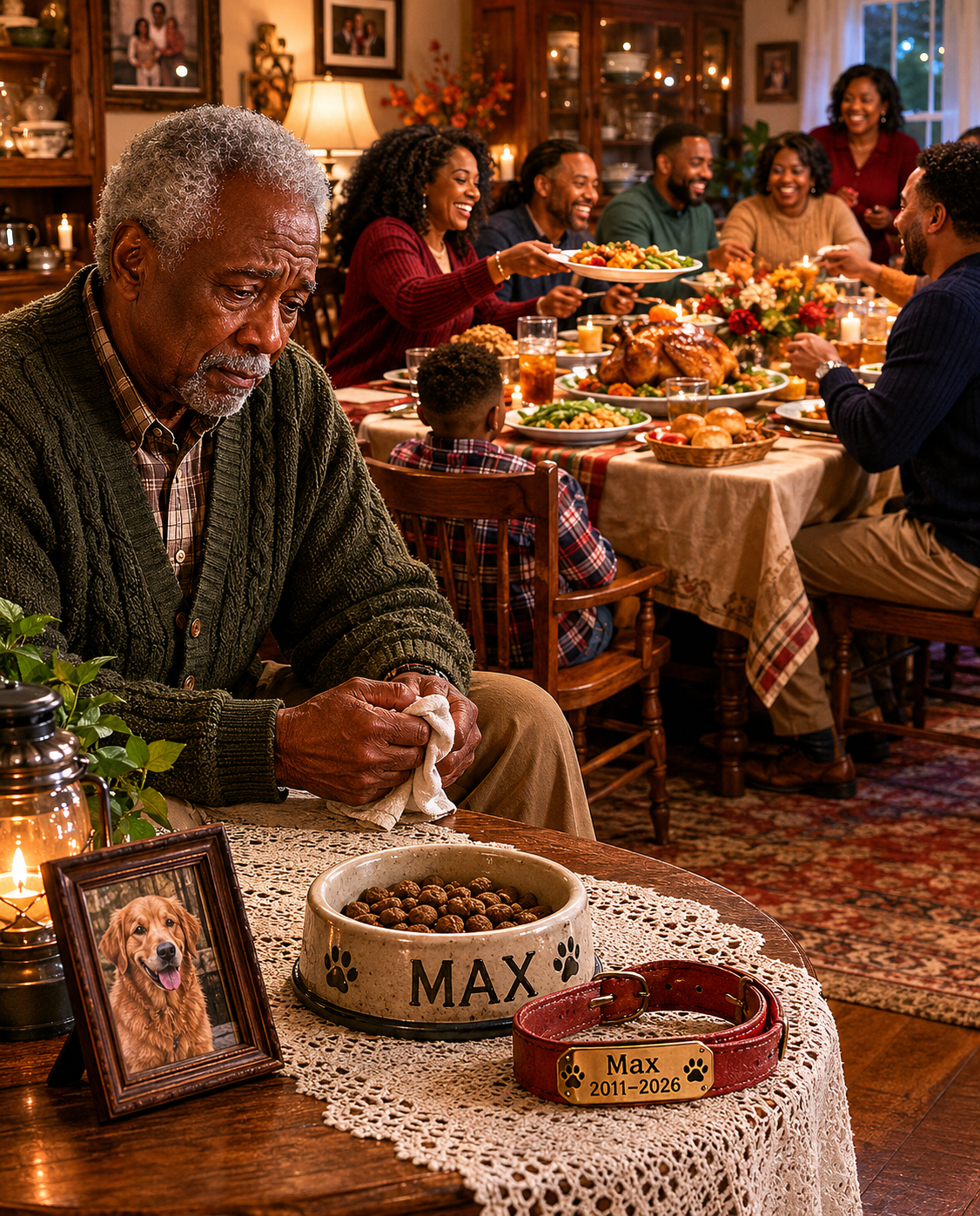
An apology is not a broom. It does not sweep away four years of disrespect. It does not erase the dog bowl. It does not unforge a signature. It does not return dignity by itself.
“I believe you’re sorry now,” I said.
He flinched.
“What does that mean?”
“It means you are sorry after losing access.”
He lowered his eyes.
“I don’t have anywhere to go.”
I looked at him, and the father inside me nearly broke.
Then I looked past him into the dining room, where the rug was stained, the chairs scratched, and Helen’s seat still sat slightly crooked from Melissa leaning back in it as if she belonged there.
“You had a home,” I said. “You turned it into a hunting ground.”
He began to cry.
Not loudly.
Just enough that I remembered holding him as a baby, his tiny fingers curled around mine.
“Dad, please.”
I stepped closer.
“I will pay for one week at a motel. I will give you the number of a debt counselor and a gambling recovery program. I will speak to you when you are sober, employed, and in treatment. But you will not sleep under my roof tonight.”
He stared at me.
“You’d choose the house over me?”
“No,” I said. “I am choosing myself before there is nothing left of me to love you with.”
He wiped his face.
“I hate you.”
“I know.”
“You’re cruel.”
“No,” I said. “I’m late.”
He stared at me for a long moment.
Then he picked up his bag and walked away.
That night, after Rachel left, after the locksmith finished, after Samuel promised to call in the morning, I sat alone at the dining room table.
The house felt enormous.
For four years, I had mistaken noise for company.
The television blaring from Brian’s room. Melissa laughing on the phone. Doors slamming. Delivery drivers ringing the bell. People I never invited eating food I paid for.
I thought the noise meant I was not lonely.
But loneliness had been sitting beside me the whole time, quietly watching my son teach me to accept less and less.
I took Helen’s photo from the mantel and placed it across from me.
“I failed him,” I whispered.
The house did not answer.
Maybe because Helen would not have agreed.
Maybe because truth does not always comfort.
The next morning, the first call came from my sister-in-law, Patricia.
“Walter, what on earth happened? Brian says you threw him out over a joke.”
I looked at the phone.
Then at my files.
For the first time, I decided I was done protecting people from the truth they had created.
“I’ll send you something,” I said.
I sent her the photo Melissa had taken of the dog bowl.
Then the bank statements.
Then the forged intake form.
