When you whip heavy cream, you are forcing air into the liquid. The fat globules in the cream partially collapse and “stick” to one another, forming a protective wall around the air bubbles. This is a Foam-Phase Emulsion.
The “Folding” step is the most critical regulatory moment in the recipe. If you stir vigorously, you pop the air bubbles (deflation), leading to a soupy cheesecake. By gently folding, you integrate the dense pistachio-cream cheese mixture into the light foam without compromising the air-gap structure.
4. The Instructions: A Step-by-Step Methodology
Stage 1: The Foundation
Crust Consolidation
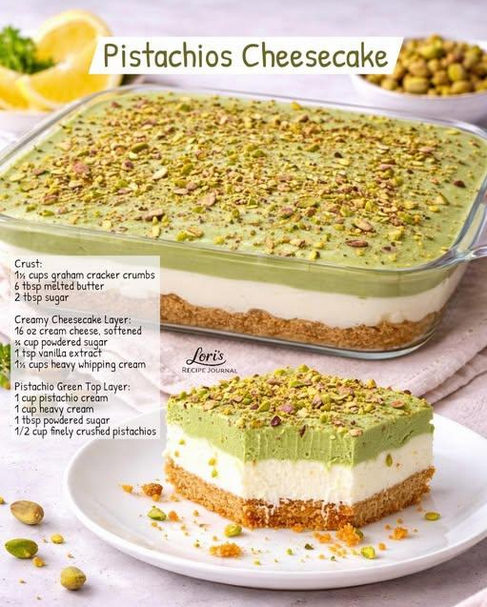
Combine graham crumbs and melted butter. Pressing “firmly” is not just for shape; it’s to eliminate air pockets that could allow the cream layer to seep through and make the base soggy. Chilling for 15 minutes initiates lipid crystallization, locking the crumbs in place.
Stage 2: The Creamy Emulsion
Aerating the Core
Beat the cream cheese until smooth before adding sugar. This ensures there are no protein clumps. When adding the pistachio cream and vanilla, you are creating a “concentrated base.” In a separate bowl, whip the cream to Stiff Peaks—the stage where the cream stands straight up when the whisk is lifted. Fold this into the base to create the primary cheesecake volume.
Stage 3: Thermal Setting
The Intermediate Chill
Chill the first layer for 30–45 minutes. This is a Surface Tension play. If you add the green top layer immediately, the two will bleed into each other, destroying the clean aesthetic. You need the surface of the first layer to “skin over” so the topping can be spread without dragging the white filling underneath.
Stage 4: The Finishing Layer
Pistachio Saturation
The top layer is a Ganache-style topping. By whisking pistachio paste with cream, you create a rich, emerald-green finish. Sprinkle the crushed pistachios immediately so they adhere to the moist surface before the final set.