

The ingredients are structured to manage the two distinct cooking times—the long simmer and the short pasta cook:
I. The Slow Cooker Base (Long Cook):
- **2 cups** cooked shredded chicken (Fully cooked protein)
- **2 cups** Alfredo sauce (Shelf-stable base)
- **1 cup** chicken broth or water (Assumed, liquid for cooking pasta/moisture)
- **1/2 teaspoon** Italian seasoning (Assumed, primary flavor)
- **Salt and pepper** (Assumed, for seasoning the base)
II. The Finishing Agents (Short Cook):
- **1 package** cheese tortellini (fresh or frozen – Added LATE)
- **1 cup** heavy cream (Added LATE for fresh creaminess)
- **1 cup** shredded mozzarella (Added LATE for topping/binding)
Instructions: Timing the Tortellini and Finishing Richly
Phase 1: Initial Cook and Base Flavor
- **Set Up:** Place the **cooked shredded chicken** into the 6-quart (or larger) slow cooker.
- **Combine Base:** Pour the **2 cups Alfredo sauce** and **1 cup chicken broth/water** (assumed) over the chicken. Stir in the **Italian seasoning, salt, and pepper** (assumed).
- **Cook Base:** Cover and cook on **LOW for 3–4 hours** or on **HIGH for 1.5–2 hours**. This period is only for heating the chicken and sauce through and allowing the flavors to meld.
Phase 2: The Critical Pasta Timing Protocol
- **Add Tortellini (CRITICAL TIMING):** Add the **1 package of cheese tortellini** (fresh or frozen) to the crockpot. Gently stir to submerge the pasta completely in the liquid base.
- **Pasta Cook:** Cover and cook on **HIGH for 15–20 minutes** for fresh tortellini, or **20–30 minutes** for frozen tortellini. The pasta should be tender but not mushy.
Phase 3: Creaming and Finishing
- **Add Cream (Stabilization):** Once the tortellini is cooked, turn the slow cooker off or switch it to the WARM setting. Stir in the **1 cup heavy cream**. This is done off the direct heat to prevent curdling and ensures a fresh, velvety texture.
- **Melt Cheese:** Stir in **half of the shredded mozzarella** (½ cup) to bind the sauce.
- **Topping and Serve:** Sprinkle the **remaining ½ cup mozzarella** over the top of the dish. Place the lid back on for **5 minutes** (with the cooker off) to allow the residual heat to melt the topping cheese.
- **Serve:** Stir gently to distribute the melted topping and serve hot.
Serving and Storage: The Starch and Dairy Dilemma
The high starch and dairy content of this dish means leftovers require specific handling.
- **Serving:** Serve immediately for the best consistency. Garnish with fresh parsley or parmesan cheese.
- **Storage (Refrigerated):** Cool completely, then store in an airtight container for **3–4 days**. The pasta will continue to absorb sauce and swell in the refrigerator.
- **Reheating (Mandatory Thinning):** When reheating, the dish will be very thick. Add **1/4 cup of milk or broth** per serving, and reheat gently on the stovetop or in the microwave at 50% power. Do not boil, as this may break the final cream emulsion.
- **Freezing:** **Not recommended.** Pasta texture degrades significantly upon thawing and reheating, often resulting in a mushy, separated dish.
Tips: Essential Techniques for Perfect Pasta
**Liquid Management:** The liquid in the base (assumed broth/water) is crucial for two reasons: it prevents scorching on the bottom of the pot, and it provides the necessary moisture for the tortellini to cook and expand (Step 2).
**Cream Stabilization:** Never add the **heavy cream** (Step 6) at the beginning of the cook cycle. The proteins in fresh dairy coagulate under low, prolonged heat. Adding it at the end ensures a smooth, silky finish.
**Tortellini Type:** Fresh (refrigerated) tortellini requires a shorter cook time (15–20 minutes) than frozen (20–30 minutes). Be precise with the timing in Step 5 and check often after the first 15 minutes.
**Seasoning the Chicken:** If your **shredded chicken** (Step 1) is unseasoned (e.g., plain rotisserie chicken), be sure to increase the amount of salt, pepper, and Italian seasoning in the base mixture for full flavor.
**No Stirring During Base Cook:** Avoid lifting the lid or stirring during the main 3–4 hour cook (Step 3). Slow cookers rely on trapped steam and consistent heat to cook; disturbing the heat adds time to the recipe.
Variations: Customizing Protein and Flavor
The creamy Alfredo base pairs well with other flavors and textures:
- **Broccoli Inclusion:** Add **1 cup of chopped fresh broccoli florets** (no need to blanch) at the same time as the tortellini (Step 4). This adds color and texture, and the broccoli will steam perfectly in 20 minutes.
- **Sun-Dried Tomato:** Stir in **½ cup of drained, oil-packed sun-dried tomatoes** (chopped) at the same time as the heavy cream (Step 6) for a bright, tangy flavor boost.
- **Spicy Kick:** Add **1/2 teaspoon of red pepper flakes** and a dash of cayenne pepper to the sauce base (Step 2) for a subtle but warming heat.
- **Garlic Boost:** Add **1 teaspoon of minced garlic** to the sauce base (Step 2). Garlic powder works well here, too, as it won’t burn on the bottom of the pot.
- **Vegetarian Option:** Omit the chicken and replace the broth with **vegetable broth**. Add **1 cup of sautéed mushrooms** and **1 cup of spinach** (added with the cream).
**Preventing Sticking:** If using an older crockpot, place the **sauce and broth layer** down first before adding the chicken (Step 1). The liquid acts as a buffer to prevent the solid ingredients from sticking and burning on the bottom.
**Checking Doneness:** Tortellini is ready when it is plump and slightly softened (Step 5). Unlike dry pasta, it doesn’t have a rigid center, so taste a piece to ensure it’s not chalky (uncooked) or bursting (overcooked).
**Cream Choice:** You can substitute the **heavy cream** (Step 6) with **half-and-half** for a slightly lighter texture, but do not use low-fat milk, as its lower fat content makes it much more likely to curdle.
**Pre-Shredded vs. Fresh:** For the topping (Step 8), **freshly shredded mozzarella** will melt smoother and have better cheese pull than pre-shredded cheese, which often contains starches that inhibit smooth melting.
Conclusion: Time Management for Texture
The Crockpot Chicken Alfredo Tortellini is a recipe where timing is everything. Successfully achieving a creamy, non-separated sauce requires the use of a two-part dairy system: a heat-stable base, and a final addition of heavy cream off the heat. More importantly, the strict adherence to the **Late Pasta Addition Protocol** ensures the tortellini is cooked to a perfect tenderness, avoiding the mushy fate of over-boiled slow-cooker pasta and delivering a satisfying, restaurant-quality meal.
Frequently Asked Questions (FAQ)
Q: My tortellini was mushy. How do I prevent this?
A: The tortellini was added **too early** (Step 4). It must only be added for the final 15–30 minutes of the cook time. Always check its tenderness frequently.
Q: Why did my Alfredo sauce look oily and grainy after cooking?
A: This is called **breaking the emulsion** (separation). While the jarred sauce is stable, the addition of fresh cream (if you added it too early) or any prolonged high heat caused the fat and liquid components to separate.
Q: Can I use raw chicken breasts instead of cooked shredded chicken?
A: Yes. Place **2-3 raw chicken breasts** on the bottom of the pot with the sauce and broth. Cook on LOW for 3–4 hours. Shred the chicken breasts in the pot (or remove and shred) and return to the sauce before proceeding to Step 4.
Q: Why did my leftovers get so thick overnight?
A: The pasta starch (Step 5) continues to absorb the liquid from the sauce even when refrigerated. To fix this, simply add a splash of milk or broth when reheating (see Storage section).
Related posts:
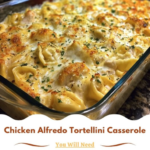 Weeknight Comfort: The Ultimate Chicken Alfredo Tortellini Casserole
 Cheesy Perfection: Cheese Tortellini Pepperoni Pizza Casserole
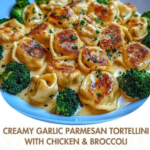 Creamy Garlic Parmesan Tortellini with Chicken & Broccoli
 Garlic Butter Chicken and Alfredo Linguine
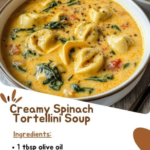 Velvet Comfort: Mastering Creamy Spinach Tortellini Soup
 The Physics of the Slow Simmer
