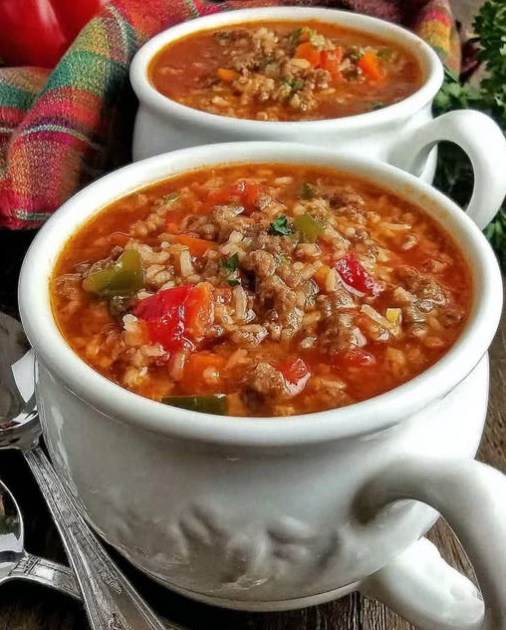
The success of this soup depends on two chemical processes: The Maillard Reaction and Acid-Base Balancing.
When you brown the beef in Step 1, you are creating hundreds of different flavor compounds as the amino acids and sugars in the meat react to heat. Draining the fat is necessary, but leaving the “fond” (the brown bits stuck to the bottom of the pot) is vital.
When you add the tomatoes, the citric acid ($C_6H_8O_7$) acts as a deglazing agent, lifting those flavor-packed bits back into the soup. This creates a “round” flavor profile that feels deeply developed even with a 15-minute simmer.
4. The Step-by-Step Methodology
Searing and Fat Management
Begin by browning your ground beef in a heavy-bottomed Dutch oven. Resist the urge to move the meat constantly; let it develop a dark, caramelized crust. Once cooked, drain the excess fat but do not rinse the beef. The residual flavor on the meat is what seasons the vegetables in the next step.
Aromatic Sweat
Add the diced onions and minced garlic. Sauté for 3–5 minutes. This “sweating” process breaks down the cell walls of the aromatics, releasing their oils and sweetness into the beef fat before the liquids are added.
The Pepper Integration
Stir in the chopped bell peppers. By adding them now rather than letting them boil for an hour, you maintain a “crisp-tender” texture. Peppers contain high amounts of Vitamin C and Vitamin A, which can degrade with excessive heat; a short sauté followed by a simmer preserves both flavor and nutrition.
Building the Broth
Pour in your diced tomatoes, tomato sauce, and beef broth. Add the Italian seasoning (basil, oregano, rosemary, thyme). This is the stage where the soup “marries.” Bring to a boil, then immediately reduce to a low simmer. Simmering prevents the beef from becoming rubbery.
Starch Stabilization
Add the already cooked rice. Adding raw rice to the soup is a common error; raw rice will absorb too much broth and release excess starch, turning your soup into a thick porridge. By adding cooked rice at the end, the grains stay distinct and the broth remains clear.
5. Storage and 2026 Preservation Techniques
This soup is a prime candidate for “Batch Cooking.” However, rice behaves as a sponge over time.
| Method | Recommendation | Result |
|---|---|---|
| Fridge | Store rice separately from the liquid. | Prevents the rice from getting mushy. |
| Freezer | Freeze the soup base without rice. | Better texture; add fresh rice upon reheating. |
6. Troubleshooting and Expert Tips
Variations for Every Palate
- The “Keto” Swap: Replace rice with riced cauliflower. Add it in the last 5 minutes of simmering.
- The Spicy Kick: Add 1/2 tsp of red pepper flakes and 1 diced jalapeño during the aromatic sweat.
- The Creamy Finish: Stir in a half-cup of heavy cream or a dollop of sour cream just before serving.
7. Conclusion
Stuffed Pepper Soup is the ultimate example of how home cooking can be both nostalgic and efficient. By focusing on the quality of your sear and the timing of your starch, you create a dish that is far more than the sum of its parts. It is a hearty, nutrient-dense meal that captures the essence of a classic with a fraction of the effort. Happy cooking!