ADVERTISEMENT
The ingredients fall into three critical categories: the structural components (wafers and bananas), the custard base (liquids, thickeners, and sweetener), and the creamy twist.
I. The Structural and Flavor Components:
- 2 boxes Vanilla Wafers: The traditional base. Their high sugar and low moisture content make them perfect for slowly absorbing the custard, preventing a soggy mess but creating a tender, cake-like layer after chilling.
- 6 to 8 bananas, sliced: The primary flavor. Use **firm, ripe bananas** (yellow with few or no brown spots). Overripe bananas will turn mushy and brown quickly in the pudding.
II. The Custard Base:
- 2 cups milk: The liquid foundation. Whole milk is recommended for richness, but evaporated milk can be used for a slightly thicker, traditional Southern custard.
- 4 large egg yolks: Provides color, richness, and aids in thickening through **tempering**. The yolks give the custard its signature yellow hue and luxurious mouthfeel.
- 1 cup granulated sugar: The primary sweetener, also aids in stabilization.
- 1/4 cup cornstarch or all-purpose flour: The thickening agent. Starch is essential to preventing the eggs from curdling and ensuring the custard reaches a spoon-coating consistency.
- 1 teaspoon vanilla extract: A crucial flavor enhancer, typically added after the custard is removed from the heat.
- 1/4 teaspoon salt: Balances the sweetness and enhances the overall flavor profile.
III. The Creamy Twist (Implied):
- 1 cup heavy whipping cream: Whipped until stiff peaks form, this is often folded into the cooled custard to create a lighter, fluffier texture, adding the “creamy twist.”
- 2 tablespoons powdered sugar: Used to sweeten and stabilize the whipped cream.
- **(Optional): 4 large egg whites:** Reserved from the yolks to be whipped into a classic meringue topping.
A Note on Bananas: To prevent the sliced bananas from browning prematurely during assembly, toss them very lightly with **1 teaspoon of lemon juice** before layering. This acidity slows the oxidation process.
Directions: Tempering, Folding, and Chilling
The process is divided into cooking the perfect custard, assembling the layers, and allowing the necessary chilling time.
Step 1: Cooking the Custard Base
- Combine Dry Ingredients: In a medium saucepan, whisk together the **granulated sugar, cornstarch (or flour), and salt**. Slowly whisk in the **2 cups of milk** until the mixture is smooth and lump-free.
- Cook the Milk: Cook over medium heat, stirring constantly, until the mixture thickens and begins to gently bubble (about 8–10 minutes). The starch must be boiled for a full minute to fully activate its thickening power.
- Temper the Eggs: While the milk mixture cooks, whisk the **4 egg yolks** in a separate bowl. Once the milk mixture is hot, slowly ladle about 1/2 cup of the hot liquid into the egg yolks while whisking vigorously. This crucial step, called **tempering**, prevents the eggs from scrambling.
- Finish the Custard: Pour the tempered egg mixture back into the saucepan with the remaining hot milk mixture. Continue to cook, stirring constantly, for 1–2 minutes, until the custard is thick enough to coat the back of a spoon. Remove from heat and stir in the **vanilla extract**.
Step 2: The Creamy Twist and Assembly
- Cool the Custard: Transfer the custard to a separate bowl, cover the surface directly with plastic wrap (to prevent a skin from forming), and let it cool in the refrigerator for at least 1 hour.
- Prepare the Creamy Twist: Whip the **1 cup heavy whipping cream** with the **powdered sugar** until stiff peaks form. Gently fold about half of the whipped cream into the cooled custard until just combined.
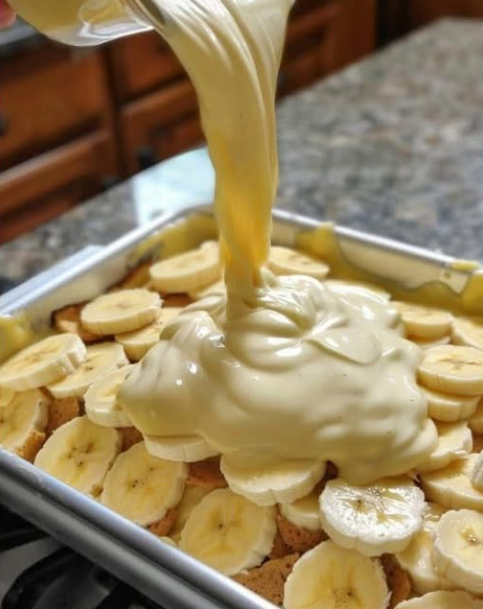
- Layer the Pudding: In a 9×13-inch dish or trifle bowl, create the layers: start with a single layer of **Vanilla Wafers**, followed by a layer of **sliced bananas**. Pour about one-third of the **custard mixture** evenly over the bananas. Repeat the layers (wafers, bananas, custard) two more times.
- Top the Pudding: Spread the remaining **whipped cream** over the final layer of custard, or create the optional meringue topping (see Variations).
Step 3: The Critical Chill
- Chill and Mellow: Cover the dish and refrigerate for a minimum of **6 hours, or preferably overnight**. The extended chilling time is essential for the wafers to soften and the flavors to fully meld.
- Serve: Serve cold, directly from the dish.
Serving and Timing: The Patience of Pudding
Banana pudding is a dessert of patience; rushing the chilling time compromises the signature texture.
Timing & Preparation Summary:
- Active Cook Time (15 minutes): Primarily focused on cooking and tempering the custard.
- Cooling Time (1 hour): Needed for the custard before folding in the cream.
- Assembly Time (10 minutes): Quick layering of components.
- Chill Time (6–12 hours): The critical step for structural and flavor melding.
- Total Time: A minimum of **7.5 hours**, mostly inactive time.
Serving Suggestions:
- Portioning: Serve directly from a large dish or prepare in individual clear glasses for an elegant presentation.
- Garnish: Top each serving with a single **Vanilla Wafer** or a small sprinkle of cinnamon just before serving.
- Temperature: Banana pudding must be served **cold**.
Tips: Mastering the Perfect Custard
Advanced Tips for Velvet Texture:
- **The Tempered Egg Check:** Tempering (Step 3) is foolproof if done slowly. The eggs must be at room temperature, and the hot milk must be added very slowly while whisking continuously. If the eggs do scramble, you can try passing the custard through a fine-mesh sieve.
- **Preventing the Skin:** Covering the hot custard immediately and tightly with **plastic wrap placed directly on the surface** (Step 5) prevents condensation from forming a watery layer and keeps oxygen away, stopping the formation of a thick, rubbery skin.
- **Don’t Over-Whip the Cream:** When preparing the “creamy twist,” stop whipping the cream just as stiff peaks form. Over-whipping can result in a grainy texture when folded into the custard.
- **Use Good Vanilla:** Because the flavor profile is so simple, using **pure vanilla extract** (or vanilla bean paste) rather than imitation vanilla dramatically improves the custard’s depth of flavor.
Variations: Customizing the Classic
While the classic formula is perfect, minor adjustments can elevate the flavor profile.
The Meringue Topping (Baked Classic):
Instead of folding whipped cream into the custard (Step 6), use the **4 reserved egg whites**. Whip them with 1/2 cup sugar until glossy, stiff peaks form. Spread the meringue over the assembled pudding, ensuring the meringue touches the edge of the dish all around. Bake at $350^\circ\text{F}$ for 8–10 minutes until the tips are golden brown. Cool, then chill.
Cream Cheese Swirl:
To deepen the creamy twist: Whip 4 oz. of **softened cream cheese** with 1/4 cup powdered sugar until smooth. Gently fold this mixture into the whipped cream before combining with the custard. This adds a slight tang and exceptional stability.
Salted Caramel Drizzle:
Drizzle a thin layer of **homemade salted caramel sauce** over the custard and banana layers. The salt and deeper sugar flavor provide a complex contrast to the sweet fruit and vanilla. This can also be drizzled on top just before serving.
Bourbon Banana Pudding:
Add **1 tablespoon of high-quality bourbon** to the custard base along with the vanilla extract (Step 4). The bourbon provides a warm, oaky note that pairs beautifully with the vanilla and bananas.
Conclusion: Time is the Secret Ingredient
The **Best Banana Pudding Ever** is defined by its smooth, rich custard and the tender texture achieved through patient chilling. By opting for a scratch-made custard, mastering the technique of tempering the eggs, and adhering to the minimum 6-hour chill time, you elevate this dessert from a simple mash-up to a complex, harmonious masterpiece.
The layering—wafers to absorb, bananas for flavor, and custard to bind—is a deliberate formula for texture and flavor release. This recipe is a guaranteed crowd-pleaser that proves the most comforting flavors often come from the simplest, yet most carefully executed, techniques.
Frequently Asked Questions: Troubleshooting and Best Practices
Q: Why is my custard grainy or watery?
A: A **grainy** texture is usually caused by **scrambled eggs** due to insufficient tempering (adding the hot liquid too fast, or whisking too slowly). A **watery** texture means the custard was not cooked long enough to fully activate the starch thickener (it needs to boil for at least one minute, Step 2).
Q: Why did my bananas turn brown overnight?
A: Bananas turn brown due to oxidation. This can be prevented by **tossing the sliced bananas lightly with lemon juice** before layering (see Note in Section 2) or by ensuring the bananas are completely submerged in the custard to minimize their exposure to air.
Q: Can I use instant vanilla pudding mix instead of making custard from scratch?
A: You can, but it will significantly change the texture and depth of flavor. Instant pudding relies on chemical thickeners and won’t have the same velvety richness or complex flavor profile provided by the tempered eggs and slow-cooked starches. The homemade custard is the “creamy twist” that makes it the “Best.”
Q: Can I make this a day in advance?
A: Yes, absolutely. It is highly recommended to make this dessert 12–24 hours in advance. The flavor and texture improve dramatically after resting overnight, as the wafers soften perfectly.
ADVERTISEMENT