The instruction sequence for this dish is crucial—the onions must be fully cooked before the ultra-fast liver is introduced.
Step 1: Prep the Liver and Seasoning
- Soak (Optional, but Recommended): Place the sliced liver in a shallow bowl and cover it completely with 1 cup of milk. Let it soak at room temperature for **30 minutes**.
- Dry and Season: Remove the liver from the milk (discard the milk) and pat the slices thoroughly dry with paper towels. Drying is mandatory! Excess moisture prevents proper browning. Season both sides aggressively with salt and pepper.
- Coat (Optional): If using the flour, dust the slices lightly. A simple method is to place the flour and seasoned liver in a plastic bag and shake gently to coat. Shake off any excess flour before cooking.
Step 2: Cook the Onions to Golden Perfection
- Heat Fat: Heat 2 tablespoons of butter or oil in a large, heavy-bottomed skillet (cast iron works best) over medium heat.
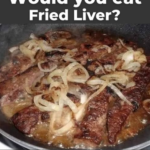
- Caramelize: Add the sliced onions. Cook for **15–20 minutes**, stirring occasionally. The goal is not just to soften them, but to caramelize them slightly—they should be sweet, deeply golden-brown, and jammy. This slow, low-heat cooking is essential.
- Reserve: Once the onions are perfectly tender and golden, remove them from the pan and set them aside. Retain any remaining fat and fond (browned bits) in the skillet for the liver.
Step 3: The Rapid Cook of the Liver
- Heat Pan: Add the remaining 1 tablespoon of butter or oil to the pan and increase the heat to **medium-high**. The pan must be hot to achieve a quick sear.
- Sear: Working in batches (if necessary, to avoid crowding the pan), place the seasoned/floured liver slices in the hot fat. Cook for only **2–3 minutes per side**. The external temperature should quickly hit a safe sear, while the internal temperature remains barely cooked.
- The Doneness Test: The liver should be browned nicely on the outside. The center should still be faintly pink—not red, but definitely not gray. An internal temperature of $160^{\circ}\text{F}$ ($71^{\circ}\text{C}$) is the target, but visually, once the center loses its red raw color, remove it immediately. Overcooking is the death knell of this dish.
Step 4: Combine and Serve
- Toss: Return all the cooked onions to the pan with the liver. Toss gently for just **1 minute** to rewarm the onions and allow them to coat the liver slices with their sweet, sticky juices.
- Plate: Serve immediately while the liver is at peak tenderness.
Serving and Storage: The Complete Homestyle Meal
The Ideal Accompaniments
The richness and strong flavor of Liver and Onions demand hearty, simple sides that can absorb the pan juices and complement the savory profile.
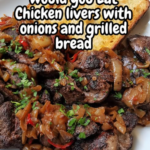
- Classic Pairings: Creamy **Mashed Potatoes** are the canonical choice. Their mild flavor and ability to soak up the juices are unmatched. **Rice** (plain white or brown) and **crusty bread** are excellent alternatives.
- Vegetable Balance: A tart vegetable side cuts through the richness, such as blanched green beans, asparagus, or a simple side of coleslaw or sauerkraut.
Storage and Reheating Caution
Liver is a delicate protein that is notoriously unforgiving when reheated. The best practice is to **cook only what you plan to eat**. If you must store leftovers, allow them to cool completely, store them in an airtight container for up to 2 days, and **reheat gently**. Avoid the microwave; instead, use a covered skillet with a splash of broth or water over very low heat until just warm, about 5 minutes.
Tips: Flavor Mitigation and Tenderizing Secrets
Tip 1: The Buttermilk Advantage
If you find the milk soak insufficient for removing the assertive flavor, use **buttermilk** instead. The higher concentration of lactic acid in buttermilk is more aggressive at tenderizing the protein and neutralizing the metallic flavor compounds in the liver. Soak the liver for 30-45 minutes in the buttermilk, then rinse and pat dry.
Tip 2: The Final Acidic Splash
Just before serving, deglaze the pan with a small splash ($1$ tablespoon) of acid. **Red wine vinegar**, **balsamic vinegar**, or a squeeze of **lemon juice** works wonders. This light acidity cuts through the richness of the butter and the liver, acting as a final flavor lift that makes the dish brighter and less heavy. If you floured the liver, this acid splash will form a thin, flavorful gravy.
Tip 3: The Quick-Cook Method for Small Pieces
If you struggle with ensuring the center of the slices is not overcooked, try slicing the liver into smaller, bite-sized strips ($1\text{ inch}$ by $2\text{ inch}$). These smaller pieces require an even shorter cooking time (1–2 minutes per side) but eliminate the risk of the thicker center piece being underdone or the edges being tough.
Variations: Culinary Twists
1. Liver with Bacon and Sage
Fry 3-4 slices of bacon until crispy. Remove the bacon and cook the onions in the rendered bacon fat for unmatched savory flavor. Crumble the bacon and chop 1 tablespoon of fresh sage. Toss the cooked liver and onions with the bacon and sage during the final minute of warming. The sage and bacon fat are classic pairings with liver.
2. Creamy Mustard Sauce
After cooking the liver and returning the onions, pour in $1/4$ cup of dry white wine or chicken broth and scrape up the fond from the bottom of the pan. Whisk in 2 tablespoons of heavy cream and 1 teaspoon of Dijon mustard. Allow the sauce to simmer and thicken for 1 minute before serving. This creates a luxurious, savory sauce that coats the liver beautifully.
3. Venetian Style (Fegato alla Veneziana)
Use calf liver (if available) and substitute the butter with **olive oil**. The key is to use a large volume of onions (use 3-4 medium onions) and cook them very slowly until they are translucent and nearly melting, rather than caramelized. Finish with a generous splash of dry white wine and fresh, finely chopped **parsley** just before serving. This preparation is lighter and sweeter.
Advanced Tips: Pan Selection and Prep
Tip 4: The Cast Iron Advantage
Use a cast iron or a thick stainless steel skillet. These materials retain heat exceptionally well, which is crucial when cooking the liver. The liver is cooked so quickly that a cold or thin pan will drop in temperature too fast, preventing the necessary hard sear and leading to steaming, which results in tough, gray liver.
Tip 5: Deglazing the Pan
If you used the flour dredge, the pan will develop a delicious fond (browned bits). After removing the liver, you can create a simple, thin gravy by pouring 2 tablespoons of warm water, broth, or sherry into the hot pan and scraping the bottom with a wooden spoon. This flavorful liquid should be poured over the final dish along with the onions.
Tip 6: Staggered Onion Cooking
If you prefer some onions to be soft and some to retain a slight bite, reserve $1/4$ of the sliced onions. Add these reserved onions to the pan during the last 5 minutes of the caramelization process. This allows them to soften and sweeten but retains some of their structural integrity and freshness.
Conclusion: A Fast, Nutrient-Rich Culinary Triumph
Liver and Onions, when executed properly, is a testament to the fact that the simplest dishes can often be the most profound. Success hinges on a few, crucial technical steps: the flavor-mellowing milk soak, the generous caramelization of the onions, and, most importantly, the ruthless commitment to a lightning-fast cook time for the liver. By focusing on a quick sear and removing the liver just as the pink color disappears, we achieve a texture that is tender and succulent, proving that this homestyle classic deserves its place on any table.
This dish is a high-protein, nutrient powerhouse, particularly rich in iron and B vitamins. Armed with the knowledge of precise heat control and flavor balancing, you are now equipped to conquer the classic and deliver a hearty, comforting meal that is both traditionally satisfying and exceptionally easy to execute.
Frequently Asked Questions: Troubleshooting and Preparation
Q: My liver came out tough and chewy. What went wrong?
A: Overcooking is almost always the cause. Liver has virtually no connective tissue (unlike steak), so long cooking times do not tenderize it; they dry it out and toughen the protein fibers instantly. Ensure your pan is very hot, cook for only 2–3 minutes per side, and remove it immediately when the faint pink center is just gone. Slicing it thinner ($1/4\text{ inch}$) can also help.
Q: Does soaking in milk really work, or is it a myth?
A: Yes, it works. While not necessary for food safety, the milk soak is a traditional method. The lactic acid and casein proteins in the milk bind with some of the iron compounds and blood in the liver, effectively leaching them out. This process results in a noticeably milder, less metallic flavor and can slightly tenderize the meat.
Q: Can I use frozen liver?
A: Yes, but you must thaw it completely in the refrigerator first. Pat it extremely dry after thawing to remove excess moisture. If you try to cook it partially frozen, it will release too much water, steam instead of searing, and become tough.
Q: I hate the strong liver smell when cooking. Any tips?
A: The smell is usually strongest when you first introduce the liver to the pan. Try adding a sprig of fresh thyme or rosemary to the hot butter/oil just before the liver goes in—the aromatic herbs help mask the strong odor with a more pleasant, savory scent. Also, ensure you pat the liver dry, as moisture release contributes to the odor.