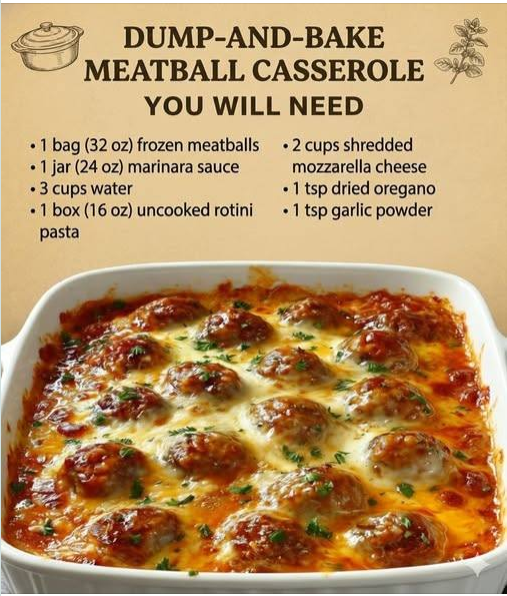
Step 1: The Liquid-Starch Integration
Preheat oven to 400°F. In a 9×13 dish, combine pasta, sauce, water, and spices. The “Hydration Ratio” Science: Standard pasta absorbs roughly 1.5 to 2 times its weight in liquid. The 3 cups of water, combined with the water content of the marinara, provides the exact volume needed to reach the Saturation Point of the rotini.
Step 2: The Meatball Distribution
Stir in the frozen meatballs. The “Convection” Rule: Ensure the meatballs are submerged. If they sit on top, they will dry out; if they are nestled within the pasta, they act as Internal Heat Conductors, releasing moisture directly into the surrounding noodles.
Step 3: The Steam Seal (The Cover)
Cover the dish tightly with aluminum foil. The “Pressure Chamber” Physics: This is the most critical step. Without a tight seal, the water will evaporate into the oven rather than into the pasta. You are creating a Micro-Steam Environment that cooks the starch through vapor pressure.
Step 4: The Primary Hydration (The Bake)
Bake covered for 35 minutes. The “Amylopectin” Transformation: During this time, the heat causes the starch granules in the pasta to swell and burst (gelatinization), turning the hard wheat into a tender, edible structure. The “shaking” or stirring halfway through prevents the noodles from fusing together via Starch Bonding.
Step 5: The Maillard Crust (The Broil)
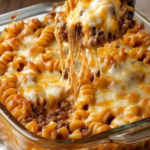
Remove foil, top with mozzarella, and bake for 10 more minutes. The “Vesiculation” Science: As the cheese reaches $300^{\circ}\text{F}$, the proteins and sugars react to form a golden-brown crust. This is the Maillard Reaction, which provides the complex, toasted flavor that balances the acidity of the tomatoes.
Serving and Storage: Managing the Set
Serving: Let the casserole rest for 5-10 minutes. The “Carry-Over” Secret: As it rests, the starches undergo Retrogradation, firming up just enough to make the casserole sliceable rather than runny. Serve with garlic bread to provide a Textural Contrast (crunchy vs. soft).
Storage: This dish is highly Rehydration-Friendly. Store in an airtight container for up to 4 days. When reheating, add a tablespoon of water; the pasta will have absorbed the remaining sauce in the fridge, and the extra water will restore the Fluidity of the marinara.
Tips: Pro-Level “Dump-and-Bake” Nuances
- The “Foil-Tightness” Regulation: If you see steam escaping the corners of your pan, your pasta will be crunchy. Use a heavy-duty foil and “crimp” the edges around the rim of the dish for a Pressure-Cooker Effect.
- Pasta Type: Do not use “Quick Cook” or “Thin” pasta (like Angel Hair). It will disintegrate before the meatballs thaw. Rotini or Penne have the Structural Density required for a 45-minute bake.
- The “Boiling Water” Hack: If you are in a rush, use boiling water instead of room-temp water. This initiates the Starch Swelling immediately, potentially shaving 10 minutes off your bake time.
Holiday Variations: Seasonal Adaptations
| Variation | The Adjustment | The Vibe |
|---|---|---|
| Creamy Rosé Christmas | Swap 1 cup of water for 1 cup of heavy cream. | Decadent, silky, and rich. |
| Spicy Arrabiata | Add 1 tsp red pepper flakes and use spicy meatballs. | Warming, bold, and energetic. |
| Vegetarian Garden | Swap meat for frozen “veggie” balls and add frozen spinach. | Lighter, nutritious, and vibrant. |
Tips: Preventing the “Gummy” Crumb
A “Gummy” casserole is caused by Starch Overload. This happens if you use too much pasta or too little liquid. Always stick to the 16 oz to 3-cup water ratio. If you want a thicker sauce, do not add more pasta; instead, remove the foil for the last 15 minutes of baking to allow for Evaporative Concentration.
Conclusion: A Christmas Day Victory
The Dump-and-Bake Meatball Casserole is a triumph of Home-Kitchen Engineering. By understanding the relationship between starch hydration and thermal conduction, you transform raw, shelf-stable ingredients into a gourmet, one-pan masterpiece. On this Christmas Day 2025, as the aroma of garlic and melting mozzarella fills your home, remember that you are serving a masterclass in efficiency. Enjoy the bake!
Frequently Asked Questions
- Can I use fresh meatballs?
- Yes, but you should Brown them first in a skillet. Fresh meatballs lack the structural integrity of frozen ones and may “melt” into the sauce if dumped in raw, leading to a lumpy meat sauce rather than distinct meatballs.
- Why is my pasta still hard?
- This is almost always a Steam-Loss Failure. If your pan wasn’t sealed tightly, the water evaporated too fast. Add 1/2 cup of hot water, reseal tightly, and bake for an additional 10 minutes.
- Can I use gluten-free pasta?
- Yes, but gluten-free pasta (rice or corn-based) has a much lower Tolerance for Over-Cooking. Reduce the initial bake time to 25 minutes and check for tenderness to prevent the noodles from turning into mush.
Would you like me to suggest a “Garlic-Herb Butter” recipe to serve with this casserole, or perhaps show you how to turn this into “Mini Meatball Sliders”?