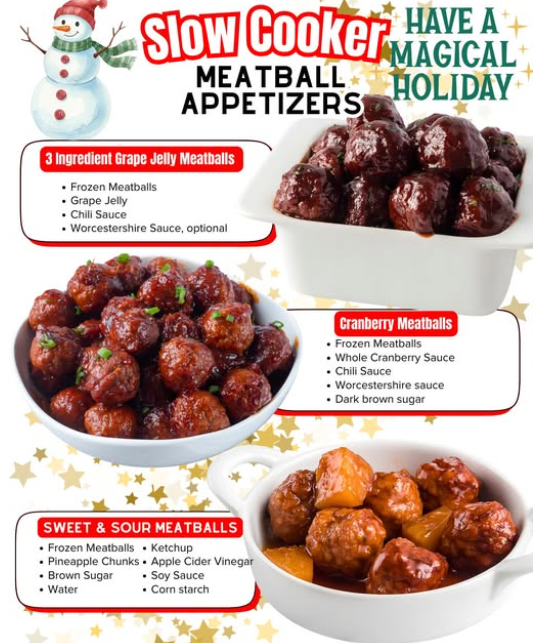
Recipe A: The Grape Jelly Emulsion
Combine jelly, chili sauce, and Worcestershire in a slow cooker. The “Phase Transition” Rule: Heat the mixture until the jelly moves from a semi-solid to a liquid state before adding the meatballs. This ensures a Homogeneous Solution.
Cook on Low for 3-4 hours until the sauce reduces and coats the meat through viscous drag.
Recipe B: The Cranberry Braise
Whisk cranberry sauce, chili sauce, sugar, and Worcestershire until integrated. Add meatballs and stir to ensure every sphere is encapsulated. The “Braising” Physics: As the cranberries heat, they release juice that mingles with the sugar, creating a Heterogeneous Matrix that provides more “grip” on the meatball surface than a smooth jelly.
Recipe C: The Starch Gelatinization (Sweet & Sour)
The “Cold Slurry” Mandate: Whisk cornstarch into cold water and soy sauce first. If added to hot liquid, the starch will undergo Flocculation (clumping).
[Image showing starch granules swelling and thickening a liquid]
Add the remaining liquids and sugar, then heat until the mixture reaches approximately 176°F (80°C). This is the point of Starch Gelatinization, where the granules swell and trap water, turning the sauce from opaque to translucent and thick.
Serving and Storage: Maintaining Thermal Stability
Serving: Serve directly from the slow cooker or a pre-warmed dish. The “Thermal Set” Factor: As these glazes cool, their viscosity increases significantly. Serving them warm ensures they remain fluid enough to be enjoyed with a toothpick without becoming a “gel.”
Storage: Store in an airtight container for up to 4 days. The “Syneresis” Warning: Upon cooling, the starch in the Sweet & Sour sauce may weep water. When reheating, add a teaspoon of water and stir vigorously to re-emulsify the bonds.
Tips: Maximizing the “Cling”
- The “Frozen” Advantage: Starting with frozen meatballs is actually a technical benefit. The Latent Heat of Fusion allows the sauce time to reduce and thicken before the internal meat becomes overcooked.
- Surface Area: Bite-sized meatballs are superior because they have a higher Surface-Area-to-Volume Ratio, meaning more delicious glaze per gram of meat.
- Acidity Balance: If a sauce feels too cloying, add a teaspoon of apple cider vinegar. The acetic acid acts as a flavor brightener, balancing high glucose concentrations.
Variations: Iterative Flavor Design
| Variation | The Adjustment | The Result |
|---|---|---|
| BBQ Smokehouse | Swap jelly for BBQ sauce and add liquid smoke. | Savory, deep, and high-sugar caramelization. |
| Asian Fusion | Add ginger, garlic, and sriracha to the Grape Jelly base. | Aromatic, spicy, and umami-rich. |
| The “Adult” Cranberry | Add 1/4 cup of Orange Liqueur (Grand Marnier). | Sophisticated citrus notes and lower sugar perception. |
Tips: Managing Liquid Vapor Pressure
If your glaze appears too thin toward the end of the cooking cycle, remove the lid of your slow cooker. The “Evaporation” Secret: By removing the lid, you allow Evaporative Cooling and moisture escape, which concentrates the sugars and increases the sauce’s yield stress. This transforms a “runny” sauce into a professional glaze in about 20 minutes.
Conclusion: A Triumph of Viscosity and Flavor
The mastery of meatball appetizers is fundamentally a mastery of Hydrocolloid Stability. Whether you are utilizing the natural pectin in fruit preserves or the engineered starch of corn, the goal is to create a sauce that functions as a structural component of the dish. On this Friday, December 26, 2025, as you watch your guests enjoy these perfectly coated spheres, you are witnessing the successful application of culinary physics. Enjoy the party!
Frequently Asked Questions
- Can I use homemade meatballs?
- Yes, but bake them in the oven first to ensure Structural Integrity. Raw meatballs added directly to high-sugar glazes may disintegrate under the mechanical agitation of stirring.
- Why is my Sweet & Sour sauce grainy?
- This is likely Starch Flocculation. It occurs if the cornstarch slurry was not fully dissolved or if it was added to a boiling liquid. Always start the starch in a cold environment.
- Can I freeze the sauced meatballs?
- Yes, but be aware of Retrogradation. The starch and pectin bonds will firm up significantly in the freezer. Reheat slowly with a splash of broth to restore the original liquid phase.