ADVERTISEMENT
Mac and Cheese is a study in colloidal chemistry. The cheese must be suspended in a stable emulsion to prevent “grease-breaking” during the baking cycle.
Ingredients (Yield: 8 Servings)
- 1 lb Elbow Macaroni (the carbohydrate scaffold)
- 2 cups Sharp Cheddar Cheese (shredded from a block)
- 1/2 cup Parmesan (for ionic salinity)
- 3 tbsp Butter & 3 tbsp All-purpose Flour (the roux)
- 3 cups Whole Milk (the continuous phase)
- 1 tsp Mustard Powder (a natural emulsifier)
Instructions
- Starch Preparation: Boil macaroni in salted water until 2 minutes before al dente. It will continue to hydrate during the bake via capillary action.
- Roux Synthesis: Melt butter and whisk in flour. Cook for 2 minutes to denature the raw starch proteins.
- Emulsification: Slowly whisk in milk. Simmer until thickened. Gradually fold in shredded cheese. Note: Use block cheese, as pre-shredded cheese is coated in cellulose which inhibits smooth melting.
- Assembly: Combine sauce and pasta. Transfer to a baking dish.
- Thermal Finish: Bake at 375°F (190°C) for 20 minutes. This creates a dehydrated crust on top while maintaining a semi-fluid interior.
Phase III: The Garden Salad (The Aqueous Counterpoint)
The salad serves as a biological reset for the palate, using acidity and fiber to cut through the heavy lipids of the previous phases.
Ingredients (Yield: 4 Servings)
- 4 cups Mixed Greens (Spinach, Arugula, Romaine)
- 1 cup Cherry Tomatoes (sliced)
- 1 large Cucumber (sliced into rounds)
- 1/2 Red Onion (thinly shaved for sulfuric zing)
- Optional: Carrots and Bell Peppers
Instructions
- Cleaning: Wash and spin dry. Surface water will dilute the dressing, causing emulsion failure on the leaves.
- Mechanical Prep: Dice vegetables into uniform sizes to ensure a consistent surface-area-to-flavor ratio in every bite.
- Dressage: Toss with a vinaigrette (3 parts oil, 1 part acid) immediately before serving to prevent osmotic wilting of the cell walls.
Serving and Storage: Post-Culinary Regulations
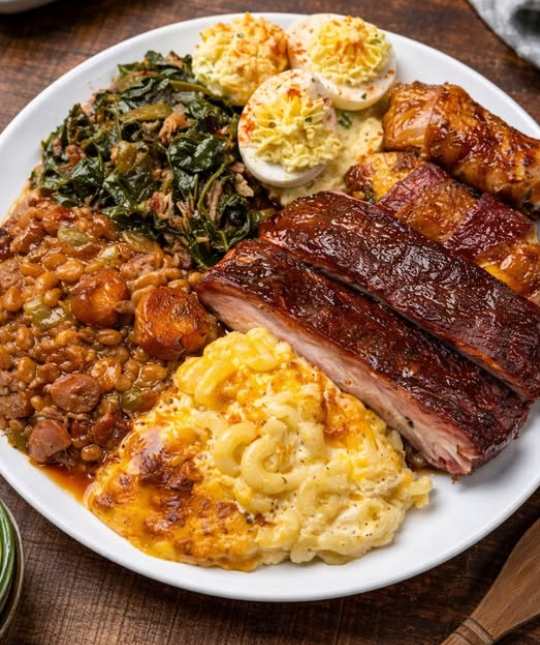
Serving: The meal should be plated with the Mac and Cheese and Wings placed adjacently to share residual heat, while the salad should be kept in a separate vessel or chilled plate to maintain its thermal contrast.
Storage: Wings should be stored in a ventilated container to prevent the crust from becoming “soggy” via trapped steam. Mac and Cheese should be sealed tightly; when reheating, add a tablespoon of milk to restore the interstitial moisture that was lost to starch retrogradation during cooling.
Tips: Pro-Level Dinner Engineering
- The “Baking Powder” Hack: For the wings, add 1 tsp of baking powder to the dry rub. This raises the skin’s pH, breaking down peptide bonds more efficiently and resulting in a micro-textured, ultra-crisp surface.
- Temperature Gradation: Ensure the cheese sauce never reaches a full boil once the cheese is added. High heat causes the casein proteins to tighten and squeeze out the fats, leading to a grainy sauce.
- Hydration Control: If the Mac and Cheese looks dry before entering the oven, add an extra 1/4 cup of milk. The pasta acts like a hydrophilic sponge and will absorb more liquid than you expect during the 20-minute bake.
Variations: Iterative Design Adjustments
| Variation |
The Adjustment |
Resulting Impact |
| Buffalo Wing Swap |
Replace BBQ sauce with Frank’s RedHot and melted butter. |
Increased Capsaicin volatility and acidic bite. |
| Truffle Mac |
Add 1 tsp Truffle Oil and Gruyere cheese. |
Enhanced Earthy Umami and depth. |
| Potato Salad Side |
Swap greens for boiled potatoes and mayo/mustard base. |
Higher Starch Density and creaminess. |
Tips: Structural Integrity and Timing
“To coordinate a multi-component meal, start the Mac and Cheese first as it has the longest thermal stability. The wings should be timed to finish exactly when the salad is tossed, ensuring the crispness-to-wilting ratio is optimized for immediate consumption.”
Conclusion: A Triumph of Culinary Systems
This full dinner meal is a masterclass in Phase Coordination. By balancing the smoky, tacky exterior of the wings with the rich, fluid-dynamic cheese sauce of the macaroni and the crisp, cellular structure of the salad, you have engineered a meal that satisfies the biological requirements for variety and nutrition. On this December 27, 2025, enjoy the perfectly executed results of your kitchen lab. Happy dining!
Frequently Asked Questions
- How many servings does this provide?
- As engineered, the wings provide 8-10 servings, the Mac and Cheese provides 8 servings, and the salad provides 4 servings. For a balanced dinner, you may need to double the salad recipe.
- Can I air-fry the wings?
- Yes. Air frying is essentially high-velocity convection. Reduce the temperature to 380°F (190°C) and cook for 20-25 minutes for a similar structural result.
- Why is my Mac and Cheese dry?
- This is Absorption Error. The pasta was likely cooked too long in the water, or there wasn’t enough sauce to accommodate the starch’s continued hydration during the bake.
Would you like me to suggest a “Garlic Bread” recipe to add more carbohydrates to this feast, or perhaps a “Fudgy Brownie” for a high-glucose finish?
ADVERTISEMENT