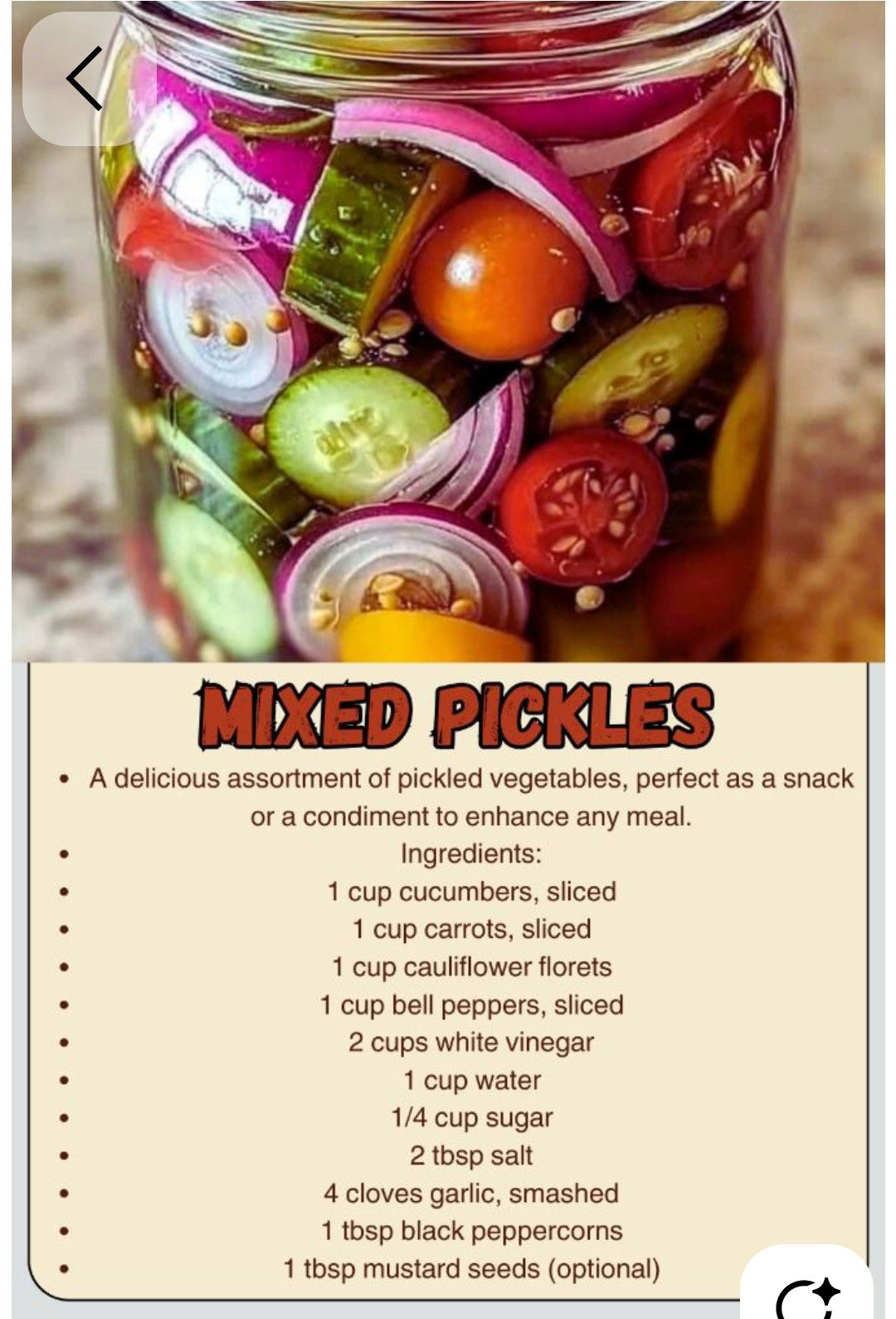
- The Structural Prep: Wash and chop all vegetables into bite-sized pieces. The Regulation: Ensure the cauliflower is broken into small, elegant florets to maximize surface area for the brine.
- The Brine Emulsion: In a medium saucepan, combine the water, white vinegar, sugar, and salt. Heat gently until the solids dissolve into a velvet-smooth liquid.
- The Infusion: Add the crushed garlic and mustard seeds to the brine. Let it simmer for 2 minutes to allow the aromatics to “bloom” and ground the flavor profile.
- The Assembly: Pack the chopped vegetables tightly into a clean glass jar. The Technique: Layer the different colors to create a vibrant aesthetic.
- The Thermal Descent: Pour the hot brine over the vegetables until they are completely submerged. Tap the jar gently to remove any “air chaos” bubbles.
- The Set: Seal the jar and allow it to cool to room temperature. Transfer to the refrigerator for at least 24 hours to allow the pickling process to achieve a premium depth.
Service and Storage Tips
- Service: Serve chilled as a palate cleanser alongside rich meats or as a vibrant snack.
- Storage: These pickles remain honest and crunchy in the refrigerator for up to 2 weeks.
- Texture Tip: Always use a clean fork to remove pickles from the jar to prevent introducing “bacterial chaos” that could soften the vegetables.
The Flavor Pivot: Variations
- The Spicy Maverick: Add 1/2 teaspoon of red pepper flakes or a sliced bird’s eye chili for a vibrant, fiery kick.
- The Herbaceous Bloom: Add a sprig of fresh dill or a teaspoon of celery seeds for a sophisticated, orchard-fresh profile.
- The Golden Glow: Add 1/2 teaspoon of turmeric to the brine for a vibrant yellow hue and earthy undertone.
Chef’s Tips: Mastering the Crunch
- The Vinegar Rule: For a more “premium” bite, you can experiment with apple cider vinegar, though white vinegar provides the most honest, clean acidic profile.
- Cold Start: If you prefer an even “shatter-crisp” texture, let the brine cool completely before pouring it over the vegetables. This prevents the heat from slightly “cooking” the fibers.
- The Salt Balance: Always use non-iodized salt (like sea salt or kosher salt) to ensure the brine remains clear and vibrant rather than cloudy.
Conclusion: An Honest, Vibrant Triumph
The Mixed Pickled Harvest is a testament to the power of rhythmic preservation. It transforms simple vegetables into a premium reward that is both grounding and undeniably sharp. By respecting the balance of sugar and vinegar, you’ve created an honest masterpiece. Enjoy the velvet-tart, crunchy reward of every single bite!
Frequently Asked Questions
- Why are my pickles soft?
- This is usually due to using older vegetables or over-heating them with the brine. For a premium crunch, always use the freshest, firmest produce available.
- Can I reuse the brine?
- You can reuse it once for a “quick pickle” of sliced red onions, but for the most vibrant results, a fresh brine is the honest standard.
- Do I need to peel the carrots?
- It is recommended for a velvet-smooth appearance and to ensure the brine penetrates the core without the interference of a tough outer skin.