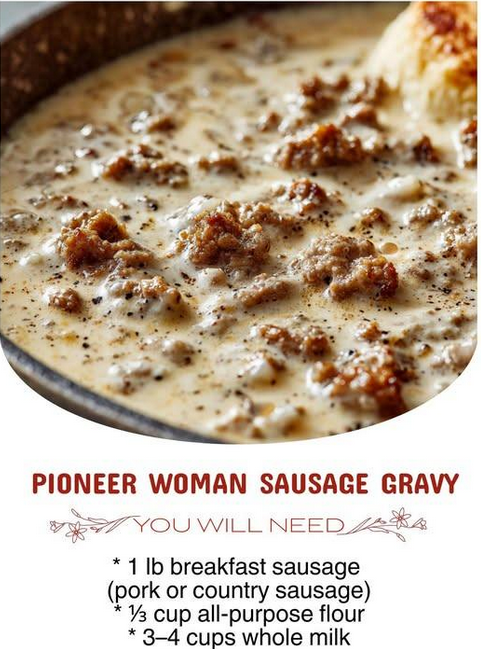
- The Maillard Strike: In a large, heavy skillet over medium-high heat, crumble and cook the sausage. The Technique: Brown it until it is “shatter-crisp” in spots. Do not drain the fat; those lipids are the premium foundation of your gravy.
- The Roux Evolution: Reduce heat to medium. Sprinkle the flour over the cooked sausage. Stir rhythmically for 1–2 minutes. The Regulation: You are looking to “toast” the flour into the fat, removing the raw taste without letting it reach “burnt chaos.”
- The Liquid Marriage: Slowly pour in the milk, one cup at a time, while whisking or stirring constantly. This ensures a velvet-smooth emulsion.
- The Thickening Bloom: Simmer the gravy for 5–10 minutes. The mixture will transition from a liquid to a vibrant, coating consistency. If it becomes too dense, add the final cup of milk to regulate the texture.
- The Aromatic Set: Add an “honest” amount of black pepper—more than you think you need—and salt to taste. This grounds the creaminess with a vibrant, spicy finish.
Service and Storage: Preserving the Velvet
- Service: Ladle generously over split, “shatter-crisp” buttermilk biscuits. For a premium presentation, garnish with a pinch of fresh parsley or extra cracked pepper.
- Storage: Store in an airtight container for up to 3 days. The gravy will “ground” and thicken significantly in the refrigerator.
- The Reheat: Heat on the stovetop over low, adding a splash of milk to restore the velvet, pourable glow.
The Flavor Pivot: Variations
- The Spicy Maverick: Use “Hot” breakfast sausage and add a pinch of cayenne for a vibrant, fiery kick.
- The Orchard Glow: Add a pinch of ground nutmeg or extra rubbed sage for a premium, autumnal aromatic profile.
- The Smoky Forge: Stir in a tablespoon of bacon drippings during the roux phase for a grounding, wood-fired depth.
Chef’s Tips: Mastering the Roux
- The Fat Ratio: If your sausage is very lean and doesn’t render enough fat, add 1–2 tablespoons of butter. You need that premium lipid base to absorb the flour.
- Cold Milk Rule: Adding cold milk to the hot roux allows the starch granules to burst more evenly, preventing “lumpy chaos” and ensuring a velvet mouthfeel.
- The “Coating” Test: The gravy is ready when it coats the back of a wooden spoon and you can draw a clear line through it with your finger.
Conclusion: An Honest, Vibrant Triumph
Sausage Gravy is a testament to the power of rhythmic whisking and lipid regulation. It transforms simple, rustic components into a premium culinary reward that is both grounding and undeniably comforting. By respecting the sear of the meat and the patience of the simmer, you’ve created an honest masterpiece. Enjoy the velvet-rich, savory reward of every single spoonful!
Frequently Asked Questions
- Can I use 2% milk?
- You can, but whole milk provides the premium fat content necessary for a truly velvet-smooth finish. 2% may result in a slightly “thinner” profile.
- Why is my gravy lumpy?
- This usually happens if the flour wasn’t stirred enough into the fat or the milk was added too quickly. Whisk rhythmically to break up any “clump chaos.”
- Can I make this ahead of time?
- Absolutely. It is an honest make-ahead dish; just be prepared to thin it out with extra milk when reheating.