
Step 1: Setting the Stage
Generously butter a 9×13-inch baking dish. Arrange your French bread slices in a single layer. Don’t be afraid to overlap them slightly; this creates those beautiful nooks and crannies for the custard to hide in.
Step 2: Whisking the Custard
In a large mixing bowl, combine the eggs, half-and-half, milk, vanilla, sugar, cinnamon, and nutmeg. Whisk vigorously until the sugar is dissolved and the spices are evenly distributed throughout the liquid.
Step 3: The Overnight Soak
Pour the mixture slowly over the bread, making sure every slice gets a “bath.” Gently press down on the slices with the back of a spoon to ensure they are fully saturated. Cover tightly with plastic wrap and refrigerate for at least 8 hours (or overnight).
Step 4: The Morning Bake
Preheat your oven to 350°F (175°C). Remove the plastic wrap and dot the top of the bread with small pieces of the unsalted butter. Sprinkle a light layer of sugar over the top. Bake for 35–40 minutes until the toast is puffed, fragrant, and golden brown.
Step 5: The “Brûlée” Moment
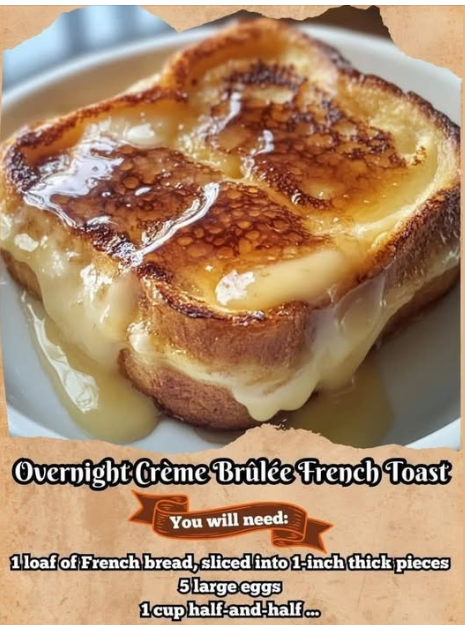
This is the crucial step! Remove the dish from the oven and sprinkle another generous, even layer of sugar over the top. Set your oven to “Broil.” Place the dish back in for 1–3 minutes. Watch closely! You want the sugar to bubble and turn a deep amber brown without burning the bread.
Serving and Storage
Serving: Allow the toast to sit for 2 minutes so the sugar crust hardens. Serve with warm maple syrup, fresh raspberries, or a dollop of cold whipped cream to contrast the heat of the bake.
Storage: While best enjoyed fresh for that “crack,” leftovers can be kept in the fridge for 2 days. Reheat in the oven at 350°F to try and revive the crust; the microwave will make the sugar layer soft and syrupy.
Tips: The Secret to the Perfect Soak
- Bread Choice: Brioche or Challah are fantastic alternatives to French bread. Their high egg and butter content make the result even more decadent.
- Dry Your Bread: If your bread is fresh, lay the slices out on the counter for a few hours before soaking, or toast them in a low oven (200°F) for 10 minutes to dry them out. Dry bread equals better absorption!
Variations: Seasonal Twists
- Orange Zest Infusion: Add the zest of one orange to the custard for a bright, citrusy note that cuts through the richness.
- Boozy Brunch: Stir in 1 tablespoon of Grand Marnier or Bourbon into the custard for an adult-friendly flavor profile.
- Berry Bottom: Scatter fresh blueberries or sliced strawberries at the bottom of the dish before adding the bread for a fruity surprise.
Tips: Mastering the Torch Effect
- The Kitchen Torch: If you have a culinary torch, use it instead of the broiler for more control over the caramelization.
- Even Sugar: Use a fine-mesh sieve to sprinkle the sugar for the brûlée topping. An even layer ensures an even “crack” across the entire dish.
Conclusion: A Morning to Remember
Overnight Crème Brûlée French Toast is the ultimate gift to your “future self.” By doing the prep work the night before, you allow yourself to enjoy a stress-free morning while still serving a five-star meal. The combination of the soft, custardy center and the brittle, caramelized topping is a sensory experience that standard French toast simply cannot match. It’s elegant, comforting, and guaranteed to make anyone at your table feel truly special. Bon appétit!
Frequently Asked Questions
- Can I make this the same day?
- While you can bake it after 2 hours of soaking, the texture will be less “custard-like” and the bread might have a dry center. Overnight is highly recommended for the best results.
- Can I use skim milk?
- You can, but the sauce will be much thinner and less rich. The fat in the half-and-half is what creates that “Crème Brûlée” consistency.
- What if I don’t have French bread?
- Any thick-cut, sturdy bread will work. Avoid thin sandwich bread, as it will likely disintegrate during the overnight soak.
Would you like me to suggest a recipe for a homemade Triple-Berry Compote to serve alongside this toast, or perhaps a guide to the best coffee pairings for sweet breakfasts?
Related posts:
 Mastering Strawberry Cheesecake Stuffed French Toast
 The Best Banana Pudding Ever: A Classic Dessert with a Creamy Twist
 Milktart Cookie Cups—Irresistibly Creamy and Homemade Delights
 Mastering Cream Puffs with Vanilla Custard
 3-Ingredient No-Bake Biscuit Pudding: Effortless Elegance
 Mastering Creme Egg Stuffed Cookies
