1. Heat-Treating the Flour
Before beginning, place your flour in a microwave-safe bowl and heat in 30-second intervals until it reaches 74°C (165°F). This eliminates any bacteria, making the “raw” dough safe to consume.
2. Creating the Cookie Dough Base
In a medium bowl, cream together the softened butter, brown sugar, and granulated sugar until smooth. Stir in the milk, vanilla, and salt. Gradually fold in the heat-treated flour until a thick dough forms. Finally, fold in 1/2 cup of the semi-sweet chocolate chips. Set this aside.
3. Melting the Fudge Matrix
In a heavy-bottomed saucepan over low heat, combine the sweetened condensed milk and the white chocolate chips. Stir constantly until the mixture is completely smooth and glossy. Remove from heat immediately to avoid scorching the white chocolate.
4. The Swirl and Fold
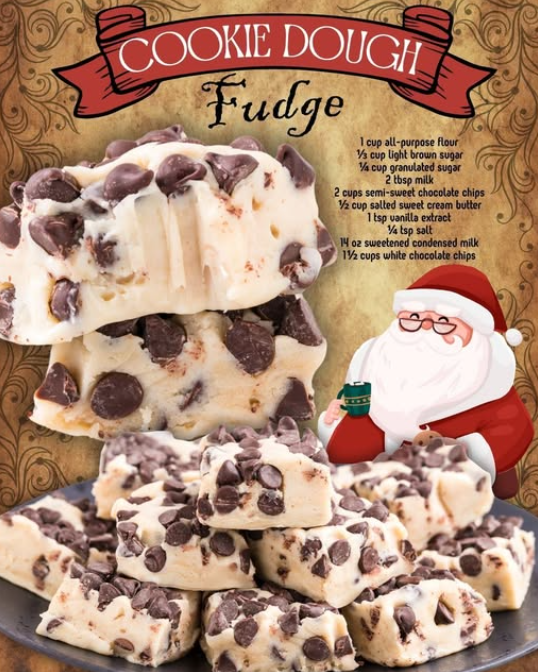
Gently fold the prepared cookie dough into the warm white chocolate fudge mixture. You want large “clumps” of dough to remain visible rather than blending it into a uniform paste. Stir in the remaining semi-sweet chocolate chips quickly so they don’t melt entirely.
5. Setting the Fudge
Pour the mixture into an 8×8 inch pan lined with parchment paper. Smooth the top with a spatula. For a professional look, press a few extra chocolate chips into the surface.
6. The Chilling Regulation
Place the pan in the refrigerator for at least 3 to 4 hours (or overnight). This allows the white chocolate to set firmly, creating the characteristic fudge snap.
Serving and Storage: Maintaining the Texture
Serving: Use a sharp, warm knife to cut the fudge into small 1-inch squares. Because this treat is exceptionally rich, smaller portions are recommended.
Storage: Keep the fudge in an airtight container to prevent it from absorbing refrigerator odors.
| Storage Location | Duration | Texture Note |
|---|---|---|
| Refrigerator | 2 Weeks | Firm & Chewy |
| Freezer | 3 Months | Truffle-like |
Tips: The Candy Maker’s Edge
- Don’t Overcook the White Chocolate: White chocolate has a lower burning point than dark chocolate. Always melt it on low heat or in short microwave bursts.
- Sift the Flour: After heat-treating, flour can become clumpy. Sifting it back into the bowl ensures your cookie dough chunks are smooth and professional.
- Salt Balance: If you use unsalted butter, increase the salt to 1/2 tsp to ensure the flavor isn’t one-dimensional.
Variations: Customizing the Crunch
Looking for a different “mouthwatering” twist? Try these adaptations:
- Peanut Butter Swirl: Add 2 tbsp of creamy peanut butter to the fudge base while melting.
- Dark Chocolate Contrast: Use dark chocolate fudge (14oz condensed milk + 1.5 cups dark chips) with the same cookie dough centers.
- Holiday Sprinkles: Mix in colorful nonpareils to the dough for a festive “funfetti” appearance.
Tips: Troubleshooting Common Fails
“My fudge is too soft”: This usually happens if the white chocolate wasn’t fully melted or if too much milk was added to the dough. Keep it in the freezer for an hour to firm it up before serving.
“The chocolate chips melted into the fudge”: Ensure the fudge mixture has cooled for 2-3 minutes before adding the final chocolate chips.
Conclusion: A Sophisticated Indulgence
Cookie Dough Fudge is a testament to the joy of textures. By following the “regulations” of heat-treating and careful temperature control, you produce a treat that bridges the gap between a simple snack and a high-end confection. It is rich, nostalgic, and guaranteed to be the first thing to disappear from the dessert table.
Frequently Asked Questions:
Q: Is the dough really safe to eat?
A: Yes, as long as you heat-treat the flour to 74°C (165°F) and use a recipe like this one that contains no raw eggs.
Q: Can I use a different size pan?
A: A 9×9 pan will work, but the fudge squares will be thinner. Avoid larger pans as the fudge may lose its structural height.
Q: Why use white chocolate instead of just sugar?
A: White chocolate provides a more stable, “foolproof” set than traditional boiled sugar fudge, which can often turn out grainy if the temperature isn’t exact.