
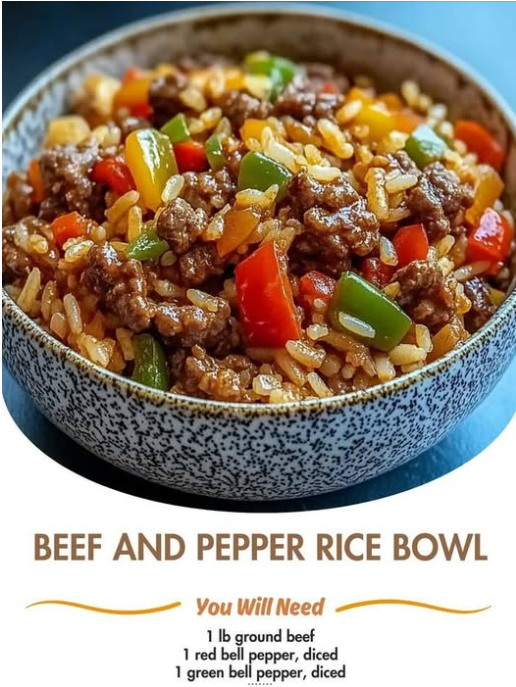
Wok-Inspired Weeknight: Mastering the Beef and Pepper Rice Bowl
Introduction: The Principles of High-Heat Flavor Building
The **Beef and Pepper Rice Bowl** is a blueprint for high-impact, low-effort Asian-inspired cuisine. Its success is not measured by long, slow cooking, but by mastering the quick, high-heat techniques typically associated with stir-frying. This recipe hinges on three non-negotiable regulations: **Maillard Maximization**, **Vegetable Integrity**, and **Sauce Stabilization**.
The first regulation, **Maillard Maximization**, applies to the **1 lb ground beef**. The Maillard reaction—the browning of amino acids and reducing sugars—creates the complex, savory, roasted flavor that defines this dish. To achieve a proper sear, the beef must be cooked in a very hot pan without crowding. The ground beef must be spread in a single layer and left undisturbed for several minutes to allow the water content to evaporate and the browning to occur. **Draining the fat** is a necessary step after browning to prevent the final dish from being greasy, and the residual fat should not be so excessive that it impedes the vegetable sauté.
The second regulation, **Vegetable Integrity**, relates to the **1 red bell pepper, 1 green bell pepper, and 1 small onion, diced**. These vegetables must be cooked quickly to achieve the desired “tender-crisp” texture, known as *al dente* in the vegetable world. Overcooking the peppers leads to a mushy texture and loss of vibrant color. They are added to the pan *after* the beef is browned and drained, using the residual heat and a small amount of oil to quickly soften them without losing their bite. [Image demonstrating the Maillard reaction on ground meat, showing the browned, caramelized bits]
The third regulation, **Sauce Stabilization**, is critical due to the presence of **2 tbsp hoisin sauce**—a high-sugar condiment. The sauce, consisting of **1/4 cup soy sauce, 2 tbsp hoisin sauce, 1 tbsp sesame oil, 1 tsp garlic powder, and 1/2 tsp ground ginger**, must be added only at the very end. Sugar-rich sauces burn easily when exposed to high, direct heat for extended periods. Adding the sauce only after the beef is browned and the vegetables are cooked allows the sauce to bubble and thicken briefly (about 60 seconds) before being removed from the heat, ensuring the perfect glaze without a burnt, acrid flavor.
The entire dish is designed to be quickly assembled over the **3 cups of cooked white or brown rice**, which serves as the neutral, absorbent base for the intensely flavored beef mixture.
