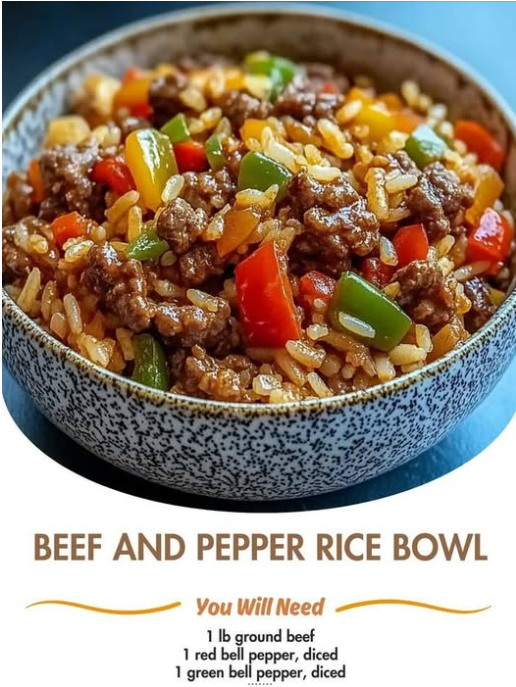
The ingredients provide a strong balance between the protein base, the crisp vegetable components, and the rich, savory sauce:
I. The Base and Aromatics:
- **1 lb** ground beef (The primary protein)
- **1 red bell pepper, diced**
- **1 green bell pepper, diced**
- **1 small** onion, diced
- **3 cups** cooked white or brown rice (The neutral base)
II. The Sauce and Seasoning:
- **1/4 cup** soy sauce (The primary savory/salty component)
- **2 tbsp** hoisin sauce (Sweetness, depth, and thickening agent)
- **1 tbsp** sesame oil (The high-impact aromatic finisher)
- **1 tsp** garlic powder (Quick, distributed garlic flavor)
- **1/2 tsp** ground ginger (Aromatic and bright spice)
- **1 tbsp** neutral oil (e.g., canola or vegetable, assumed, for searing)
Instructions: Searing, Stir-Frying, and Glazing
Phase 1: Maillard Maximization (Searing the Beef)
- **Prepare Pan:** Heat a large skillet or wok over medium-high heat. Add **1 tablespoon of neutral oil** (assumed).
- **Sear Beef (CRITICAL):** Add the **ground beef** to the hot pan. Spread it evenly across the surface and **leave it undisturbed for 3–4 minutes**. This allows the water to evaporate and the Maillard reaction to begin, creating a deep brown crust.
- **Brown and Drain:** Break up the beef and continue cooking until no pink remains. **Drain off the excess fat** from the pan. Return the beef to the pan.
Phase 2: Vegetable Integrity and Quick Cook
- **Sauté Aromatics:** Add the **diced small onion** to the beef and cook for 2 minutes until softened.
- **Add Peppers:** Add the **diced red and green bell peppers**. Stir-fry for **3–4 minutes**. The peppers should be bright in color and tender-crisp—they should retain some bite, not be completely soft.
Phase 3: Sauce Stabilization and Glaze
- **Mix Sauce:** In a small bowl, whisk together the **soy sauce, hoisin sauce, sesame oil, garlic powder, and ground ginger**.
- **Glaze (MANDATORY):** Pour the entire sauce mixture over the beef and peppers. Toss quickly and continuously over medium-high heat.
- **Thicken:** Cook the sauce for only **60–90 seconds**. The hoisin sauce’s sugar will caramelize and thicken the liquid quickly, creating a sticky glaze that adheres to the meat and vegetables. **Remove from heat immediately** to prevent the sugars from burning.
- **Serve:** Serve the glazed beef and pepper mixture immediately over the **3 cups of cooked rice**.
Serving and Storage: Retaining Crispness and Moisture
This dish is best served immediately to appreciate the tender-crisp vegetables and sticky glaze. Storage requires separating the rice and the beef mixture.
- **Serving:** Serve hot, spooning the glazed beef mixture over the fresh, hot rice. Garnish with sesame seeds or green onions (optional).
- **Storage:** Store the **rice** and the **beef/pepper mixture** in separate airtight containers in the refrigerator for up to 3 days. Combining them immediately will cause the rice to absorb the glaze and become sticky.
- **Reheating:** Reheat the beef mixture in a skillet on the stovetop for the best texture. Reheat the rice separately (microwave works well). Combine just before serving.
- **Freezing:** **Not Recommended.** The high water content of the peppers will cause them to become mushy upon thawing, and the glaze’s texture will become uneven.
Tips: Essential Techniques for Flavor and Texture
Pan Temperature: Use a high, consistent heat for searing the beef (Step 2) and stir-frying the peppers (Step 5). This minimizes the cooking time and maximizes the browning, locking in flavor.
Pre-Mixing the Sauce: **Always mix the sauce ingredients together beforehand** (Step 6). Pouring individual high-sugar sauces (like hoisin) directly onto the beef can lead to immediate burning before they are properly dispersed.
Vegetable Consistency: Dice the bell peppers and onion to a uniform size (about $1/2$ inch cubes). This ensures they cook evenly. Adding the peppers slightly after the onion ensures they retain their integrity.
Preventing Steam: Ensure the ground beef is truly drained of excess fat and water (Step 3) before adding the vegetables. Too much moisture in the pan will cause the ingredients to steam instead of sear, resulting in a boiled texture and dull flavor.
Use of Sesame Oil: Note that **sesame oil is an aromatic finisher**—it is not ideal for high-heat cooking due to its low smoke point. It is included in the sauce (Step 6) and added at the very end to retain its strong, volatile flavor.
Variations: Customizing Protein, Spice, and Veggies
The rice bowl format is highly adaptable to various flavor profiles:
- **Protein Swap:** Substitute the ground beef with **ground pork or ground turkey**. For turkey, you may need to add a touch more oil, as turkey is leaner. Ensure all ground meat is fully seared (Step 2).
- **Spicy Kick:** Add **1 teaspoon of chili garlic sauce or sriracha** to the sauce mixture (Step 6) for significant heat. Alternatively, add a pinch of crushed red pepper flakes during the vegetable sauté.
- **Flavor Boost:** Incorporate **1/4 cup of chopped water chestnuts** or **sliced bamboo shoots** with the peppers for added crunch and textural contrast.
- **Vegetable Variety:** Introduce different vegetables like **sliced zucchini, snow peas, or broccoli florets**. Harder vegetables (like broccoli) should be added earlier with the onions or blanched quickly beforehand.
- **Finishing Touches:** Garnish with **toasted sesame seeds, chopped scallions, or a fried egg** for added richness and aesthetic appeal.
Rice Temperature: Use **freshly cooked, hot rice** for immediate serving (Step 9). Cold, refrigerated rice tends to clump and requires more effort to separate and reheat evenly.
Salt Control: The primary sodium comes from the **soy sauce**. Use low-sodium soy sauce if you are sensitive to salt. Always taste the dish *before* adding any extra salt, as the sauce is already intensely flavored.
Ginger and Garlic Alternative: If using **freshly minced garlic and ginger**, add them during the last 30 seconds of the onion sauté (Step 4). Fresh ingredients have a risk of burning if added too early, unlike the powders listed in the ingredients.
Wok vs. Skillet: A traditional wok is ideal because its high, thin sides allow for rapid evaporation and concentration of heat. If using a skillet, ensure it is a **wide, heavy-bottomed pan** to maximize the surface area for searing and minimize crowding.
Conclusion: Speed, Sear, and Sauce
The Beef and Pepper Rice Bowl is a triumph of quick-cooking efficiency. By prioritizing the aggressive browning of the ground beef through the Maillard reaction and ensuring the peppers achieve a tender-crisp integrity, the dish builds a robust foundation. The final, brief glazing step, carefully managed to prevent the high-sugar sauces from burning, locks in the signature savory and sweet flavors. This recipe proves that profound flavor can be achieved quickly through the strategic use of high heat and proper ingredient timing.
Frequently Asked Questions (FAQ)
Q: Why did my ground beef steam instead of brown?
A: The pan was **not hot enough** initially, or you **crowded the pan** (too much beef in one layer), causing the meat to release too much water too quickly. Ensure a very hot pan and spread the beef out, leaving it undisturbed for the first few minutes (Step 2).
Q: My sauce tasted burnt and bitter. What went wrong?
A: The sauce was **cooked for too long** (more than 90 seconds) or added when the heat was too high (Step 7). The high sugar content in the hoisin sauce caramelized excessively and burned. Remove the pan from the heat immediately after the sauce has thickened.
Q: My peppers turned out mushy. How can I keep them crisp?
A: The peppers were **overcooked** (Step 5). Stir-fry them for only 3–4 minutes, or until they are bright and still have a noticeable firmness. You want them tender-crisp.
Q: Can I use fresh white rice from the refrigerator?
A: Yes, but you must break up the clumps before serving (Step 9). Cold, day-old rice actually separates better and is often preferred in stir-fries, but ensure it is reheated to hot for optimal bowl temperature.