
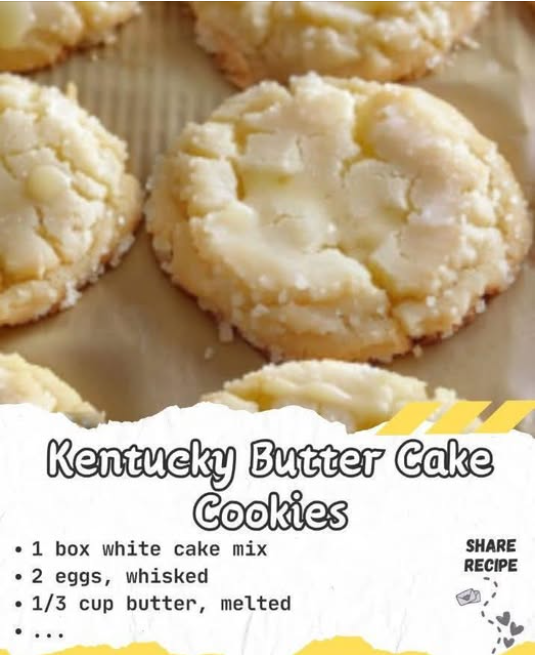
The Kentucky Butter Cake Cookie: Engineering the Ultimate Butter Crust
Introduction: Re-Engineering the Boxed Mix
In the world of professional “doctoring,” the Kentucky Butter Cake Cookie is a triumph of Hydration Management. On this Thursday, December 25, 2025—Christmas Day—this cookie offers a decadent, buttery finish to the holiday. The “regulation” success of this recipe lies in the Density Shift: by removing the water or milk typically required for a cake and replacing it with pure lipids (melted butter), we prevent the starch from fully expanding, resulting in a soft, “short” cookie texture rather than a fluffy cake.
This guide explores the Chlorinated Flour Stability of cake mixes, the Emulsification of whisked eggs, and the Sucrose Saturation of the butter glaze. We will examine why the glaze must be applied to a warm cookie to achieve the iconic “Kentucky” soak.
Ingredients: The Molecular Building Blocks
- White Cake Mix (1 box): This is your Pre-Engineered Starch Base. Cake mixes contain chlorinated flour, which has a higher capacity to hold sugar and fat than standard all-purpose flour. It also contains leavening salts that provide just enough lift to keep the cookie soft but not puffy.
- 2 Whisked Eggs: These act as the Protein Binder. Whisking the eggs before adding them ensures the lecithin is ready to emulsify the melted butter into the dry flour starches immediately.
- 1/3 Cup Melted Butter: This is the Tenderizing Lipid. Unlike softened butter, melted butter integrates into the flour quickly, coating the proteins to prevent gluten development. This ensures a “melt-in-your-mouth” experience.
- The Butter Glaze (Butter, Sugar, Water, Vanilla): This is a Sugar Syrup Emulsion. The water acts as a solvent for the sugar, while the butter provides the fat necessary to keep the glaze translucent and flexible once set.
