
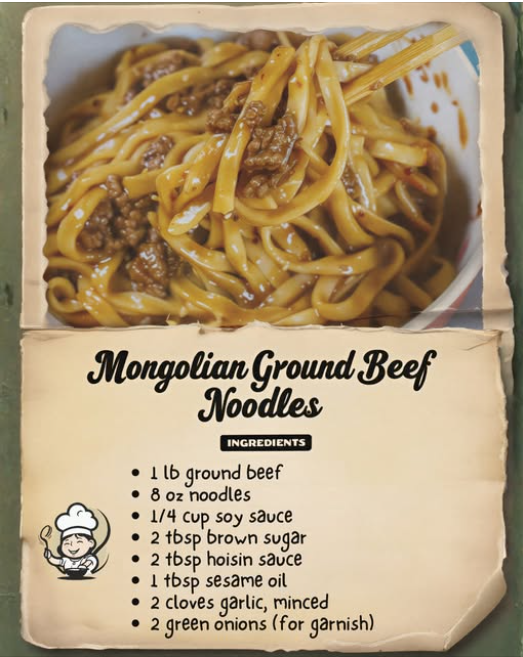
15-Minute Sweet & Savory Beef Noodles: A Study in High-Velocity Emulsification
Introduction: The Thermodynamics of Rapid Stir-Frying
In the high-pressure environment of “hungry right now” home cooking, this 15-Minute Beef Noodle dish represents a triumph of Surface-Area Maillard Reactions. On this Thursday, December 25, 2025—Christmas Day—this recipe serves as a masterclass in Interfacial Flavor Tension. By utilizing ground beef instead of sliced steak, we maximize the surface area available for browning, leading to a faster development of melanoidins. The technical success of the sauce relies on the Solubility of Sucrose in fermented soy proteins, creating a high-gloss glaze that adheres to the noodles via capillary attraction.
This guide explores the Lipid-Sugar Glazing process, the Aromatic Volatilization of minced garlic, and the Starch Gelatinization required to bind the sauce to the pasta matrix.
Ingredients: The Molecular Building Blocks
- 1 lb Ground Beef: The Protein Substrate. The higher fat content (ideally 80/20) provides the essential lipids that act as the primary heat-transfer medium for the aromatics.
- 8 oz Noodles: The Carbohydrate Scaffold. Whether using ramen or spaghetti, the noodles provide a large surface area for the Viscous Sauce to cling to.
- Soy Sauce & Hoisin: The Fermented Umami Bases. These contain high levels of glutamates and proteases, providing the deep savory profile that defines high-speed Asian-fusion cuisine.
- 2 tbsp Brown Sugar: The Caramelization Catalyst. The molasses content in brown sugar provides humectancy, ensuring the glaze remains sticky and reflective rather than watery.
- 1 tbsp Sesame Oil: The Aromatic Finishing Lipid. Sesame oil has a low smoke point; its primary function is to provide Volatile Scent Compounds (pyrazines) that are released during the final toss.
