
The Engineering of High-Viscosity Appetizers: A Trio of Meatball Glazes
Introduction: The Physics of “The Perfect Cling”
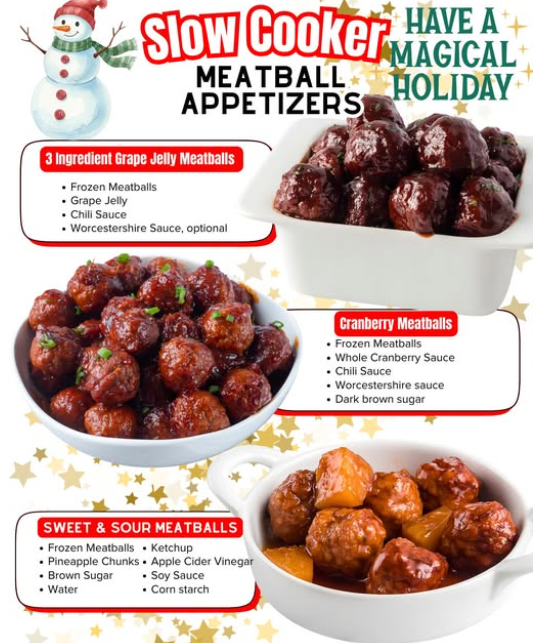
In the high-stakes world of holiday hosting, the cocktail meatball remains a structural marvel. The goal of a successful meatball appetizer is to achieve a Non-Newtonian Fluid state in the glaze—a sauce thick enough to resist gravity (the “cling”) while maintaining a glossy, translucent finish. This Friday, December 26, 2025, we examine the culinary regulations of three distinct flavor profiles: the Pectin-stabilized Grape Jelly Meatball, the Heterogeneous Matrix of the Cranberry Meatball, and the Starch-gelatinized Sweet & Sour Meatball. By mastering the pH balance and molecular bonding of these sauces, you ensure a high-protein snack that is both functionally efficient and sensorially complex.
Ingredients: The Molecular Building Blocks
1. The Grape Jelly Matrix
- 26 oz Frozen Meatballs: The Structural Substrate. Frozen meatballs provide a consistent surface area for glaze adhesion.
- 18 oz Grape Jelly: The Hydrocolloid Agent. Rich in pectin, which provides the sauce’s body.
- 12 oz Chili Sauce: The Acidic Catalyst. Provides the necessary pH reduction to balance the sugar.
- 1.5 tbsp Worcestershire Sauce: The Umami Reinforcement.
2. The Cranberry Composite
- 26 oz Frozen Meatballs: The protein base.
- 14 oz Whole Cranberry Sauce: The Structural Inclusion. Provides whole fruit solids for texture.
- 12 oz Heinz Chili Sauce: The aromatic base.
- 1.5 tbsp Dark Brown Sugar: Facilitates Caramelization and increases specific gravity.
3. The Sweet & Sour Suspension
- 28 oz Frozen Meatballs: The protein base.
- 20 oz Pineapple Chunks: The Enzymatic Inclusion. Provides bromelain and natural sugars.
- 1 cup Light Brown Sugar: The sweetener and bulking agent.
- 1/2 cup Apple Cider Vinegar: The Acidic Solvent for brightness.
- 2 tbsp Cornstarch: The Gelatinization Agent.
