
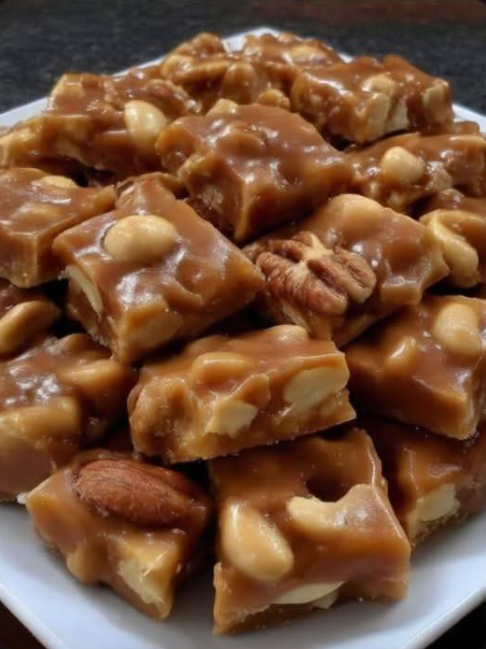
The Art and Science of Oklahoma Nut Candy: A Confectionery Masterclass
Introduction: Engineering the Perfect Sweet Treat
Oklahoma Nut Candy is more than just a sweet treat; it’s a meticulously engineered confection that harmonizes the complex chemical reactions of sugar with the rich, stabilizing properties of dairy and the earthy crunch of nuts. Often likened to a buttery penuche or a dense, crumbly fudge, this candy stands out due to its unique combination of caramelized sugar and a cream-based matrix. On this Friday, December 26, 2025, we delve into the precise regulations and scientific principles that govern its creation. Mastering this recipe is a lesson in patience, precision, and understanding the intricate phase transitions of sugar. The objective is to achieve a texture that is simultaneously firm enough to slice, yet melts in the mouth with a creamy, nutty finish, avoiding the pitfalls of graininess or excessive hardness. This delicate balance is achieved by carefully controlling the thermal decomposition of sugar and the subsequent crystallization process, all while integrating a rich lipid-protein phase from heavy cream and butter.
This article will guide you through the journey of transforming simple ingredients into a confectionery masterpiece, focusing on the “why” behind each step. From the initial caramelization to the final cooling and setting, every stage plays a crucial role in the ultimate success of this delightful Oklahoma tradition.
Ingredients: The Molecular Building Blocks of Flavor and Texture
Each ingredient in Oklahoma Nut Candy is selected for its specific chemical and physical contributions to the final product. Understanding these roles is key to achieving consistent, high-quality results.
The Sweet Architects: Sugar (6 cups, divided)
- Role: Sugar (sucrose) is the primary structural component and sweetening agent. The division into two portions is critical for controlling flavor development and crystallization.
- Scientific Impact:
- 2 cups for Caramelization: These sugar molecules undergo thermal degradation (pyrolysis). This process breaks down sucrose into a complex mixture of new compounds, including furans and pyrones, which are responsible for the rich, nutty, and slightly bitter notes of caramel. This reaction occurs at temperatures above the sugar’s melting point, around 320°F (160°C).
- 4 cups for Dissolution: These sugar crystals dissolve into the heavy cream, forming a concentrated syrup. This syrup’s concentration is meticulously controlled to reach the ‘softball stage,’ which defines the candy’s final texture.
