
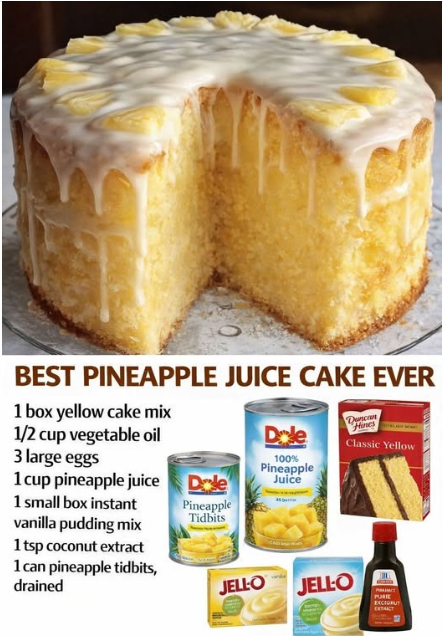
The Gilded Orchard: A Masterclass in the Architecture of the Pineapple Juice Sponge
Introduction: The Geometry of Tropical Indulgence
In the expansive landscape of classic home baking, there exists a specific category of “humble” cakes that defy their simple origins to become legendary. The Pineapple Juice Cake is the pinnacle of this movement. It represents an honest approach to dessert architecture: a structural masterpiece that utilizes the natural acidity and aromatic enzymes of the pineapple to bypass the need for complex creaming methods or heavy chemical leaveners. This is not merely a confection; it is a vibrant, grounding experience that captures the essence of a sun-drenched orchard within a “velvet-smooth” crumb.
To master this recipe is to understand the “thermal regulation” of sugar and fruit acid. Unlike airier sponges that rely on the mechanical aeration of butter, the Pineapple Juice Cake utilizes an oil-based emulsion. This ensures that the interior remains moist and resilient, even when faced with the “chaos” of fluctuating room temperatures or long-term storage. The result is a cake with a shatter-crisp golden crust and a center so tender it borders on the ethereal. It is a premium reward for the baker who values precision, simplicity, and the undeniable luxury of tropical flavor.
This article serves as a definitive guide to executing this masterpiece. We will explore the chemical synergy of the ingredients, the protocol of assembly, and the nuances of preservation. This is the recipe you don’t lose; it is the one that becomes the “Weekend Standard” for generations to come.
The Components: Ingredients
Every element in this list is chosen to serve a specific structural or aromatic purpose. To achieve a premium finish, each ingredient must be handled with respect for its individual “regulation” within the batter.
- 2 cups All-Purpose Flour: The skeletal frame. We recommend sifting this twice to remove any density-inducing clumps, ensuring the final crumb is “heavenly” rather than heavy.
- 2 cups Granulated Sugar: Beyond sweetness, sugar acts as a liquefier. It breaks down the gluten strands, resulting in that iconic “velvet-soft” mouthfeel and a beautifully caramelized exterior.
- 2 Large Eggs: The protein structuralists. They provide the necessary “binding energy” to keep the oil and juice in a permanent state of emulsion. Always use eggs at room temperature to avoid shocking the batter.
- 1 cup Vegetable Oil: The moisture insurance policy. Unlike butter, which firms up as it cools, oil keeps the cake’s cell structure flexible and moist for days.
- 1 cup Pineapple Juice (100% Pure): The soul of the cake. The citric acid in the juice reacts with the baking soda to provide lift, while the sugars in the juice create a deep, golden “bloom” during the bake.
- 2 teaspoons Baking Soda: The engine of the rise. It neutralizes the acidity of the pineapple juice, releasing carbon dioxide bubbles that create a light, porous interior.
- 1 teaspoon Vanilla Extract: The floral aromatic. High-quality vanilla bridges the gap between the sharpness of the fruit and the richness of the oil, providing a sophisticated finish.
