
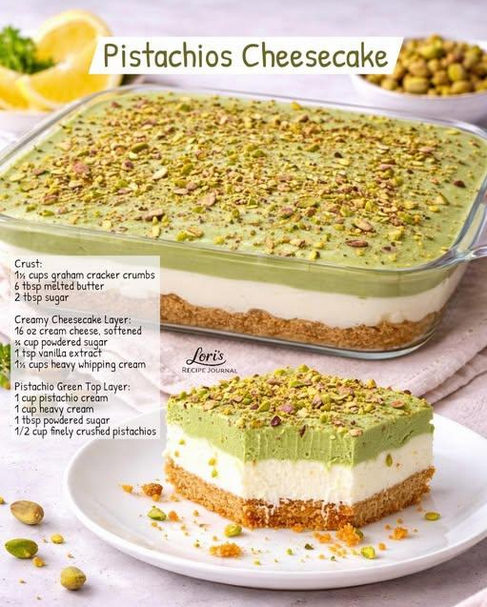
Pistachio Layered Cheesecake
A Study in Lipid Stabilization and Textural Contrast
“The pistachio is the emerald of the nut world, and its paste is the key to a cheesecake that is as structurally sound as it is decadent.”
1. Introduction: The No-Bake Revolution
In the culinary world of 2026, the no-bake cheesecake has graduated from a “shortcut” to a sophisticated dessert category of its own. Unlike baked cheesecakes, which rely on egg coagulation for structure, this Pistachio Cheesecake utilizes Cold-Setting Aeration. By avoiding the oven, we preserve the volatile aromatic compounds in the pistachio paste, which can often be muted by high heat. This results in a cleaner, more vibrant nut flavor and a “silk-velvet” mouthfeel that is impossible to achieve with baked proteins.
2. Ingredients: The Structural Components
The Flavor-Structure Matrix
- Graham Cracker Base: The Structural Anchor. The 6 tbsp of melted butter act as a thermal binder; once chilled, the fats solidify, creating a moisture-resistant barrier for the cream layers.
- Cream Cheese (16 oz): The Emulsification Core. High in milk fat, it provides the density and tang that balances the sweetness.
- Heavy Whipping Cream (3 cups total): The Aeration Agent. This must have at least 36% fat content to ensure the creation of “Stiff Peaks”—the mechanical framework of the dessert.
- Pistachio Cream/Paste: The Lipid-Flavor Infusion. Pistachios are rich in monounsaturated fats, which contribute to the glossy finish of the top layer.
