
The Maillard Standard
A Study in High-Heat Dehydration and Lipid-Infused Aromatics
Introduction: The Physics of the Crust
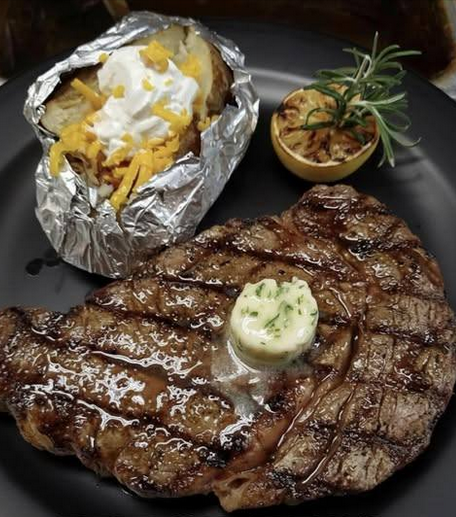
In the culinary landscape of 2026, the Steak and Roasted Potato pairing is analyzed through the lens of Thermal Conductance. To achieve a restaurant-grade result, one must master the Maillard reaction—a chemical interaction between amino acids and reducing sugars that gives browned food its distinctive flavor.
The primary challenge in this preparation is Temporal Synchronization. Potatoes require prolonged, dry convective heat to achieve starch gelatinization and exterior crispness, while steak requires high-intensity conductive heat for a brief window to reach the desired internal doneness. This article outlines the regulatory steps to align these two distinct thermal trajectories into a singular, cohesive dining experience.
Ingredients: The Molecular Components
Precision in protein-to-starch ratios ensures a balanced macronutrient profile and optimal sensory feedback.
- 1–2 Ribeye or Sirloin Steaks: Selected for intramuscular fat (marbling) which acts as a thermal insulator and flavor carrier.
- 3–4 Medium Potatoes: Diced to increase the surface-area-to-volume ratio for maximum crispness.
- Lipid Matrix: Olive oil for high-heat roasting and butter for a low-temperature aromatic finish.
- The Aromatic Trinity: Garlic, rosemary, and thyme for volatile organic compound (VOC) infusion.
- Seasoning Chassis: Paprika for color, garlic powder for savory depth, and salt for osmotic moisture management.
