
Preheat the oven to 400°F. Toss diced potatoes in olive oil, paprika, garlic powder, and salt. Arrange in a single layer on a pre-heated sheet pan. This Conductive Shock prevents sticking and initiates immediate surface dehydration. Roast for 25–30 minutes, agitating midway to ensure uniform starch setting.
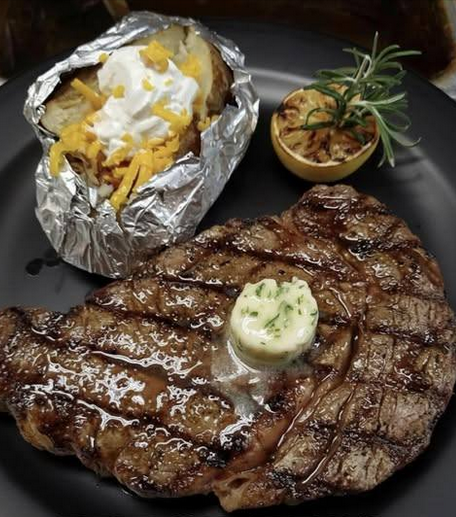
Phase 2: Protein Tempering and Seasoning
While potatoes roast, allow steaks to reach Thermal Equilibrium at room temperature. Pat dry with paper towels to remove surface moisture—excess water consumes latent heat through evaporation, preventing the Maillard reaction. Apply a liberal coating of salt, pepper, garlic powder, and paprika.
Phase 3: Conductive Searing and Aromatic Basting
Heat a cast-iron skillet until the smoke point of the oil is reached. Sear the steak for 3–4 minutes per side. In the final 2 minutes, introduce butter, crushed garlic, and herbs. Use a spoon to perform Arrosé (butter basting), which continuously bathes the protein in flavored lipids, ensuring even cooking and a deep mahogany crust.
Serving and Storage: Post-Production Maintenance
The Resting Window is the most critical regulatory step. Resting allows the muscle fibers to relax and reabsorb internal juices, preventing “purge” (liquid loss) upon slicing.
| Component | Target Temperature | Resting Requirement |
|---|---|---|
| Steak (Medium-Rare) | 130°F – 135°F | 5–8 Minutes |
| Roasted Potatoes | 210°F (Internal) | None (Serve hot) |
Tips: Managing the Thermal Gradient
Technical Note: For the most consistent steak, use an instant-read thermometer. Pull the steak off the heat at 5°F below your target temperature; Carryover Cooking will bridge the gap during the resting phase.
- Potato Crispness: For an extra-glassy crust, par-boil the diced potatoes for 5 minutes in alkaline water (add 1/2 tsp baking soda) before roasting. This creates a starchy slurry on the surface that crisps up intensely.
- The Resting Environment: Rest the steak on a warm plate, loosely tented with foil. Tight wrapping will trap steam and soften the crust you worked so hard to build.
Variations: Adjusting the Flavor Profile
- The Umami Spike: Brush the steak with a thin layer of Dijion mustard or Worcestershire sauce before applying the dry rub.
- Truffle Infusion: Toss the roasted potatoes in white truffle oil and fresh Parmesan immediately after they exit the oven.
Tips: Preventing Lipid Oxidation
If the butter in the pan begins to turn black rather than brown (noisette), immediately add a small splash of olive oil or move the pan off the heat. Burnt milk solids introduce a bitter carbon flavor that overrides the herb aromatics.
Conclusion: The Synergy of the Plate
Steak and Roasted Potatoes represent the pinnacle of Maillard-driven comfort. By respecting the dehydration requirements of the potato and the resting requirements of the protein, you transform simple ingredients into a sophisticated study in texture. Master the basting, respect the rest, and let the thermodynamics do the work.
Frequently Asked Questions
Q: Why is my steak grey inside instead of pink?
A: This often happens if the pan isn’t hot enough or if the steak was cooked straight from the fridge. High heat and tempering are key to a “wall-to-wall” pink interior.
Q: My potatoes are soft, not crispy. What happened?
A: Overcrowding the pan is the likely culprit. If the potatoes are too close together, they steam each other rather than roast. Use a larger pan or two separate pans.
Would you like me to provide a “Steak Doneness Chart” for precise internal temperatures, or perhaps a recipe for a “Red Wine Reduction Sauce” to elevate the protein?
Related posts:
 Dinner or Breakfast Perfection: Mastering Steak & Eggs
 The Perfect Duo: Garlic Butter Steak Bites and Creamy Mash
 The Ultimate Guide to Steak & Cheese Quesadillas
 Mastering Old-Fashioned Chicken Fried Steak
 Mastering Cheesy Ranch Oven Roasted Potatoes
 The Ultimate Guide to Cheesy Ranch Oven Roasted Potatoes
