
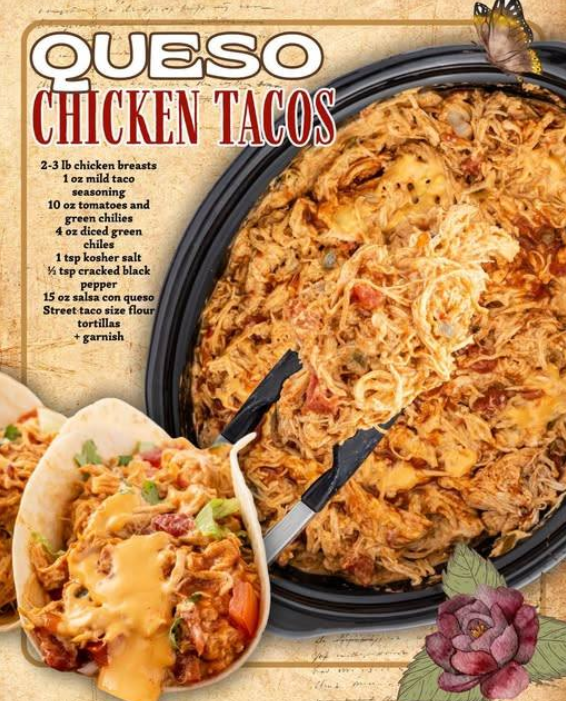
The Queso-Protein Matrix
Phase Transitions and Lipid Stabilization in Slow-Cooked Chicken
1. Introduction: The Bio-Physics of the Taco Filling
The 2026 standard for high-performance comfort food focuses on Aqueous Saturation. In this recipe, the chicken breast ($Gallus gallus domesticus$) is subjected to an acidic, low-temperature environment. This facilitates Collagen Solubilization, turning connective tissue into gelatin, which improves the mouthfeel of the lean white meat.
The addition of Salsa Con Queso at the conclusion of the cook cycle is a critical regulatory step. Because the queso is a pre-stabilized emulsion, adding it too early could cause the dairy proteins to “break” under prolonged acidity. By integrating it into the shredded chicken, we create a Viscous Barrier that locks in moisture and prevents the meat from oxidizing.
2. Ingredients: The Structural Chassis
Success in this filling requires a balance between the aqueous acidity of the tomatoes and the lipid density of the cheese.
- 2-3 lb Chicken Breasts: The lean protein substrate. Breasts are chosen for their ability to shred into long, sauce-absorbing fibers.
- 10 oz Tomatoes & Green Chilies: Provides the Citric Acid necessary for flavor brightness and protein tenderization.
- 15 oz Salsa Con Queso: The primary emulsifier and lipid source. Contains stabilized salts to ensure a smooth melt.
- Seasoning Matrix: 1 oz Taco seasoning, kosher salt, and black pepper provide the Ionic Balance to enhance all savory notes.
