
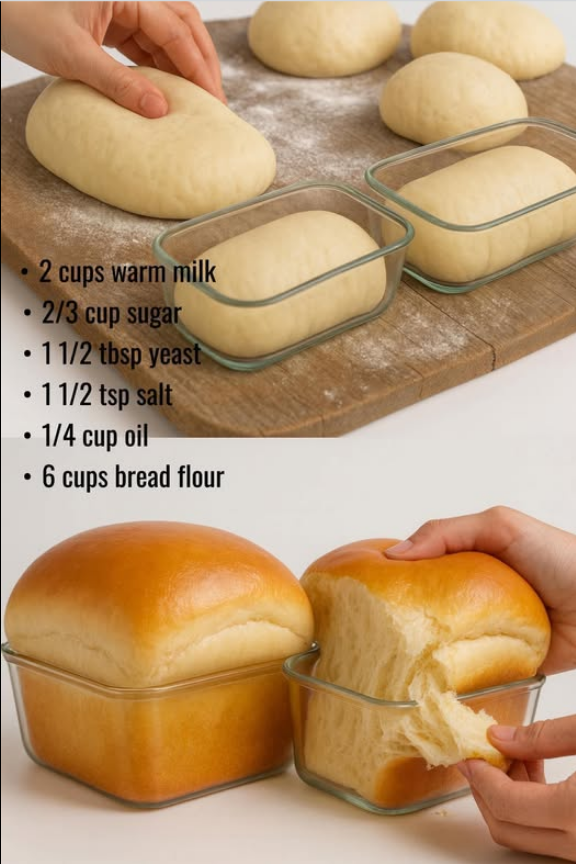
The White Bread Matrix
1. Introduction: The Fuel-to-Gas Ratio
This recipe utilizes a high concentration of Yeast (Saccharomyces cerevisiae) and Sucrose. When the yeast is “bloomed” in warm milk, it begins anaerobic fermentation, breaking down sugar into ethanol and carbon dioxide. The milk proteins (casein) and fats provide a Tenderizing Barrier, ensuring that despite the rapid gas production, the final crumb remains soft rather than leathery.
2. Ingredients: The Structural Infrastructure
- 6 Cups Bread Flour: The high-protein chassis. Bread flour contains more Glutenin than all-purpose flour, which is essential for holding the structure of a tall, sandwich-style loaf.
- 2/3 Cup Sugar: Acts as an Osmotic Regulator and fuel source. While some is consumed by yeast, the remainder retains moisture (hygroscopy) to keep the bread fresh.
- 2 Cups Warm Milk: Provides Lactose for crust browning and lipids for crumb softness.
- 1/4 Cup Oil: A lipid that coats gluten strands, preventing them from becoming too rigid, resulting in a “pillowy” texture.
