
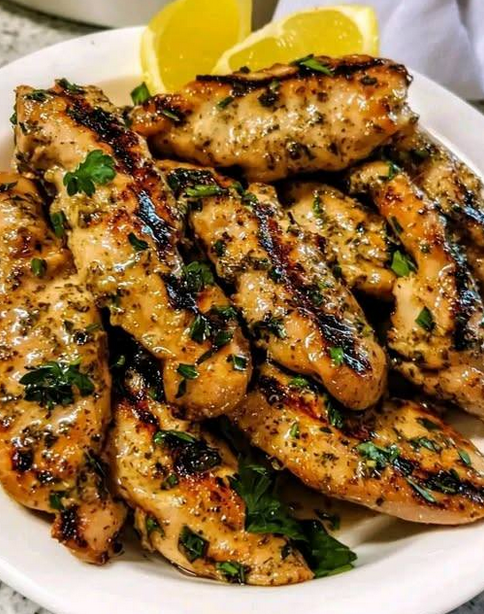
Mediterranean Precision: Optimizing Protein Denaturation for Grilled Chicken Tenders
The Art and Science of the Perfect Greek-Style Chicken Tender
Introduction: The Chemistry of the Tender Bite
In the evolving landscape of culinary science, achieving the optimal texture in grilled poultry is paramount. The humble chicken tender, with its unique lean composition and elongated structure, presents a distinct challenge: how to maximize flavor infusion and maintain succulence under high-heat grilling. This is where the principles of **acidic protein denaturation** and **lipid-carrier aromatics** come into play, forming the bedrock of the perfect Greek-style grilled chicken tender.
The traditional Greek marinade, characterized by lemon juice and olive oil, is not merely a flavor enhancer but a sophisticated biophysical tool. Lemon juice, rich in citric acid, initiates a controlled relaxation of the chicken’s muscle fibers. This process, often referred to as “cold-cooking,” tenderizes the meat by partially unraveling protein helices, allowing for deeper penetration of flavors and a reduction in the fibrous toughness typically associated with overcooked chicken breast. Concurrently, extra virgin olive oil acts as a dual-purpose agent: a thermal conductor facilitating even searing and a hydrophobic medium for the solubilization and delivery of fat-soluble aromatic compounds.
The goal is a precise balance. Over-marination in acid can lead to a “mushy” or chalky texture as proteins denature excessively and lose their water-holding capacity. Under-marination leaves the chicken tough. This recipe provides a scientifically calibrated protocol to navigate these variables, ensuring a tender interior and a beautifully caramelized exterior, making it a staple for high-performance meal prep and gourmet grilling alike.
Ingredients: The Molecular Components
Each ingredient in this minimalist yet potent recipe plays a critical role in the final sensory profile and structural integrity of the grilled chicken. Understanding their individual functions is key to appreciating the culinary engineering at work.
1. 1 lb Chicken Tenders
- Protein Source: Primarily composed of myofibrillar proteins (actin and myosin) and connective tissue (collagen).
- Optimal Geometry: Tenders are ideal for grilling due to their relatively uniform thickness, which allows for even heat penetration and consistent cooking times. This minimizes the risk of dry edges and undercooked centers, a common issue with larger cuts.
- Surface Area: The elongated shape provides ample surface area for marinade absorption and subsequent Maillard reaction browning.
2. 2 tbsp Olive Oil
- Lipid Carrier: Extra Virgin Olive Oil (EVOO) is rich in monounsaturated fatty acids and polyphenols. It serves as an excellent solvent for fat-soluble flavor compounds (e.g., from herbs or garlic, if added).
- Heat Conductor: Applied to the chicken, it creates a direct thermal bridge between the hot grill grates and the meat surface, promoting rapid and even searing. This conductive heat is crucial for developing a flavorful crust.
- Moisture Barrier: Forms a thin film on the surface, which helps to mitigate moisture loss during grilling, contributing to a juicier end product.
3. Juice of 1 Lemon (approx. 2 tbsp)
- Acidic Tenderizer: Lemon juice’s citric acid ($pH \approx 2.0-2.5$) disrupts the protein structure of the chicken. This partial denaturation loosens the tightly coiled muscle fibers, enhancing the meat’s tenderness.
- Flavor Brightener: Provides a characteristic “zing” that cuts through the richness of the chicken and olive oil, offering a refreshing counterpoint. The volatile compounds in fresh lemon juice also contribute a complex aromatic profile.
- Color Retention: Helps prevent oxidation of the chicken’s surface, maintaining a fresh appearance prior to grilling.
Instructions: The Optimized Preparation Protocol
The sequence and duration of each step are scientifically formulated to maximize tenderness and flavor, while minimizing risks such as over-denaturation or desiccation.
