
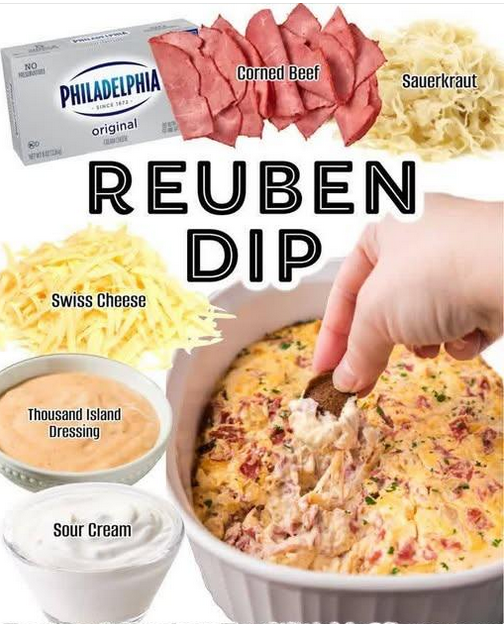
Reuben Dip: A Masterclass in Multi-Phase Lipid Stabilization
Introduction: The Physics of “Deconstructed” Deli Flavors
In the culinary world of warm appetizers, Reuben Dip represents a triumph of Structural Creaminess. The technical success of this dish relies on the Interfacial Tension between the cream cheese base and the acidic dressing. By heating these components together, the proteins in the cream cheese undergo a partial denaturation, allowing them to wrap around the fat globules of the sour cream. This creates a velvety “mouthfeel” that remains stable even as the dip cools.
This guide explores the Umami Synergy of the dressing, the Viscosity of the dairy base, and the Aromatic Volatiles that make this dip indistinguishable from a toasted Reuben sandwich.
Ingredients: The Molecular Building Blocks
- 8 oz Cream Cheese (Softened): The Structural Scaffold. This high-fat cheese provides the body and thickness. Softening it to room temperature is critical for achieving a homogenous mixture without clumps.
- 1/2 Cup Sour Cream: The Acidic Diluent. Sour cream introduces lactic acid, which thins the cream cheese to a scoopable consistency while adding a sharp, cultured tang.
- 1/2 Cup Thousand Island Dressing: The Complex Flavor Carrier. This dressing contains tomato paste (glutamates), sugar, vinegar, and relish. It provides the “Reuben” identity through Chemical Flavor Layering.
